

Samsung unveils the Galaxy Book6 Edge, equipped with Snapdragon X2 Elite and enhanced Galaxy AI features.
Digital Trends may receive a commission when purchases are made through links on our website. Why should you trust us?
The premium Copilot+ PC integrates Qualcomm's newest chip with a lightweight, slim design.
Samsung has officially broadened its AI PC range by introducing the Galaxy Book6 Edge, a high-end Windows laptop that combines Qualcomm’s latest Snapdragon X2 Elite processor with Galaxy AI functionalities and a highly portable form factor. The company is marketing it as a productivity-oriented device that unites on-device AI with smooth integration within the Galaxy ecosystem.
The Galaxy Book6 Edge is centered on AI and ease of transport.
Samsung states that the Galaxy Book6 Edge utilizes the new Snapdragon X2 Elite platform, facilitating Copilot+ PC experiences while enhancing AI capabilities and energy efficiency. It is equipped with a 16-inch display housed in a slender chassis, designed to manage AI-assisted tasks without compromising battery performance or portability.
Samsung is also highlighting ecosystem attributes that closely connect the laptop to Galaxy smartphones. Users can take advantage of features such as Multi Control, Quick Share, Phone Link, and Galaxy AI-powered interactions across devices, simplifying the transfer of files, continuation of tasks, or direct engagement with their phone from the PC.
The Galaxy Book6 Edge is now available in the United States, with prices starting at $2,099.99. Although the hardware targets premium consumers, Samsung is positioning this device as a versatile productivity partner rather than a substitute for gaming or heavy-duty workstations.
This appears to represent Samsung's strong commitment to the AI PC market.
Notably, the most significant aspect here isn’t merely another slim laptop but Samsung’s ongoing dedication to the ARM-based Windows ecosystem during a time when AI processes are becoming vital to the PC experience. By merging Qualcomm's latest technology with its Galaxy software environment, Samsung aims to provide a synergy that feels more integrated than just a list of technical specifications.
The success of this strategy will hinge on software compatibility and real-world performance. However, one aspect is evident: the AI PC competition is shifting focus from merely having the most powerful chip to building the most intelligent ecosystem around it, and Samsung intends for the Galaxy Book6 Edge to be central to that discourse.
Varun is an experienced technology journalist and editor with more than eight years in consumer tech media. His work encompasses…
Chrome is eliminating the last workaround that has kept Manifest V2 ad blockers operational.
Chrome 150 removes the final developer flag that power users depended on to keep Manifest V2-based ad blockers like uBlock Origin functioning. Google has been gradually discontinuing Manifest V2, the previous framework supporting numerous Chrome extensions, since October 2024. Most users found that ad blockers like uBlock Origin ceased working by default well over a year ago. While technical workarounds extended their use a bit longer for power users, Chrome's latest update permanently closes the remaining loopholes.
The last flag is removed.
Read more
Android 17: All we know so far
From AI agents that handle your dinner bookings to depth-enhanced emojis, Android’s most significant update to date.
Taking into account all the Android 16 QPR updates and the newly announced features during The Android Show and Google I/O 2026, Android 17 is clearly developing into one of the most ambitious updates the company has released in years. With Gemini Intelligence that performs tasks on your behalf, new security enhancements, and productivity-oriented features like App Bubbles, there is much to explore. The stable update is anticipated in June or early July 2026, but many forthcoming features are already available in the Android 17 Beta version for compatible Pixel devices.
Read more
Faceless creators are becoming collateral damage in YouTube’s AI cleanup.
YouTube is addressing an AI content issue, and its response is unintentionally affecting genuine creators. Faceless channels, which do not have a visible human host, have been around for years and are not automatically AI-generated. Many of these channels are managed by individual creators who prefer to remain anonymous. However, the emergence of AI tools has enabled a surge of low-effort faceless content on the platform, and now YouTube's algorithm is penalizing this type of content overall.
Read more.








Other articles
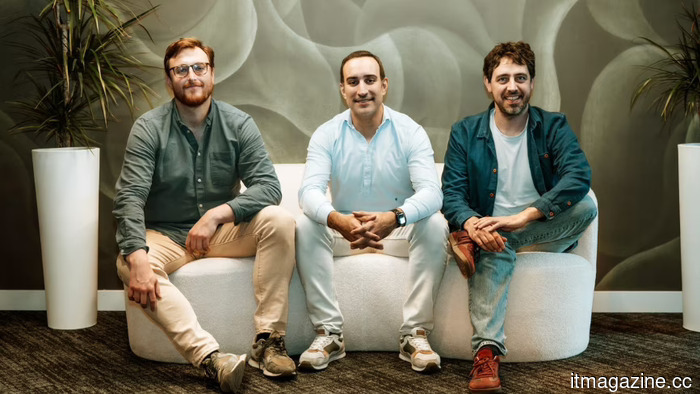 Exclusive: Optiak secures €4 million to develop an orchestration layer for enterprise AI.
Optiak, established by former members of DeepMind, Amazon, and Stripe, has secured €4 million in pre-seed funding, with Market One Capital leading the round. The company aims to bridge the gap between enterprise AI applications and the models that support them.
Exclusive: Optiak secures €4 million to develop an orchestration layer for enterprise AI.
Optiak, established by former members of DeepMind, Amazon, and Stripe, has secured €4 million in pre-seed funding, with Market One Capital leading the round. The company aims to bridge the gap between enterprise AI applications and the models that support them.
 India has banned Telegram until June 22 due to ongoing medical exam cheating schemes.
India has placed a temporary ban on Telegram until 22 June, referring to channels that are marketing unauthorized access to a NEET-UG re-examination. Additionally, there is a separate directive to turn off the message editing feature.
India has banned Telegram until June 22 due to ongoing medical exam cheating schemes.
India has placed a temporary ban on Telegram until 22 June, referring to channels that are marketing unauthorized access to a NEET-UG re-examination. Additionally, there is a separate directive to turn off the message editing feature.
 Sagabox: Shaping the Future of Digital Storytelling
How a mobile-optimized platform is meeting the worldwide demand for serialized romance and fantasy fiction. The way people engage with reading has transformed significantly in recent years. Nowadays, readers frequently reach for their phones for a brief escape, whether it’s through social media or gaming. Sagabox has adopted this mobile-focused method of storytelling and has established a space for […]
Sagabox: Shaping the Future of Digital Storytelling
How a mobile-optimized platform is meeting the worldwide demand for serialized romance and fantasy fiction. The way people engage with reading has transformed significantly in recent years. Nowadays, readers frequently reach for their phones for a brief escape, whether it’s through social media or gaming. Sagabox has adopted this mobile-focused method of storytelling and has established a space for […]
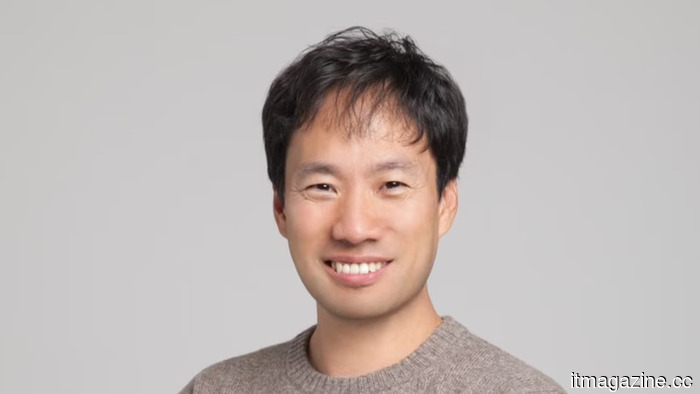 The head of Upstage claims that restrictions on anthropocentric AI support the argument for sovereign AI.
Upstage CEO Sung Kim states that the US order limiting Anthropic’s leading models demonstrates the necessity for South Korea to develop its own sovereign AI that cannot be isolated from.
The head of Upstage claims that restrictions on anthropocentric AI support the argument for sovereign AI.
Upstage CEO Sung Kim states that the US order limiting Anthropic’s leading models demonstrates the necessity for South Korea to develop its own sovereign AI that cannot be isolated from.
 Italy's antitrust authority initiates an investigation into Apple's cloud services.
Italy's AGCM has launched an investigation into Apple regarding its cloud services, which are being scrutinized in accordance with the EU's Digital Markets Act.
Italy's antitrust authority initiates an investigation into Apple's cloud services.
Italy's AGCM has launched an investigation into Apple regarding its cloud services, which are being scrutinized in accordance with the EU's Digital Markets Act.
Samsung unveils the Galaxy Book6 Edge, equipped with Snapdragon X2 Elite and enhanced Galaxy AI features.
Samsung has introduced the Galaxy Book6 Edge featuring Qualcomm's Snapdragon X2 Elite chip, Galaxy AI capabilities, and a slender design optimized for Copilot+ experiences.