

UC Davis brain implant enables ALS patient to communicate with 99% accuracy and maintain full-time employment, without requiring researchers' involvement.
TL;DR: A UC Davis BCI implant enabled an ALS patient to communicate independently for over 3,800 hours in two years with 99% accuracy, allowing him to work full-time.
An ALS patient has utilized a brain implant to speak on his own for more than 3,800 hours over two years, generating nearly 2 million words at an average rate of 56 words per minute. The study, released on Monday in Nature Medicine by researchers from the University of California, Davis, demonstrates the longest continuous use of a brain-computer interface (BCI) as a practical communication tool outside a lab setting. Casey Harrell, the 47-year-old participant, has effectively returned to full-time work as an environmental advocate thanks to this system.
The implant features four microelectrode arrays situated in Harrell’s left precentral gyrus—the area of the brain involved in speech coordination—recording signals from 256 cortical electrodes. Machine learning algorithms integrated into a software platform called BRAND, designed by UC Davis postdoctoral fellow Nicholas Card, convert this neural activity into phonemes in English, subsequently mapping them to words and sentences. The system vocalizes the decoded text in a synthesized version of Harrell’s voice prior to his ALS diagnosis.
In controlled tests using a 125,000-word vocabulary, the device achieved over 99% word accuracy. In real-world applications outside the lab, Harrell rated 92% of his sentences as accurate or mostly correct, successfully communicating more than 183,000 sentences during the study.
“The crucial aspect for me is that it facilitates everyday communication for someone who wants to speak but cannot," stated neurosurgeon David Brandman, who implanted the device in 2023 and co-led the study. “Despite his paralysis, he has returned to full-time work and can have meaningful conversations with his daughter, who has never heard his voice.”
The importance of the study also lies in its independence; unlike prior BCI systems that necessitated research staff to be present during use, Harrell’s system is managed by his home care team without the need for researcher involvement.
Based on the study's timeline, he used the system for over five hours each day.
The UC Davis team is part of BrainGate, a consortium of universities and the US Department of Veterans Affairs focused on developing brain-computer interfaces for speech restoration, computer control, and movement recovery. The hardware employed is not custom-built; it utilizes existing microelectrode arrays from Blackrock Neurotech. The real advancement is in the software, particularly the machine learning algorithms of the BRAND platform that decode speech attempts from neural signals in real time.
Brandman likened the current state of BCI technology to early pacemakers, which in the 1950s required cumbersome external wiring connected to large batteries or wall power. Today, pacemakers are usually implanted through outpatient procedures. “We are still in the early phases of this technology,” Brandman noted.
While Harrell remains connected to external computers, advancements in AI and hardware miniaturization from companies like Neuralink, Synchron, and Paradromics suggest a future with a much less cumbersome setup.
The competitive landscape in BCI is rapidly evolving. Neuralink has implanted devices in at least 21 patients under research protocols but has yet to gain commercial approval. Earlier this year, China authorized the first commercially available invasive BCI.
Alternative methods for restoring speech in ALS patients employ AI voice conversion rather than brain implants. However, these approaches depend on patients retaining some vocal capability.
What sets the UC Davis work apart is its proof that a BCI can transition from experimental to a reliable, daily communication tool. The 3,800 hours of brain recordings also represent the largest individual neural dataset with single-neuron resolution ever collected, according to co-principal investigator Sergey Stavisky, which will help enhance future decoding algorithms.
The system is still considered investigational, restricted by federal law to research purposes, and has only been tested on one patient. Whether these findings can be generalized to other ALS patients or individuals with different neurological conditions remains uncertain. Advancing the technology from clinical trial to a prescribed medical device will necessitate regulatory approval, hardware miniaturization, and cost reductions that could take several years.
“I desperately hope to not be unique or special, as that would mean I no longer have the disease, or that all individuals with my condition could receive this treatment as well,” Harrell expressed through his BCI system.
Other articles
 A brain implant developed by UC Davis enables an ALS patient to communicate with 99% accuracy and to maintain a full-time job, without the need for researchers.
Researchers at UC Davis published a study in Nature Medicine demonstrating that a BCI implant enabled an ALS patient to achieve 99% accurate speech over two years of independent daily use.
A brain implant developed by UC Davis enables an ALS patient to communicate with 99% accuracy and to maintain a full-time job, without the need for researchers.
Researchers at UC Davis published a study in Nature Medicine demonstrating that a BCI implant enabled an ALS patient to achieve 99% accurate speech over two years of independent daily use.
 Alipay launches Abao, an AI-driven feature, putting it ahead in China's super app AI competition.
Alipay, the top mobile payment and super app platform in China, has introduced its AI-driven assistant Abao and has commenced invitation-only testing for users.
Alipay launches Abao, an AI-driven feature, putting it ahead in China's super app AI competition.
Alipay, the top mobile payment and super app platform in China, has introduced its AI-driven assistant Abao and has commenced invitation-only testing for users.
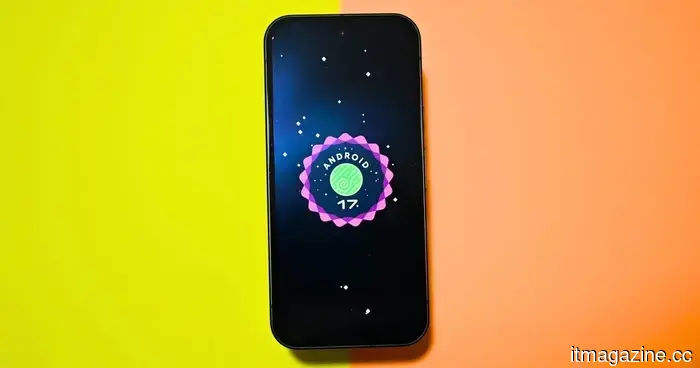 Google has launched Android 17 for Pixel devices.
Android 17 is rolling out to Pixel devices today, featuring Bubbles, creator tools, and security enhancements, while Gemini Intelligence will launch later this summer.
Google has launched Android 17 for Pixel devices.
Android 17 is rolling out to Pixel devices today, featuring Bubbles, creator tools, and security enhancements, while Gemini Intelligence will launch later this summer.
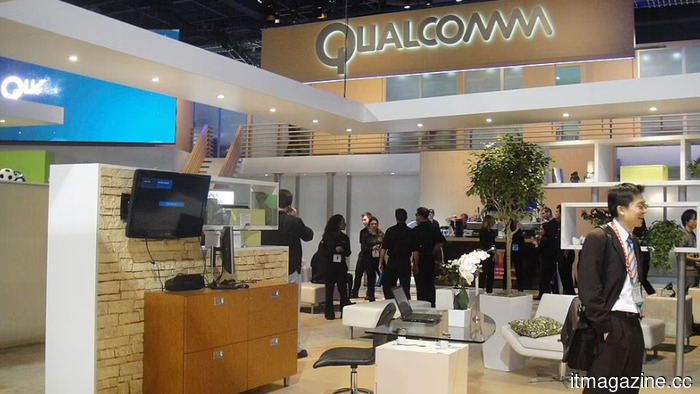 Qualcomm introduces Snapdragon Reality Elite along with a white-label toolkit for AI glasses, betting that the upcoming platform will not be a smartphone.
Snapdragon Reality Elite, START, intelligent eyewear, AI devices, XREAL, Project Aura, Play for Dream, Inspecs, hybrid reality, XR, NPU, Cristiano Amon, white label, AR1+
Qualcomm introduces Snapdragon Reality Elite along with a white-label toolkit for AI glasses, betting that the upcoming platform will not be a smartphone.
Snapdragon Reality Elite, START, intelligent eyewear, AI devices, XREAL, Project Aura, Play for Dream, Inspecs, hybrid reality, XR, NPU, Cristiano Amon, white label, AR1+
 A recently discovered Android trojan named Rokarolla is designed to target 217 banking applications and has the capability to steal your PIN, SMS verification codes, and funds from cryptocurrency wallets.
Zimperium's zLabs discovered Rokarolla, an Android banking trojan featuring 137 commands that exfiltrates PINs, intercepts SMS messages, takes over cryptocurrency transactions, and disables Play Protect.
A recently discovered Android trojan named Rokarolla is designed to target 217 banking applications and has the capability to steal your PIN, SMS verification codes, and funds from cryptocurrency wallets.
Zimperium's zLabs discovered Rokarolla, an Android banking trojan featuring 137 commands that exfiltrates PINs, intercepts SMS messages, takes over cryptocurrency transactions, and disables Play Protect.
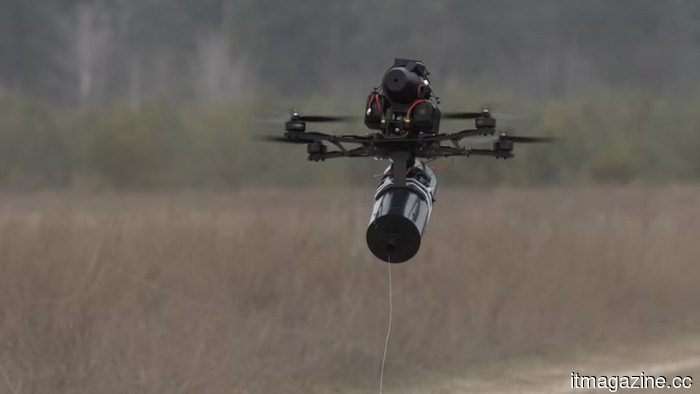 A Czech AI startup claims it can identify drones through sound for €150 per sensor and intends to prioritize wiring up power grids.
Neuron Soundware's Sound Shield employs AI-driven microphones priced between €100 and €150 each to identify drones through sound, presenting an affordable substitute for radar technology.
A Czech AI startup claims it can identify drones through sound for €150 per sensor and intends to prioritize wiring up power grids.
Neuron Soundware's Sound Shield employs AI-driven microphones priced between €100 and €150 each to identify drones through sound, presenting an affordable substitute for radar technology.
UC Davis brain implant enables ALS patient to communicate with 99% accuracy and maintain full-time employment, without requiring researchers' involvement.
Researchers at UC Davis published a study in Nature Medicine demonstrating that a BCI implant provided an ALS patient with 99% accurate speech after two years of independent daily use.