
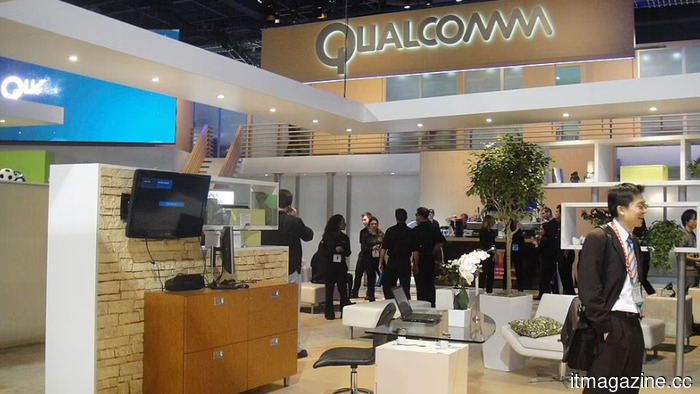
Qualcomm introduces Snapdragon Reality Elite along with a white-label toolkit for AI glasses, betting that the upcoming platform will not be a smartphone.
Qualcomm introduced the Snapdragon Reality Elite for mixed reality headsets and the START toolkit for smart glasses on Tuesday. The CEO mentioned that over 40 designs for AI wearables are in progress.
The two products are aimed at positioning Qualcomm as a key supplier for future computing devices that may replace smartphones. Snapdragon Reality Elite is a mixed-reality chip platform featuring enhanced AI processing capabilities for headsets and tethered eyewear. START is designed as a comprehensive toolkit for eyewear manufacturers, allowing them to create branded smart glasses without needing to develop the underlying technology.
CEO Cristiano Amon stated in a CNBC interview that Qualcomm is developing more than 40 AI wearable devices, which include jewelry, camera-equipped earbuds, pins, and watches. He emphasized the goal is to create devices that are always worn and capable of interacting with the environment.
Snapdragon Reality Elite offers up to 60% more GPU performance, 30% better CPU performance, and 160% enhanced NPU performance compared to the previous XR2+ Gen 2 platform. Its neural processing unit is capable of 48 TOPS, allowing it to run a 3-billion-parameter language model at 45 tokens per second. Additionally, the platform grants extended battery life and operates cooler than its predecessor.
The chip also supports 4.4K resolution per eye at 90 frames per second, a slight upgrade from the XR2+ Gen 2’s 4.3K resolution. Qualcomm claims the new chip enhances both head and hand tracking, as well as overall transparency performance, which can help reduce motion sickness and eye strain experienced with mixed reality headsets.
Reality Elite targets two types of devices: standalone video-see-through headsets that overlay digital visuals on a real-world camera feed, akin to the Meta Quest, and lightweight tethered optical-see-through glasses that integrate digital imagery into the wearer’s view.
Initial products utilizing this platform include XREAL’s Project Aura, shown during Google I/O, featuring a 70-degree field of view and binocular displays, along with a device from Play for Dream. Qualcomm has yet to reveal pricing or a timeline for the release of consumer products.
START, which stands for Scalable Turnkey AI-Ready Toolkit, combines a hardware module based on Qualcomm’s AR1+ chip with a software platform, companion apps for iOS and Android, an AI cloud solution, and three reference designs. The designs include a configuration similar to Meta’s Ray-Ban smart glasses, a monocular display variant, and a binocular display variant.
The initial partnerships for this program include eyewear manufacturer Inspecs and O’Neill, the latter owned by TitanFlex. Qualcomm has also invested $10 million in Inspecs by acquiring new shares. This move indicates Qualcomm’s commitment to not just licensing technology but also securing a financial interest in the supply chain for these devices.
The rationale is that traditional eyewear companies have the necessary design experience, distribution channels, and consumer trust to market smart glasses as fashion items, but lack expertise in chip design, AI, and sensor integration. START aims to fill that gap, similarly to how Qualcomm helped manufacturers develop smartphones on its Snapdragon platform in earlier years. The company plans to expand START beyond smart glasses to other categories in the future.
The market landscape is highly competitive and rapidly evolving. Meta has sold over seven million pairs of Ray-Ban smart glasses, holding about 82% of the market, with plans to increase annual production to 10 million units by 2026. Snap recently launched its $2,195 Specs AR glasses.
Apple is said to be testing various frame designs with an eye towards a potential 2027 launch. Google will release Android XR audio glasses this autumn in partnership with Samsung, Warby Parker, and Gentle Monster. Many of these devices already utilize Qualcomm silicon, but the company is now developing an integrated solution rather than relying on partners to create it independently.
Qualcomm is banking on the idea that no single company will monopolize the smart glasses market. If the smart glasses segment fragments like the smartphone market, with multiple manufacturers utilizing a shared platform, Qualcomm stands to benefit regardless of which brand prevails. This strategy mirrors its approach in the mobile phone industry, and Amon’s pipeline of 40 devices suggests the company anticipates a quicker transition than the market currently perceives.
However, these claims are still largely speculative. The 48 TOPS rating and performance figures are based on Qualcomm’s own assessments, and there haven’t been any independent evaluations published. The 40 AI wearable designs discussed by Amon are at varying stages of development and are not yet available as consumer products.
The potential growth of the smart glasses category to justify Qualcomm’s investments depends on consumer adoption, which has been mostly limited to Meta’s ecosystem and a few developer-targeted devices. Qualcomm is making a structural bet on the inevitability of the shift away from smartphones, but the timeline for this transition remains uncertain.
Other articles
 A newly discovered Android trojan named Rokarolla is designed to target 217 banking applications and has the ability to capture your PIN, SMS verification codes, and funds from cryptocurrency wallets.
Zimperium's zLabs discovered Rokarolla, an Android banking trojan featuring 137 commands that captures PINs, intercepts SMS messages, hijacks cryptocurrency payments, and disables Play Protect.
A newly discovered Android trojan named Rokarolla is designed to target 217 banking applications and has the ability to capture your PIN, SMS verification codes, and funds from cryptocurrency wallets.
Zimperium's zLabs discovered Rokarolla, an Android banking trojan featuring 137 commands that captures PINs, intercepts SMS messages, hijacks cryptocurrency payments, and disables Play Protect.
 Google has launched Android 17 for Pixel smartphones.
Android 17 is being released on Pixel devices today, featuring Bubbles, creator tools, and enhancements in security, while Gemini Intelligence will arrive later this summer.
Google has launched Android 17 for Pixel smartphones.
Android 17 is being released on Pixel devices today, featuring Bubbles, creator tools, and enhancements in security, while Gemini Intelligence will arrive later this summer.
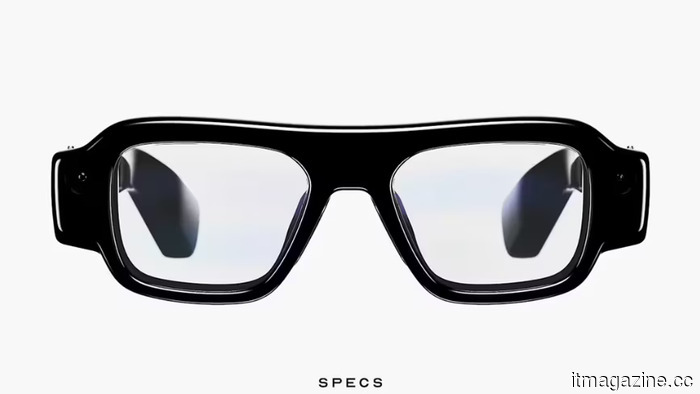 Snap has introduced its AR glasses priced at $2,195 as a consumer product, placing the company's bets on augmented reality.
Snap's Specs AR glasses are priced at $2,195 and will be shipped this fall. They feature a 4-hour battery life, a 51° field of view, and AI technology from OpenAI and Google. Preorders are available with a $200 deposit.
Snap has introduced its AR glasses priced at $2,195 as a consumer product, placing the company's bets on augmented reality.
Snap's Specs AR glasses are priced at $2,195 and will be shipped this fall. They feature a 4-hour battery life, a 51° field of view, and AI technology from OpenAI and Google. Preorders are available with a $200 deposit.
 According to reports, Apple plans to include AirPods with an integrated camera in their 2027 roadmap.
Apple's long-speculated AirPods with cameras might debut in 2027, enabling Siri to comprehend a user's environment and respond to inquiries about their surroundings.
According to reports, Apple plans to include AirPods with an integrated camera in their 2027 roadmap.
Apple's long-speculated AirPods with cameras might debut in 2027, enabling Siri to comprehend a user's environment and respond to inquiries about their surroundings.
 Google has launched Android 17, featuring Gemini Intelligence, a foldable gaming mode, and enhanced privacy controls.
Android 17 begins its rollout to Pixel phones today, featuring Bubbles multitasking, gaming for foldable devices, Gemini Intelligence, and updated security defaults.
Google has launched Android 17, featuring Gemini Intelligence, a foldable gaming mode, and enhanced privacy controls.
Android 17 begins its rollout to Pixel phones today, featuring Bubbles multitasking, gaming for foldable devices, Gemini Intelligence, and updated security defaults.
 Android 17 is set to significantly enhance the gaming experience on foldable devices.
Android 17 is committing further to mobile gaming by introducing a layout designed for foldable devices, customizable controller settings, and performance enhancements aimed at minimizing stutter.
Android 17 is set to significantly enhance the gaming experience on foldable devices.
Android 17 is committing further to mobile gaming by introducing a layout designed for foldable devices, customizable controller settings, and performance enhancements aimed at minimizing stutter.
Qualcomm introduces Snapdragon Reality Elite along with a white-label toolkit for AI glasses, betting that the upcoming platform will not be a smartphone.
Snapdragon Reality Elite, START, intelligent eyewear, AI devices, XREAL, Project Aura, Play for Dream, Inspecs, hybrid reality, XR, NPU, Cristiano Amon, white label, AR1+