

A brain implant developed by UC Davis enables an ALS patient to communicate with 99% accuracy and to maintain a full-time job, without the need for researchers.
TL;DRA: A brain-computer interface (BCI) implant at UC Davis has allowed an ALS patient to independently communicate for over 3,800 hours during two years, achieving 99% accuracy and enabling him to work full time. An ALS patient has utilized a brain implant to communicate independently for more than 3,800 hours in the last two years, generating nearly 2 million words at an average speed of 56 words per minute. The study, published in Nature Medicine by researchers at the University of California, Davis, marks the longest extended demonstration of a BCI serving as a practical communication tool outside a lab setting. Casey Harrell, the 47-year-old participant, has used this system to return to full-time work as an environmental advocate.
The implant comprises four microelectrode arrays positioned in Harrell's left precentral gyrus, a brain area involved in speech coordination, capturing activity from 256 cortical electrodes. Machine learning algorithms included in a software platform named BRAND, created by UC Davis postdoctoral fellow Nicholas Card, convert that neural activity into English phonemes, subsequently mapping the phonemes to words and sentences. The system vocalizes the decoded text in a synthesized version of Harrell’s voice before his ALS diagnosis.
In controlled tests with a vocabulary of 125,000 words, the system achieved over 99% word accuracy. In regular use outside the lab, Harrell deemed 92% of the sentences as accurate or mostly correct, communicating over 183,000 sentences during the study period.
David Brandman, a neurosurgeon who implanted the device in 2023 and co-led the study, told The Register, "The crucial aspect is that it facilitates everyday communication for a person who wants to converse but cannot." Despite his paralysis, he has resumed full-time work and engages in meaningful conversations with his daughter, who has never heard his voice.
The study's importance is not only in its accuracy but also in promoting independence. Previous BCI systems mandated the presence of researchers whenever the device was in use or required the patient to visit a lab. Harrell's system is managed by his home care team without the need for researcher assistance.
From the study's duration, he averaged more than five hours of daily usage. The UC Davis team is part of BrainGate, a consortium of universities and the U.S. Department of Veterans Affairs working on BCIs for speech restoration, computer control, and movement recovery. The hardware used is not custom-designed and utilizes existing microelectrode arrays manufactured by Blackrock Neurotech. The innovation lies in the software, particularly the machine learning algorithms within the BRAND platform that decode attempted speech from neural signals in real-time.
Brandman likened the current state of BCI technology to the early days of pacemakers, which in the 1950s relied on external wiring connected to large batteries or wall power. Today, pacemakers are implanted during outpatient procedures. "We are still in the early phases of this type of technology," Brandman stated.
Harrell is still connected to external computers, but advances from the UC Davis team’s AI combined with hardware miniaturization efforts by companies like Neuralink, Synchron, and Paradromics suggest a future where the system setup is significantly less cumbersome.
The competitive environment in BCI is rapidly evolving. Neuralink has implanted devices in at least 21 patients under research protocols but does not yet have commercial approval. Earlier this year, China granted approval for its first commercially available invasive BCI.
Alternative methods for restoring speech in ALS patients utilize AI voice conversion instead of brain implants, but these require the patient to have some vocal capacity.
What sets the UC Davis research apart is its demonstration that a BCI can transition from laboratory experimentation to a sustainable, practical everyday tool. The 3,800 hours of brain recording also represent the largest individual neural dataset with single-neuron resolution ever gathered, according to co-principal investigator Sergey Stavisky, which will guide future enhancements to the decoding algorithms.
The system remains an investigational device, restricted by federal law to research use, and has only been tested on one patient. It is currently unknown whether the findings can be generalized to other ALS patients or individuals with different neurological conditions. Transitioning the technology from clinical trials to a prescribed medical device will necessitate regulatory approval, hardware miniaturization, and cost reductions that might take several years.
Harrell expressed through his BCI system, “I yearn to not be unique or special, because that would mean either I no longer have the disease or that everyone like me with the disease can have this treatment prescribed to them.”
Other articles
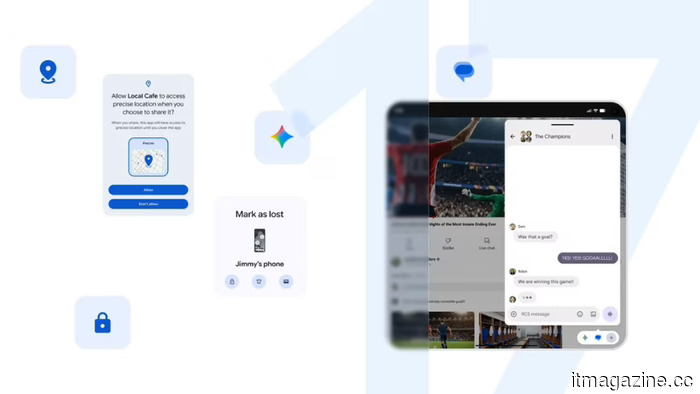 Google launches Android 17 featuring Gemini Intelligence, a foldable gaming mode, and enhanced privacy controls.
Android 17 begins its rollout to Pixel phones today, featuring Bubbles multitasking, gaming on foldables, Gemini Intelligence, and updated security defaults.
Google launches Android 17 featuring Gemini Intelligence, a foldable gaming mode, and enhanced privacy controls.
Android 17 begins its rollout to Pixel phones today, featuring Bubbles multitasking, gaming on foldables, Gemini Intelligence, and updated security defaults.
 Rivian terminates hundreds of employees just a week after commencing R2 deliveries as it aims for its first profitability.
Rivian reduced its workforce in service and customer teams by under 2%, just a week after the start of R2 deliveries. In 2025, the company incurred a loss of $3.6 billion while delivering 42,247 vehicles.
Rivian terminates hundreds of employees just a week after commencing R2 deliveries as it aims for its first profitability.
Rivian reduced its workforce in service and customer teams by under 2%, just a week after the start of R2 deliveries. In 2025, the company incurred a loss of $3.6 billion while delivering 42,247 vehicles.
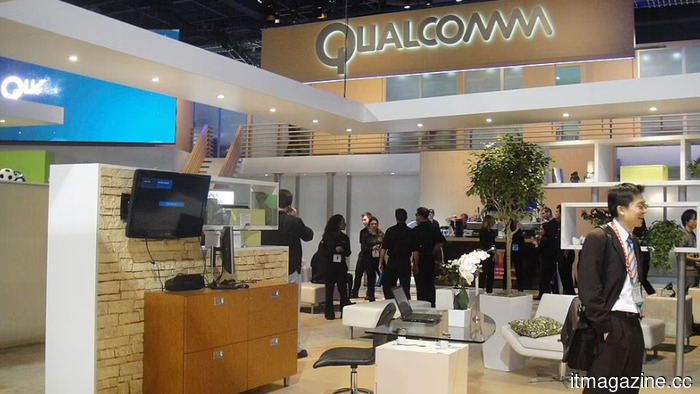 Qualcomm introduces Snapdragon Reality Elite along with a white-label toolkit for AI glasses, betting that the upcoming platform will not be a smartphone.
Snapdragon Reality Elite, START, intelligent eyewear, AI devices, XREAL, Project Aura, Play for Dream, Inspecs, hybrid reality, XR, NPU, Cristiano Amon, white label, AR1+
Qualcomm introduces Snapdragon Reality Elite along with a white-label toolkit for AI glasses, betting that the upcoming platform will not be a smartphone.
Snapdragon Reality Elite, START, intelligent eyewear, AI devices, XREAL, Project Aura, Play for Dream, Inspecs, hybrid reality, XR, NPU, Cristiano Amon, white label, AR1+
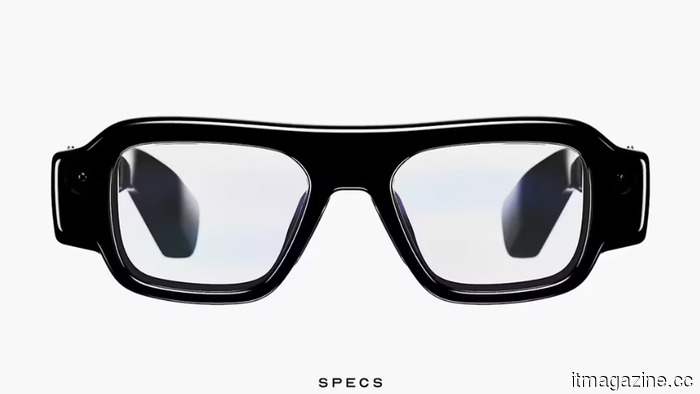 Snap introduces its AR glasses priced at $2,195 as a consumer item, putting the company's future on augmented reality.
Snap's Specs AR glasses are priced at $2,195 and will be shipped this fall. They feature a 4-hour battery life, a 51° field of view, and AI technology from OpenAI and Google. Preorders are available with a $200 deposit.
Snap introduces its AR glasses priced at $2,195 as a consumer item, putting the company's future on augmented reality.
Snap's Specs AR glasses are priced at $2,195 and will be shipped this fall. They feature a 4-hour battery life, a 51° field of view, and AI technology from OpenAI and Google. Preorders are available with a $200 deposit.
 Android 17 is set to enhance the gaming experience on foldable devices significantly.
Android 17 is reinforcing its commitment to mobile gaming by introducing a new layout that is compatible with foldable devices, options for customizable controller configurations, and enhancements designed to minimize stuttering.
Android 17 is set to enhance the gaming experience on foldable devices significantly.
Android 17 is reinforcing its commitment to mobile gaming by introducing a new layout that is compatible with foldable devices, options for customizable controller configurations, and enhancements designed to minimize stuttering.
 A brain implant developed at UC Davis enables an ALS patient to communicate with 99% accuracy and maintain full-time employment, all without the need for researchers.
Researchers at UC Davis published a study in Nature Medicine indicating that a BCI implant enabled an ALS patient to achieve 99% accurate speech over two years of independent daily usage.
A brain implant developed at UC Davis enables an ALS patient to communicate with 99% accuracy and maintain full-time employment, all without the need for researchers.
Researchers at UC Davis published a study in Nature Medicine indicating that a BCI implant enabled an ALS patient to achieve 99% accurate speech over two years of independent daily usage.
A brain implant developed by UC Davis enables an ALS patient to communicate with 99% accuracy and to maintain a full-time job, without the need for researchers.
Researchers at UC Davis published a study in Nature Medicine demonstrating that a BCI implant enabled an ALS patient to achieve 99% accurate speech over two years of independent daily use.