

Executives from major tech companies enlist in the Army Reserve amid rising concerns over conflict.
TL;DR: Three additional tech executives, including Cloudflare’s CTO, have been appointed as lieutenant colonels in the US Army’s Detachment 201. This initiative now includes seven leaders from Silicon Valley providing guidance to the Pentagon on AI and modernization, raising concerns about potential conflicts of interest since their companies hold substantial defense contracts.
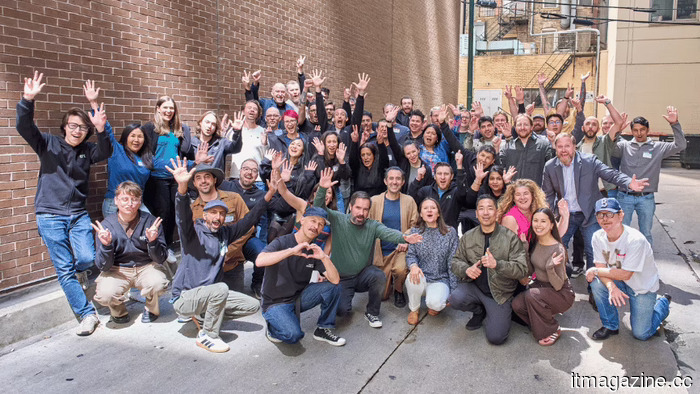
The US Army has recently commissioned three more tech executives into Detachment 201, a reserve unit that grants Silicon Valley leaders the lieutenant colonel rank and a direct advisory role to high-ranking military officials. Dane Knecht, Cloudflare's chief technology officer, Sam Pullara, CTO and managing director of Sutter Hill Ventures, and Serkan Piantino, a former executive at Reddit and co-founder of Facebook AI Research, were sworn in on June 10 at Joint Base Myer-Henderson Hall in Virginia.
These new members join an initial group commissioned in June 2025, which included Palantir CTO Shyam Sankar, Meta CTO Andrew Bosworth, former OpenAI chief product officer Kevin Weil, and Bob McGrew, an advisor at Thinking Machines Lab.
What the program entails
Detachment 201, officially named the Executive Innovation Corps, aims to “bridge the gap between private-sector innovation and military modernization,” according to the Army. Members function as part-time reservists, committing to at least 112 hours of service each year, with the option to work remotely. Their main responsibility is to advise senior military leaders on AI, cybersecurity, machine learning, and data-driven capabilities. According to the Army, they have engaged in “collaborative advisory and brainstorming sessions” regarding munitions supply chain analysis, investments in the industrial base, and strategies for autonomous systems and counter-drone technologies.
Ethical considerations
Since its launch, the program has faced criticism. All seven members began their Army service as lieutenant colonels, a rank that typically requires career officers over ten years to achieve, while their companies hold active or prospective defense contracts. Palantir’s Sankar, for instance, whose firm secured an $823 million contract from the Army for intelligence analytics and was recently designated as the Pentagon's primary AI platform, reportedly possesses stock and options valued at over $200 million. Meta’s Bosworth joined during a time when his company was initiating military use of its Llama AI models.
The Army states that members are subjected to a “multi-layered ethics framework,” which includes mandatory financial disclosures, annual ethics training, and legal reviews of each assignment. “Recusal from any matter impacting the financial interests of Detachment 201 members is compulsory,” said spokesperson Lt. Col. Orlando Howard to Business Insider.
However, critics remain unconvinced. The Democracy Defenders Fund has urged the DoD Inspector General to assess whether these appointments breach federal conflict-of-interest regulations. A report from Military.com in June 2025 noted that members of the initial cohort would not need to recuse themselves from all Department of Defense dealings.
The broader context
Detachment 201 is part of a larger initiative to strengthen the relationship between the Pentagon and major technology companies. The military has awarded hundreds of millions in AI contracts to firms like Scale AI, Microsoft, Amazon, and Google, and has authorized at least eight companies to implement AI on classified networks.
This trend is not confined to the US; in Europe, defense tech firm Helsing has teamed up with Mistral to develop military-grade AI, while startups like Rilian are securing seed funding specifically for sovereign defense applications.
The issue raised by Detachment 201 is not whether the military requires Silicon Valley's expertise—it undoubtedly does. The concern is whether a program that appoints defense contractors to advisory roles over the same budgets their companies compete for can uphold the separation promised by its ethics framework. With Palantir now serving as the Pentagon's primary AI system while its CTO wears the same uniform as the officials who awarded the contract, the responsibility to prove the integrity of this arrangement lies with the Army, not its critics.
Other articles
 Mobileye plans to introduce its own robotaxi service in the United States in 2027.
Mobileye is set to introduce its own robotaxi service in a U.S. city by 2027, putting the self-driving technology provider in competition with the automakers that purchase Mobileye Drive from it.
Mobileye plans to introduce its own robotaxi service in the United States in 2027.
Mobileye is set to introduce its own robotaxi service in a U.S. city by 2027, putting the self-driving technology provider in competition with the automakers that purchase Mobileye Drive from it.
 Microsoft's latest Surface Laptop features a trackpad that vibrates similar to a game controller.
The latest Surface Laptop and Surface Pro come equipped with haptic trackpads that provide vibrations when you snap windows or align items. They are ARM-only devices, with prices starting at $1,500, and there is no Intel version available.
Microsoft's latest Surface Laptop features a trackpad that vibrates similar to a game controller.
The latest Surface Laptop and Surface Pro come equipped with haptic trackpads that provide vibrations when you snap windows or align items. They are ARM-only devices, with prices starting at $1,500, and there is no Intel version available.
 Mobileye is set to introduce its own robotaxi service in the US by 2027.
Mobileye is set to introduce its own robotaxi service in a US city in 2027, putting the self-driving technology provider in competition with the automakers to whom it supplies Mobileye Drive.
Mobileye is set to introduce its own robotaxi service in the US by 2027.
Mobileye is set to introduce its own robotaxi service in a US city in 2027, putting the self-driving technology provider in competition with the automakers to whom it supplies Mobileye Drive.
 The AI safety paradox of Anthropic: a timeline spanning six months.
Spanning a 19,000-word cautionary essay to a White House shutdown, Anthropic's last six months highlight the challenging circumstances faced by the AI industry's self-designated leader in safety.
The AI safety paradox of Anthropic: a timeline spanning six months.
Spanning a 19,000-word cautionary essay to a White House shutdown, Anthropic's last six months highlight the challenging circumstances faced by the AI industry's self-designated leader in safety.
 Ent Security secures $100 million to reinstate prevention in cybersecurity.
Ent Security, established by the RiskIQ team that developed Microsoft Security Copilot, has secured $100 million in seed funding to reintroduce AI-driven prevention at the endpoint.
Ent Security secures $100 million to reinstate prevention in cybersecurity.
Ent Security, established by the RiskIQ team that developed Microsoft Security Copilot, has secured $100 million in seed funding to reintroduce AI-driven prevention at the endpoint.
 The Arch Linux AUR has been affected by malware aimed at obtaining developer credentials.
Attackers compromised more than 1,500 packages in the Arch Linux AUR to introduce a credential-stealing malware. While the official repositories remain secure, the trust model has been affected.
The Arch Linux AUR has been affected by malware aimed at obtaining developer credentials.
Attackers compromised more than 1,500 packages in the Arch Linux AUR to introduce a credential-stealing malware. While the official repositories remain secure, the trust model has been affected.
Executives from major tech companies enlist in the Army Reserve amid rising concerns over conflict.
Cloudflare, Sutter Hill, and former Reddit executives are now part of the Pentagon's Detachment 201, joining the CTOs from Palantir and Meta. Ethics monitors are seeking clarification.