
India's Razorpay submits application for IPO via the confidential route.
Razorpay, the payment firm based in Bengaluru, has submitted draft documents for an initial public offering via India's confidential route, as per sources familiar with the situation. This filing brings one of the larger fintech companies in the country closer to the public markets while keeping its financial details out of the public eye for now.
The confidential mechanism, recently allowed by Indian regulators, enables a company to present a draft red herring prospectus to the Securities and Exchange Board of India and the stock exchanges while concealing business, operational, and financial specifics for a later time. This approach provides added time and discretion, which is why many prominent firms have opted for it.
Sources close to the plans estimate the IPO to be valued between Rs 5,000 crore to Rs 6,000 crore, amounting to approximately $700 million at the upper range, and suggest that a listing might price the company at Rs 50,000 crore to Rs 60,000 crore. These estimates are from sources rather than Razorpay itself, and the company has yet to confirm them. The size and terms may shift before the public offering.
Razorpay was established in 2014 by Harshil Mathur and Shashank Kumar and expanded from payment acceptance into areas such as banking, payouts, payroll, and lending. The company achieved a valuation of $7.5 billion in a funding round in December 2021, which represented a high point during the previous round of significant private fintech valuations.
The IPO has a deeper context in the company's corporate framework. In 2025, Razorpay executed a reverse flip, relocating its parent company's domicile from the United States back to India, a move that incurred an estimated $150 million tax liability and is nearly essential for an Indian listing. This confidential filing is a subsequent step in that process.
Razorpay will be among a series of Indian tech firms that have shifted their domicile before going public, a trend driven by the strength of India’s retail investor base and regulators’ preference for domestic incorporation. The reverse flip represents the expensive aspect of this choice due to the crystallization of a tax charge; however, it's a necessary cost to gain access to the exchange where these firms increasingly wish to be listed.
The 2021 valuation looms over the upcoming listing. At $7.5 billion, it was established at the peak of the last funding cycle, while recent valuation reports suggest a figure in the range of approximately $6–7 billion at the upper limit, presenting a more conservative estimate than the previous private valuation. This disparity between a late-cycle private valuation and the potential public price is a critical factor that many fintech firms are evaluating as they prepare for market entry.
Future steps will involve the procedural aspects of the process. Following the confidential route, a comprehensive prospectus along with its financial details will be disclosed at a later stage before the offering begins. Until that occurs, the principal figures will continue to be attributed to individuals familiar with the plans rather than directly from the company itself.
Other articles
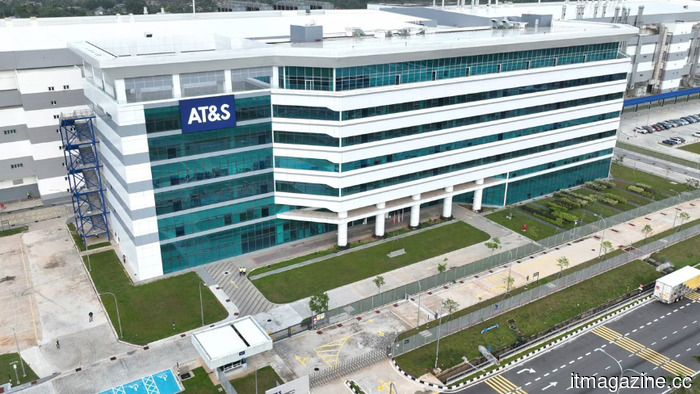 AT&S invests as much as €2 billion in Malaysia and China to capitalize on the AI chip surge.
Austria's AT&S plans to invest up to €2 billion to increase IC-substrate capacity in Malaysia and China for artificial intelligence and high-performance computing, supported by an agreement with AMD.
Schneider Electric and Foxconn collaborate on AI data center infrastructure.
Schneider Electric and Foxconn have revealed a partnership to jointly create reference designs for future AI data centres, with manufacturing expected to begin later this year.
AT&S invests as much as €2 billion in Malaysia and China to capitalize on the AI chip surge.
Austria's AT&S plans to invest up to €2 billion to increase IC-substrate capacity in Malaysia and China for artificial intelligence and high-performance computing, supported by an agreement with AMD.
Schneider Electric and Foxconn collaborate on AI data center infrastructure.
Schneider Electric and Foxconn have revealed a partnership to jointly create reference designs for future AI data centres, with manufacturing expected to begin later this year.
 Sundar Pichai from Google opted for a positive outlook on AI at Stanford. Nonetheless, graduates still walked out.
Sundar Pichai from Google delivered the commencement address for Stanford's Class of 2026, avoiding the topic of AI while students left in protest over the Project Nimbus contract.
Sundar Pichai from Google opted for a positive outlook on AI at Stanford. Nonetheless, graduates still walked out.
Sundar Pichai from Google delivered the commencement address for Stanford's Class of 2026, avoiding the topic of AI while students left in protest over the Project Nimbus contract.
 Tesla provided European regulators with inaccurate self-driving safety information.
A review by Reuters revealed that Tesla provided self-reported FSD safety data to regulators in Sweden and the Netherlands, which researchers claim are misleading.
Fox purchases Roku in a $22 billion streaming investment.
Fox purchases Roku for $160 per share, which values the company at around $22 billion, in order to combine its live sports and news offerings with the platform that reaches 100 million streaming households.
India's Razorpay has submitted a confidential filing for its IPO.
Razorpay has submitted confidential IPO documents to SEBI, with estimates suggesting the issue could be between Rs 5,000 and 6,000 crore, one year after shifting its domicile to India.
Tesla provided European regulators with inaccurate self-driving safety information.
A review by Reuters revealed that Tesla provided self-reported FSD safety data to regulators in Sweden and the Netherlands, which researchers claim are misleading.
Fox purchases Roku in a $22 billion streaming investment.
Fox purchases Roku for $160 per share, which values the company at around $22 billion, in order to combine its live sports and news offerings with the platform that reaches 100 million streaming households.
India's Razorpay has submitted a confidential filing for its IPO.
Razorpay has submitted confidential IPO documents to SEBI, with estimates suggesting the issue could be between Rs 5,000 and 6,000 crore, one year after shifting its domicile to India.
India's Razorpay submits application for IPO via the confidential route.
Razorpay has submitted confidential IPO documentation to SEBI, with estimates valuing the offering between Rs 5,000 and 6,000 crore, following its move to India last year.