

FreshBooks offer: 70% discount for freelancers | TNW
The statistics are quite revealing. By 2026, the typical freelancer spends between eight and ten hours weekly on administrative tasks unrelated to the services for which they are compensated.
This article features affiliate links. If you purchase through these links, we may receive a commission at no additional cost to you.
Following up on overdue invoices. Balancing expenses across multiple credit cards. Recording billable hours in a spreadsheet that is sometimes on the desktop or laptop, and sometimes not accessible, forcing freelancers to recall details from memory for invoicing. Setting aside funds for quarterly taxes, yet still filing them regardless, as those saved funds unexpectedly contributed to a Thanksgiving flight home.
Economists are beginning to refer to this as the freelancer admin tax: the unpaid hours that independent workers contribute to their paid work. Ten hours a week equates to half a workday. Over the year, this totals approximately six full weeks of unpaid labor, which is longer than most US employees take off for vacation. This burden is heaviest on those least able to bear it, since freelancers lack access to HR or finance departments.
The expense is very real. A recent evaluation of the costs associated with manual invoicing indicated that each invoice processed through email and spreadsheet methods could range from $15 to $40 when factoring in the time spent on follow-ups and reconciliation. For freelancers managing just a few clients each month, these costs can accumulate rapidly.
Fortunately, the good news—and the reason this narrative is being shared in 2026 rather than in 2018—is that tools designed to reclaim that lost time have significantly improved. Cloud accounting addressed storage and access issues a decade ago. Now, AI is tackling the challenges of categorization, reconciliation, and follow-up in addition.
Photographs of receipts are automatically converted into expense records. Bank feeds reconcile automatically.
Recently, Xero integrated Claude into its system, allowing users to ask questions about their finances in plain language, and leading software providers are following suit. Invoices can be scheduled to send automatically, and reminders for late payments are dispatched without any manual input. The tools that once required ten hours per week now only require one or two.
FreshBooks is the leading platform in this category by all objective measures, and it is currently running its largest seasonal promotion of the year.
Why FreshBooks specifically?
Since 2003, FreshBooks has served as the go-to accounting platform for freelancers. The reason lies in its design focus: other major accounting software was created for accountants and later modified for business owners, while FreshBooks was designed with the freelancer in mind from the start. The interface is tailored for users who may have never dealt with a chart of accounts and prefer not to. It simplifies the complexities of double-entry accounting behind a user-friendly invoicing and time-tracking framework.
The data supports this positioning. FreshBooks consistently garners top ratings on major business software review platforms, with its invoicing feature rated highest in the small business category by independent reviewers.
Serving clients in over 160 countries, FreshBooks has received multiple Stevie awards for its customer support, including the kind of human-accessible phone and chat support that has become rare among software companies.
Essential features for freelancers in 2026 include:
- Professional-looking invoices right from the start, with recurring billing set on a schedule
- Automated late fees and payment reminders
- Native time tracking directly linked to invoices
- Expense capture with automatic bank and card imports, along with offline-capable mobile apps
- Online payment options via cards, ACH, Apple Pay, Google Pay, Affirm, and Afterpay
- Multi-currency invoicing, mileage tracking, and tax-season reports
- A branded client portal for clients to view, pay, and communicate all within a single experience
This represents the freelancer admin tax as processed through a streamlined workflow.
The offer: 70% discount for four months, no credit card required to try
The FreshBooks promotional structure is transparent and worthwhile to understand before proceeding.
There’s a 30-day free trial available for every plan, with no credit card needed. You can explore the full suite of features with real clients before committing financially.
After the trial ends, customers can enjoy a 70% discount for four months on Lite, Plus, and Premium plans. The Lite plan decreases from $23 to $6.90 monthly, Plus from $43 to $12.90, and Premium from $70 to $21.
Additionally, there’s an extra 10% off the four-month promotion if annual billing is chosen, making Lite annual $188.78 (saving $87.22 compared to MSRP), Plus $352.94 (saving $163.06), and Premium $574.56 (saving $265.44).
Every paid plan comes with a 30-day money-back guarantee. If you cancel within the first 30 days of your initial paid charge, FreshBooks provides a full refund. Combined with the trial, this effectively creates a 60
Other articles
 The US directive to prevent foreign access to Anthropic's leading models signifies a shift in policy.
Washington instructed Anthropic to exclude foreign nationals from accessing Fable 5 and Mythos 5. The company responded by disabling these products globally and described the action as excessive.
The US directive to prevent foreign access to Anthropic's leading models signifies a shift in policy.
Washington instructed Anthropic to exclude foreign nationals from accessing Fable 5 and Mythos 5. The company responded by disabling these products globally and described the action as excessive.
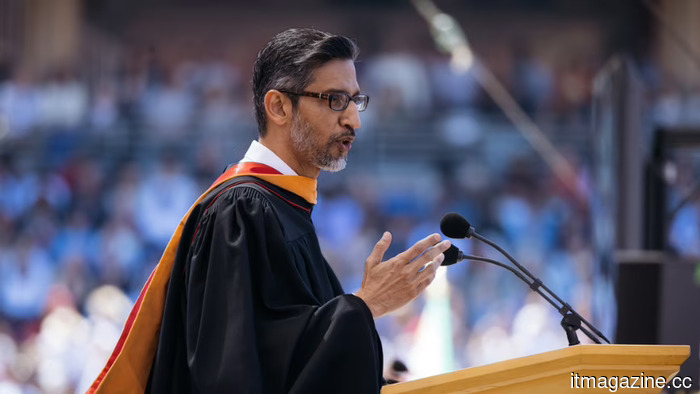 Sundar Pichai from Google opted for a positive outlook on AI at Stanford. Nonetheless, graduates still walked out.
Sundar Pichai from Google delivered the commencement address for Stanford's Class of 2026, avoiding the topic of AI while students left in protest over the Project Nimbus contract.
Sundar Pichai from Google opted for a positive outlook on AI at Stanford. Nonetheless, graduates still walked out.
Sundar Pichai from Google delivered the commencement address for Stanford's Class of 2026, avoiding the topic of AI while students left in protest over the Project Nimbus contract.
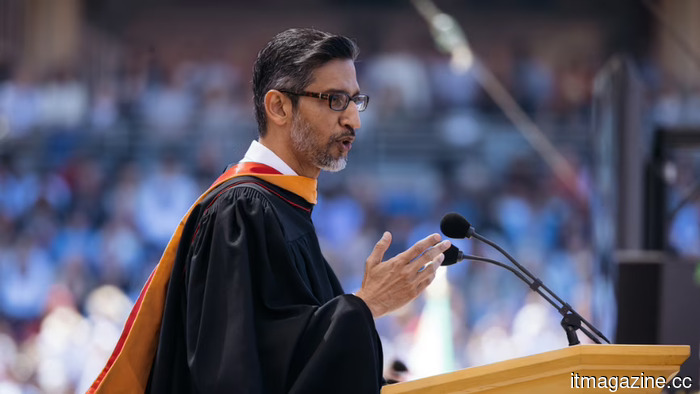 Sundar Pichai from Google opted for a positive outlook on AI at Stanford, yet graduates still chose to walk out.
Sundar Pichai from Google delivered the commencement address for Stanford's class of 2026, avoiding discussions on AI while students exited due to issues related to the Project Nimbus contract.
Sundar Pichai from Google opted for a positive outlook on AI at Stanford, yet graduates still chose to walk out.
Sundar Pichai from Google delivered the commencement address for Stanford's class of 2026, avoiding discussions on AI while students exited due to issues related to the Project Nimbus contract.
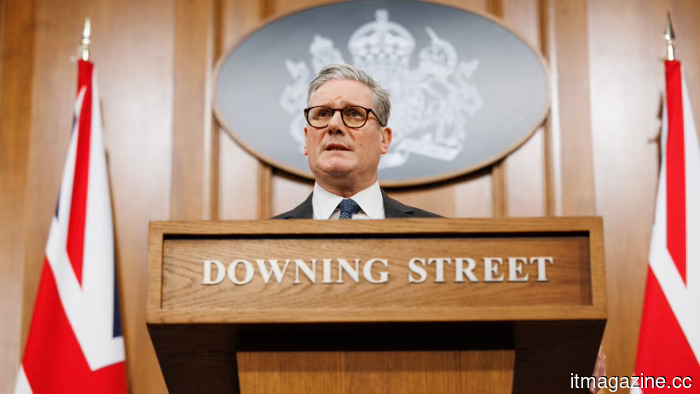 UK regulations for social media users under 16 will extend to gaming and AI chatbots.
Keir Starmer is anticipated to outline limitations on social media usage for those under 16, with restrictions extending to AI chatbots and interactions with strangers in gaming applications.
UK regulations for social media users under 16 will extend to gaming and AI chatbots.
Keir Starmer is anticipated to outline limitations on social media usage for those under 16, with restrictions extending to AI chatbots and interactions with strangers in gaming applications.
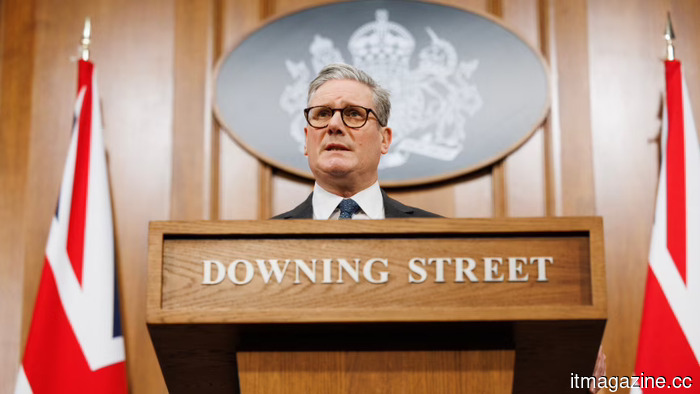 Social media regulations for under-16s in the UK will extend to gaming and AI chatbots.
Keir Starmer is anticipated to outline limitations on social media for those under 16, with restrictions extending to AI chatbots and interactions with strangers in gaming applications.
Social media regulations for under-16s in the UK will extend to gaming and AI chatbots.
Keir Starmer is anticipated to outline limitations on social media for those under 16, with restrictions extending to AI chatbots and interactions with strangers in gaming applications.
 The US directive to restrict foreign access to Anthropic's leading models signifies a change in direction.
Washington mandated that Anthropic prevent foreign nationals from accessing Fable 5 and Mythos 5. In response, the company disabled access worldwide and described the action as excessive.
The US directive to restrict foreign access to Anthropic's leading models signifies a change in direction.
Washington mandated that Anthropic prevent foreign nationals from accessing Fable 5 and Mythos 5. In response, the company disabled access worldwide and described the action as excessive.
FreshBooks offer: 70% discount for freelancers | TNW
FreshBooks is offering a 70% discount for four months on Lite, Plus, or Premium plans. This promotion helps freelancers reclaim their evenings. A 30-day free trial is available.