
Fox purchases Roku in a $22 billion streaming gamble.
Fox has acquired Roku in a $22 billion agreement that firmly places the cable-dependent broadcaster into the streaming realm. According to the companies' announcement on Monday, Fox Corporation will pay $160 per share, consisting of cash and stock, for the creator of streaming sticks and smart TVs present in over 100 million homes globally.
The structure of the deal includes $96 in cash and 0.9693 shares of Fox Class A stock for each Roku share, resulting in an enterprise value of approximately $22 billion. Following this transaction, Fox shareholders will control around 73 percent of the combined entity, while Roku shareholders will hold about 27 percent. Fox has secured $12 billion in bridge financing from Morgan Stanley, anticipates closing the deal in the first half of 2027, and will include Roku founder Anthony Wood on its board.
Reasons for Fox's Acquisition of Roku
Fox is acquiring a key entry point. Roku’s platform is accessible to over half of all broadband households in the U.S., serving as the initial stop for many users before selecting an application. This positioning, rather than the hardware itself, is the valuable aspect of the acquisition.
The financial aspect reflects a similar narrative. Roku generates the majority of its revenue from advertising and distribution, rather than from its devices: its platform segment accounted for $4.1 billion last year, representing 87.5 percent of total revenue. By owning this platform, Fox gains access to a connected-TV advertising business, first-party viewer data, and a centralized interface to promote its own services. When combined with Fox’s live sports and news offerings, including the NFL, MLB, the FIFA World Cup, and Fox News, along with its free streaming service Tubi and The Roku Channel, the two entities would boast one of the largest streaming operations in the U.S.
A Strategic Move for the Future of Television
The rationale mirrors the broader industry trend: content and distribution are increasingly merging. Over the past decade, Fox has focused on live news and sports, and added Tubi to its portfolio in 2020. Acquiring Roku represents a significant advancement, transitioning Fox from merely a channel owner to the underlying platform for those channels.
This acquisition is also occurring amid a wave of media consolidation. It follows the recent approval by the U.S. Justice Department of Paramount’s $110 billion acquisition of Warner Bros. Discovery, as various companies strive to unify their streaming services for greater scale. Lachlan Murdoch, Fox’s executive chairman, referred to this transaction as “a defining moment,” while Wood described it as “an extraordinary opportunity.”
What to Keep an Eye On
While this agreement has been reached, it is not yet finalized. It requires approval from both shareholder groups as well as U.S. and certain international regulators, although Wood and the trusts holding most of Roku’s voting shares have already pledged their support. On paper, the merged company would rank as the third-largest player in the U.S. by viewing share, a level of scale that invites regulatory examination, even though Fox’s content and Roku’s platform are more complementary than in competition.
Fox has committed to maintaining Roku as “open” and “partner-friendly,” which is crucial since Roku’s value lies in being a neutral marketplace for competitors like Netflix and Disney. The challenge will be determining whether a Fox-owned Roku can retain its neutrality once Fox's content occupies space on the home screen. Fox anticipates roughly $400 million in cost savings and asserts that the deal will become self-sustaining through free cash flow by the second year. The more complex question is whether it can dominate this entry point without alienating other content providers who use it.
Other articles
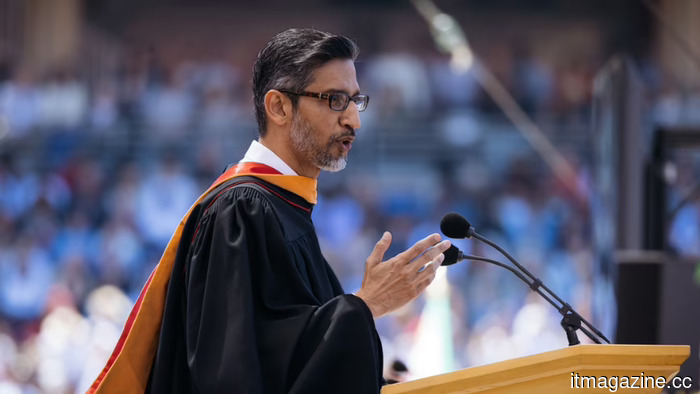 Sundar Pichai of Google opted for a message of optimism regarding AI at Stanford, yet many graduates walked out regardless.
Sundar Pichai from Google delivered the commencement speech for Stanford's Class of 2026, avoiding the topic of AI while students exited in protest of the Project Nimbus contract.
Sundar Pichai of Google opted for a message of optimism regarding AI at Stanford, yet many graduates walked out regardless.
Sundar Pichai from Google delivered the commencement speech for Stanford's Class of 2026, avoiding the topic of AI while students exited in protest of the Project Nimbus contract.
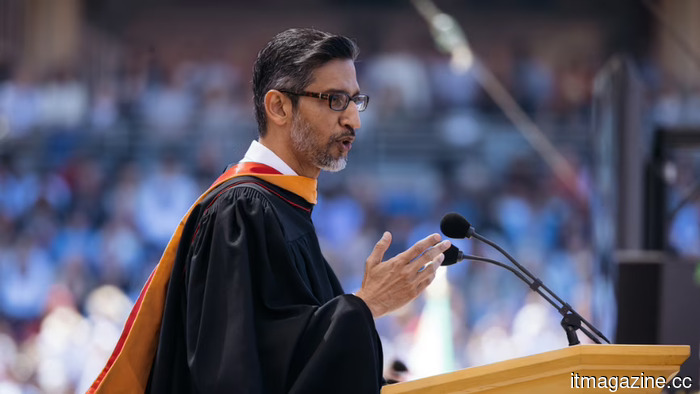 Sundar Pichai from Google opted for a positive outlook on AI at Stanford, yet graduates still chose to walk out.
Sundar Pichai from Google delivered the commencement address for Stanford's class of 2026, avoiding discussions on AI while students exited due to issues related to the Project Nimbus contract.
Sundar Pichai from Google opted for a positive outlook on AI at Stanford, yet graduates still chose to walk out.
Sundar Pichai from Google delivered the commencement address for Stanford's class of 2026, avoiding discussions on AI while students exited due to issues related to the Project Nimbus contract.
 The US directive to prevent foreign access to Anthropic's leading models signifies a shift in policy.
Washington instructed Anthropic to exclude foreign nationals from accessing Fable 5 and Mythos 5. The company responded by disabling these products globally and described the action as excessive.
Fox purchases Roku in a $22 billion streaming investment.
Fox purchases Roku for $160 per share, which values the company at around $22 billion, in order to combine its live sports and news offerings with the platform that reaches 100 million streaming households.
The US directive to prevent foreign access to Anthropic's leading models signifies a shift in policy.
Washington instructed Anthropic to exclude foreign nationals from accessing Fable 5 and Mythos 5. The company responded by disabling these products globally and described the action as excessive.
Fox purchases Roku in a $22 billion streaming investment.
Fox purchases Roku for $160 per share, which values the company at around $22 billion, in order to combine its live sports and news offerings with the platform that reaches 100 million streaming households.
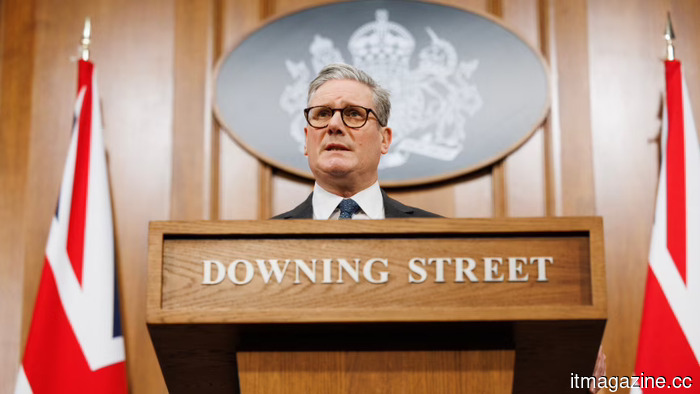 Social media regulations for under-16s in the UK will extend to gaming and AI chatbots.
Keir Starmer is anticipated to outline limitations on social media for those under 16, with restrictions extending to AI chatbots and interactions with strangers in gaming applications.
India's Razorpay has submitted a confidential filing for its IPO.
Razorpay has submitted confidential IPO documents to SEBI, with estimates suggesting the issue could be between Rs 5,000 and 6,000 crore, one year after shifting its domicile to India.
Social media regulations for under-16s in the UK will extend to gaming and AI chatbots.
Keir Starmer is anticipated to outline limitations on social media for those under 16, with restrictions extending to AI chatbots and interactions with strangers in gaming applications.
India's Razorpay has submitted a confidential filing for its IPO.
Razorpay has submitted confidential IPO documents to SEBI, with estimates suggesting the issue could be between Rs 5,000 and 6,000 crore, one year after shifting its domicile to India.
Fox purchases Roku in a $22 billion streaming gamble.
Fox purchases Roku for $160 per share, giving it a valuation of approximately $22 billion, in order to combine its live sports and news offerings with the platform that reaches 100 million streaming households.