
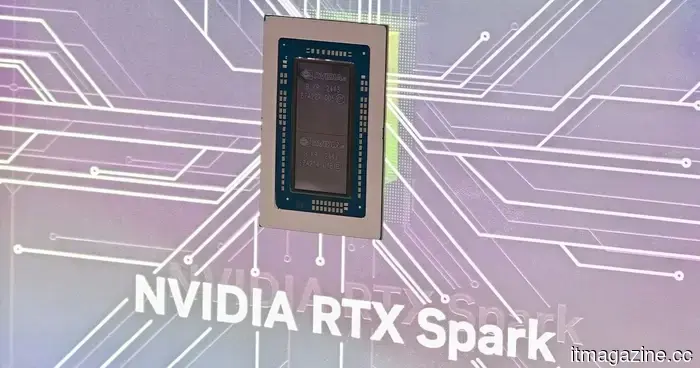
I witnessed the Nvidia RTX Spark in operation, and it seems that Windows PCs might finally be experiencing their own Apple Silicon Moment.
Windows laptops have been striving to replicate the success Apple achieved with its M-series chips years ago. In 2020, Apple introduced a new range of MacBooks powered by silicon that appeared to be leaps ahead in terms of efficiency, integration, and even performance. This was a system designed specifically around the hardware rather than just operating atop it.
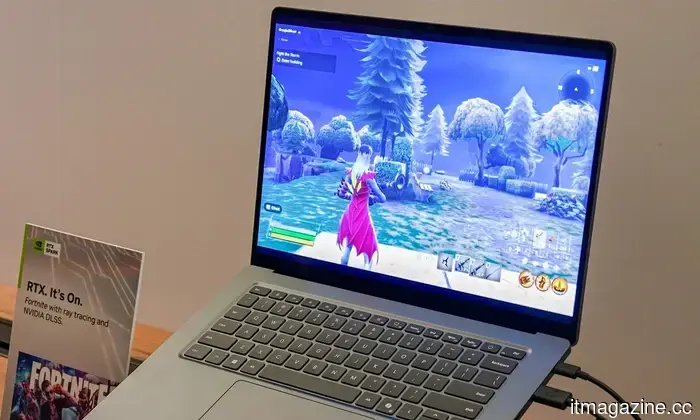
At Computex 2026, Nvidia RTX Spark emerged as one of the most compelling responses from Windows in years. I received a tour of Nvidia’s exhibit at the event, and Spark stood out as one of the most intriguing innovations. During the demonstration, the company showcased the RTX Spark handling video edits, local AI agents, gaming, and other demanding workflows. It quickly became clear that this wasn’t merely another laptop chip announcement.
Beyond just an AI PC label
The term "AI PC" has been used so frequently that it has begun to sound like an obsolete internet meme. Every so-called “next-gen” laptop appears to include an NPU to promote AI, which often seems more like a marketing gimmick than something practically beneficial for users. In contrast, Spark is taking a different approach. It focuses on workloads that are already integral to Nvidia’s ecosystem. Technologies such as CUDA, RTX, DLSS, G-Sync, local AI processing, and GPU-driven creative tasks are now at the forefront.
The specifications of the RTX Spark are impressive. It boasts a 20-core Grace CPU paired with a Blackwell RTX GPU, 6,144 CUDA cores, up to 128GB of unified memory, and up to 1 petaflop of AI performance. This combination results in a single processor capable of handling nearly any task thrown its way.
An easy comparison to Apple Silicon
When Apple transitioned the Mac to its own silicon, the performance and efficiency gains were significant, but regaining control was an even more crucial factor. Now, Apple could closely integrate the CPU, GPU, memory architecture, operating system, and software stack. The ecosystem became tighter than ever, removing reliance on Intel.
Vikhyaat Vivek / Digital Trends
With the launch of the M1, the MacBook initiated a new PC competition. They were not only more powerful but also highly efficient, an area where Windows laptops have had difficulty keeping pace. While they certainly offered ample raw performance and superior flexibility compared to the Mac, they often appeared disjointed. One company manufactures the chipset, another constructs the laptop, while yet another manages the software experience. Even with high-quality chips, an unoptimized platform can diminish the laptop experience.
Moreover, performance can fluctuate significantly based on thermal designs, drivers, battery configurations, and, importantly, vendor tuning. Nvidia lacks the ability to oversee Windows like Apple does with its macOS; however, it has collaborated closely with Microsoft to create a true Windows flagship device, the Microsoft Surface Laptop Ultra. This collaboration allows Nvidia to develop a high-performance platform built on a more consistent foundation.
Nvidia’s RTX Spark Demonstration
Vikhyaat Vivek / Digital Trends
From the outset, Nvidia emphasized the extensive work put into this "superchip." The showcase demonstrated Spark handling virtually every conceivable use case. The chip was showcased managing creative workflows, local AI agents, powering demanding AAA games, and much more. The video editing demonstration was particularly illustrative, displaying Spark’s functionality with generative AI tools within a video workflow, enabling editors to make modifications using natural language instead of navigating timelines and menus.
The goal was to streamline some of the repetitive tasks that historically slow down the editing process. For those who spend considerable time cutting footage, organizing clips, and making minor adjustments, this was one of the few AI demonstrations at Computex that appeared genuinely beneficial. Much of the effectiveness stems from the hardware. Spark’s integration of Blackwell graphics, extensive unified memory, and local AI processing allows these tools to operate directly on the machine rather than relying heavily on cloud services.
Vikhyaat Vivek / Digital Trends
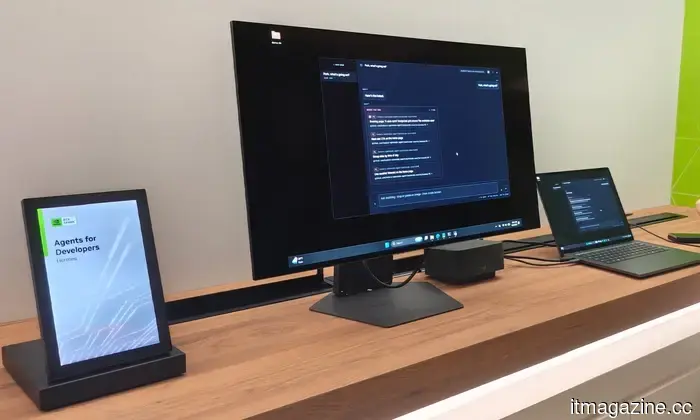
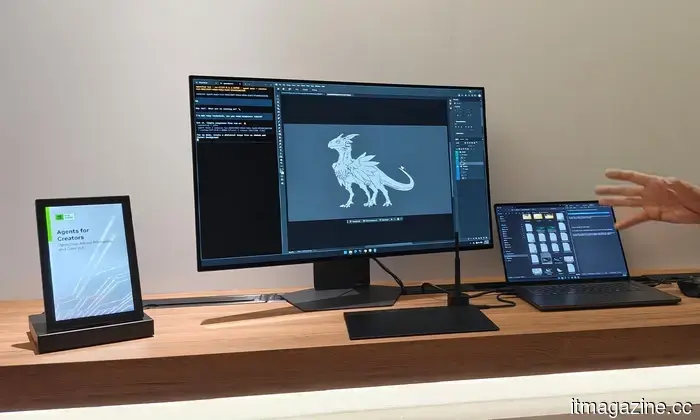
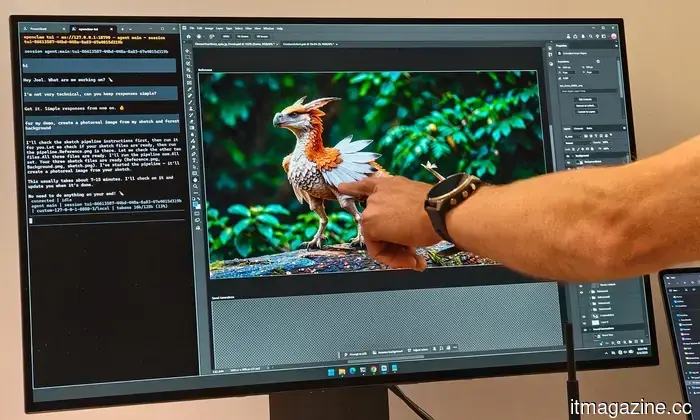
Local AI agents were another significant focus. Nvidia showcased systems capable of executing complex AI models directly on the device, performing tasks that would typically require external servers. If AI is to become an essential tool for daily workflows, localized performance may prove just as crucial as raw benchmark figures.
Gaming, unsurprisingly, was another key area. Nvidia maintains an ecosystem advantage that Apple has struggled to replicate, featuring RTX technologies, DLSS, Reflex, and extensive support within the PC gaming sector. Both native titles and emulated games displayed smooth performance. While actual performance metrics remain unknown, the initial reveal was promising.
Windows still needs to align with Nvidia
Spark shows promise, but this does not guarantee a pivotal moment for Apple Silicon merely because the hardware appears robust. Apple’s significant edge stemmed from possessing the complete stack. For Spark to truly succeed, laptop manufacturers must create exceptional machines around it. Microsoft needs to ensure Windows is prepared for local AI workflows. Developers must engage with the platform in ways that extend beyond merely benchmark-focused

Other articles
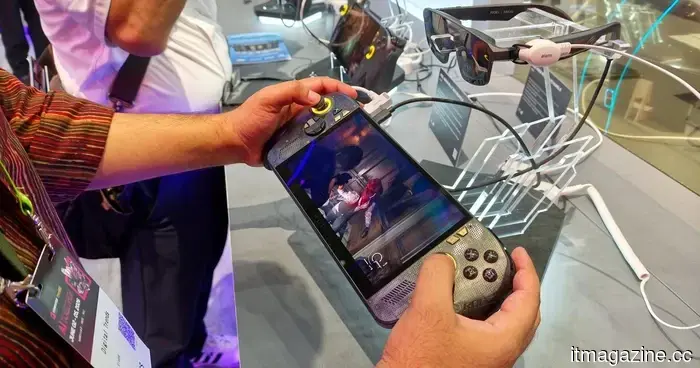 I tested the ASUS ROG Xbox Ally X20, and the 171-inch display makes a significant difference.
The OLED enhancement of the ROG Xbox Ally X20 is impressive, but after experiencing the included AR glasses, I found myself constantly considering the larger display.
I tested the ASUS ROG Xbox Ally X20, and the 171-inch display makes a significant difference.
The OLED enhancement of the ROG Xbox Ally X20 is impressive, but after experiencing the included AR glasses, I found myself constantly considering the larger display.
 Apple Intelligence 2.0: The Implications of the Latest AI Features
Apple Intelligence 2.0 represents Apple's effort to integrate AI seamlessly into the iPhone, featuring Siri as the prominent aspect, Gemini as the subtle enhancement, and the underlying app infrastructure supporting it.
Anthropic's model shutdown has given India's sovereign AI initiative its most compelling argument to date.
India is discussing the development of its own AI following the US's pressure on Anthropic to discontinue Fable 5, with suggestions for a $5 billion annual fund and appeals to adopt open-source models.
Apple Intelligence 2.0: The Implications of the Latest AI Features
Apple Intelligence 2.0 represents Apple's effort to integrate AI seamlessly into the iPhone, featuring Siri as the prominent aspect, Gemini as the subtle enhancement, and the underlying app infrastructure supporting it.
Anthropic's model shutdown has given India's sovereign AI initiative its most compelling argument to date.
India is discussing the development of its own AI following the US's pressure on Anthropic to discontinue Fable 5, with suggestions for a $5 billion annual fund and appeals to adopt open-source models.
 Designed to aid rather than substitute: exploring Intercall’s real-time AI for professional interpreters.
Intercall displays live transcription and translation on the screen in both languages while interpreters are at work, capturing names, numbers, and terms that may be missed under cognitive pressure. It is utilized by over 3,000 interpreters across 18 countries.
Designed to aid rather than substitute: exploring Intercall’s real-time AI for professional interpreters.
Intercall displays live transcription and translation on the screen in both languages while interpreters are at work, capturing names, numbers, and terms that may be missed under cognitive pressure. It is utilized by over 3,000 interpreters across 18 countries.
 Canada's Carney likens the closure of Anthropic to the 2008 financial crisis, cautioning about the implications of AI.
PM Carney stated that the shutdown of Fable 5 and Mythos 5 illustrates the risks associated with over-dependence on a limited number of AI models, likening it to the systemic threats seen in 2008.
The shutdown of Anthropic's model has provided a significant boost to India's sovereign AI initiative, giving it a compelling argument.
India is discussing the development of its own AI following the US's demand that Anthropic discontinue Fable 5. There are suggestions for establishing an annual fund of $5 billion and a push to adopt open-source models.
Canada's Carney likens the closure of Anthropic to the 2008 financial crisis, cautioning about the implications of AI.
PM Carney stated that the shutdown of Fable 5 and Mythos 5 illustrates the risks associated with over-dependence on a limited number of AI models, likening it to the systemic threats seen in 2008.
The shutdown of Anthropic's model has provided a significant boost to India's sovereign AI initiative, giving it a compelling argument.
India is discussing the development of its own AI following the US's demand that Anthropic discontinue Fable 5. There are suggestions for establishing an annual fund of $5 billion and a push to adopt open-source models.
I witnessed the Nvidia RTX Spark in operation, and it seems that Windows PCs might finally be experiencing their own Apple Silicon Moment.
After witnessing the Nvidia RTX Spark perform video editing, local AI tasks, and gaming at Computex 2026, it appears to be one of the most significant efforts to reimagine high-end Windows PCs.