
Anthropic's model shutdown has given India's sovereign AI initiative its most compelling argument to date.
TL;DR: India is discussing sovereign AI following the US government's order for Anthropic to terminate Fable 5, with suggestions for a $5 billion fund and encouragement to utilize open-source models. When the US directed Anthropic to cease operations of Fable 5 and Mythos 5 on June 12, it aimed to prevent foreign nationals from accessing the country’s top AI technologies. This move served as a warning to India, Anthropic's second-largest market, highlighting the risks of AI infrastructure dependent on foreign politics.
The suspension abruptly deprived Indian developers and businesses of access to Claude’s advanced models. India’s revenue run rate from Claude had increased significantly since October 2025, and Tata Consultancy Services had announced a partnership just a day prior, on June 11, to train 50,000 employees on Claude and establish a dedicated Anthropic unit—a deal now suspended indefinitely.
This incident has heightened an already existing discussion surrounding AI sovereignty into a strategic evaluation, with previously ambitious proposals now perceived as urgent.
Mohandas Pai, former CFO of Infosys and a leading tech investor in India, has advocated for an annual sovereign AI fund of ₹50,000 crore (around $5 billion) and a ₹2 lakh crore (approximately $21 billion) credit guarantee for cloud infrastructure, hardware acquisition, and semiconductor development, far exceeding the government's current commitments.
The IndiaAI Mission, approved in March 2024 with a budget of ₹10,372 crore (approximately $1.25 billion), has deployed about 38,000 GPUs thus far. Pai’s suggestions would increase annual spending substantially and provide a larger financial safety net.
Sridhar Vembu, founder of Zoho, argues that India should focus on smaller, open-source models, including those from China, rather than relying on American systems that can be abruptly restricted. He noted, “Technology is the ultimate weapon,” emphasizing that India must forge its own path as globalization shifts.
The recent suspension highlights the vulnerabilities identified by Vembu. Reports suggest that Amazon’s CEO triggered the US government’s intervention by indicating that Fable 5 had been utilized by researchers for potential cyberattacks. Anthropic acknowledged the action as excessive, yet compliance was swift and worldwide.
Policy expert Prasanto Roy succinctly stated, “American AI models are tied to American geopolitics,” underscoring that for Indian companies reliant on Claude, access to cutting-edge AI is a privilege that can be revoked instantly, disregarding the disruption it causes in commercial relationships.
The Indian startup landscape is already evolving. Sarvam, an AI startup based in Bengaluru, launched two open-source models at the India AI Impact Summit in 2026, while Krutrim, founded by Ola’s Bhavish Aggarwal, shifted from foundational model development to providing AI infrastructure services, reporting ₹3 billion in revenue for the fiscal year 2026.
Though neither company currently matches the capabilities of Fable 5 or Mythos 5, the argument for sovereign AI does not hinge on immediate performance parity but on ensuring resilience against unforeseen political decisions from Washington that could affect model accessibility.
Aakrit Vaish, founder of the AI startup Activate, asserted that the suspension “completely changes things” for the debate on sovereign AI, while Vijay Rayapati, CEO of Atomicwork, expressed concerns about the implications for Indian firms with international teams reliant on American AI. If the US can restrict model access to enforce export controls, countries depending on American AI could face disruption with a single policy change.
However, not all experts believe India must develop its own cutting-edge models. Hemant Mohapatra, a partner at Lightspeed Venture Partners, suggested that access to talent and computing resources is more crucial than financial investment for creating competitive AI. India has the engineering talent, yet significant investments are needed to address the computing gap or to maintain access to foreign cloud infrastructure.
Anthropic’s recent establishment of an office in Bengaluru was part of its expansion in India, and the TCS partnership was intended as a key component of its enterprise strategy in the region. The future of these plans depends on how swiftly Anthropic can restore access and whether Indian enterprises continue to trust a provider whose most advanced models can disappear overnight.
The general trend is clear. The US has tightened its grip on AI technology over the past four years, from chip export limitations to model-level interventions. Each escalation drives more nations to realize that reliance on American AI infrastructure entails political risks. With its population of 1.4 billion and a rapidly growing tech sector, India is now questioning the sustainability of that risk and the costs associated with eliminating it.
The layoffs at Opendoor in June 2026, which closed the company's India office and impacted around 250 employees, added another layer to this issue. CEO Kaz Nejatian cited the emergence of AI-native teams as a reason, indicating that some US firms are leveraging AI to lessen their dependence on Indian engineers while India
Other articles
 Digital Trends Computex 2026 Publisher Awards
Computex 2026 was filled with AI PCs, massive monitors, gaming handhelds, and innovative desktop concepts, but several products stood out amidst the clutter.
Digital Trends Computex 2026 Publisher Awards
Computex 2026 was filled with AI PCs, massive monitors, gaming handhelds, and innovative desktop concepts, but several products stood out amidst the clutter.
 Wear OS 7 appears set to arrive on Pixel Watches shortly.
According to updated Verizon support pages observed prior to the rollout, the Pixel Watch 2, Pixel Watch 3, and Pixel Watch 4 are expected to receive Wear OS 7 soon.
Wear OS 7 appears set to arrive on Pixel Watches shortly.
According to updated Verizon support pages observed prior to the rollout, the Pixel Watch 2, Pixel Watch 3, and Pixel Watch 4 are expected to receive Wear OS 7 soon.
 De Beers invests in blockchain technology as the demand for lab-grown diamonds increases.
GIA has purchased a 30% stake in Tracr, the blockchain provenance platform from De Beers, amidst a decline in natural diamond prices and an increase in market share for lab-grown diamonds.
De Beers invests in blockchain technology as the demand for lab-grown diamonds increases.
GIA has purchased a 30% stake in Tracr, the blockchain provenance platform from De Beers, amidst a decline in natural diamond prices and an increase in market share for lab-grown diamonds.
 Crypto exchanges claimed they would provide access to SpaceX IPO via tokenized stock, but nothing materialized.
Binance, Bybit, and Bitget scrapped their tokenized SpaceX IPO initiatives following xStocks' inability to provide shares, resulting in more than $1 billion worth of unfulfilled orders.
Crypto exchanges claimed they would provide access to SpaceX IPO via tokenized stock, but nothing materialized.
Binance, Bybit, and Bitget scrapped their tokenized SpaceX IPO initiatives following xStocks' inability to provide shares, resulting in more than $1 billion worth of unfulfilled orders.
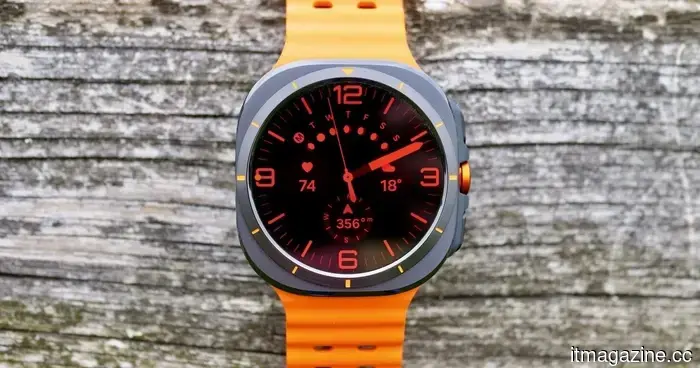 Samsung's upcoming Ultra watch could be receiving a significant battery upgrade.
Samsung's upcoming Galaxy Watch Ultra might deliver the battery enhancement that many users have been anticipating. The Galaxy Watch Ultra 2 is projected to be released in the next few weeks, and a recent report indicates that it could feature a significantly bigger battery compared to the models from 2024 and 2025. As per SamMobile, the Galaxy Watch Ultra […]
Samsung's upcoming Ultra watch could be receiving a significant battery upgrade.
Samsung's upcoming Galaxy Watch Ultra might deliver the battery enhancement that many users have been anticipating. The Galaxy Watch Ultra 2 is projected to be released in the next few weeks, and a recent report indicates that it could feature a significantly bigger battery compared to the models from 2024 and 2025. As per SamMobile, the Galaxy Watch Ultra […]
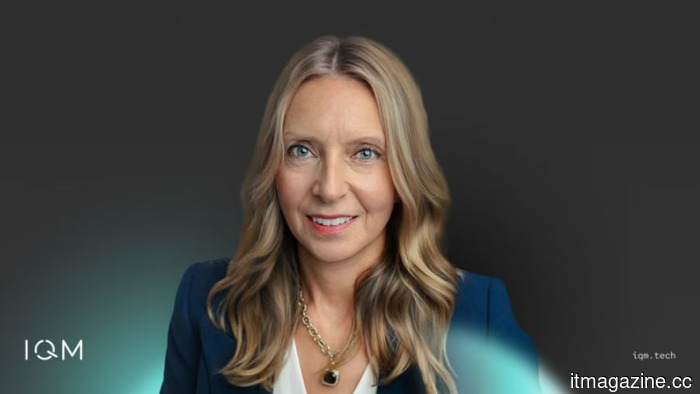 IQM appoints a Vanguard director to its board as Europe’s inaugural quantum Nasdaq listing approaches.
IQM has named Barbara Venneman to its board as it gets ready to be the first European quantum computing firm to be listed on Nasdaq with a valuation of $1.8 billion.
IQM appoints a Vanguard director to its board as Europe’s inaugural quantum Nasdaq listing approaches.
IQM has named Barbara Venneman to its board as it gets ready to be the first European quantum computing firm to be listed on Nasdaq with a valuation of $1.8 billion.
Anthropic's model shutdown has given India's sovereign AI initiative its most compelling argument to date.
India is discussing the development of its own AI following the US's pressure on Anthropic to discontinue Fable 5, with suggestions for a $5 billion annual fund and appeals to adopt open-source models.