
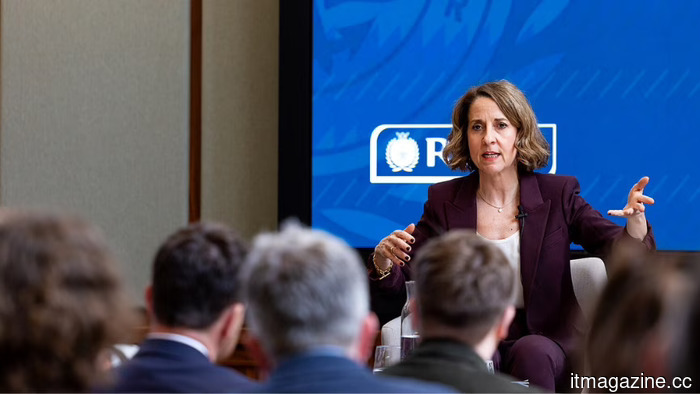
The technology leader in the UK is advocating for pension funds to invest in AI startups.
Britain’s Technology Secretary, Liz Kendall, has committed to enhancing efforts to direct institutional investment towards UK tech companies. In an interview with Bloomberg TV during London Tech Week, Kendall stated that the government intends to pursue legal reforms regarding pension fund management. “You will likely see progress on that very soon,” she remarked. This interview took place prior to Defence Secretary John Healey’s unexpected resignation due to a funding disagreement with the Treasury.
The pension initiative builds upon a voluntary agreement made last year, in which 17 major UK pension providers committed to investing at least 10% of their defined-contribution default funds in private markets by 2030, with a minimum of 5% allocated for domestic assets. This pledge is anticipated to release approximately £25 billion for UK businesses. Chancellor Rachel Reeves has not dismissed the possibility of mandating this allocation. In April, she received parliamentary approval to compel pension funds to invest a portion of their assets domestically, after the House of Lords reversed its opposition following government concessions.
Kendall positioned the strategy as part of a broader shift towards what she referred to as a “more active, more muscular government that takes bets on where we think Britain excels.” She emphasized the necessity for the country to become an “indispensable partner” in the global tech landscape to gain more control over AI.
This rhetoric was supported by spending announcements made earlier in the week. Kendall revealed a £1.1 billion AI hardware initiative, which includes £400 million for chip procurement and £150 million allocated for acquiring next-generation inference chips from UK companies this summer.
Nevertheless, despite these domestic aspirations, American firms have thus far been the primary beneficiaries of the UK’s adoption of AI. Anthropic secured a contract to develop an AI-driven assistant for GOV.UK, while Palantir Technologies obtained a £240.6 million analytics contract with the Ministry of Defence in January.
The reliance on foreign companies has sparked a political backlash, with British lawmakers recently calling for the termination of Palantir’s £330 million NHS contract due to data sovereignty issues. The government is currently assessing whether to exit the agreement when a break clause becomes available in 2027.
The commitments were announced during London Tech Week, which also saw AMD pledge up to £2 billion over five years and cloud provider Nebius promise around £1.7 billion for UK AI infrastructure. However, critics point out that much of this capacity still relies on American hardware.
This tension lies at the core of Britain’s AI strategy. Initiatives like the Cosine-led Lumen Sovereign project, aiming to create the country’s first homegrown frontier AI model, are still in the early phases. Meanwhile, Palantir is encountering increasing opposition throughout Europe, with Germany’s military recently excluding the company from a defence cloud procurement.
Kendall’s assertion regarding the government’s intent to pursue “legal reforms” concerning pension fund regulations is somewhat ambiguous, lacking a specific timeline or legislative framework. The 5% domestic investment commitment from pension providers remains voluntary, and compliance is not currently quantifiable. Although Reeves now possesses the authority to mandate domestic allocations, she has frequently stated that she does not anticipate exercising this power. The £1.1 billion hardware initiative encompasses various programmes over multiple years, rendering the headline figure less impactful than it may seem. Furthermore, while the government positions its chip procurement as a means of supporting UK firms, the nation’s leading chipmakers, Graphcore and Alphawave IP, have already been purchased by foreign entities.
Other articles
 Claude Fable 5 restrictions: targeted at China, affected AI researchers.
Anthropic created Claude Fable 5 restrictions to prevent access for China's AI laboratories. The strongest opposition originated from Western researchers, and the company has responded by reconsidering its stance.
Claude Fable 5 restrictions: targeted at China, affected AI researchers.
Anthropic created Claude Fable 5 restrictions to prevent access for China's AI laboratories. The strongest opposition originated from Western researchers, and the company has responded by reconsidering its stance.
 This jacket extracts drinking water directly from the atmosphere.
Engineers at UT Austin have created a jacket made from hydrogel fibers derived from biomass that extracts moisture from the air, producing up to 900 ml of potable water daily.
This jacket extracts drinking water directly from the atmosphere.
Engineers at UT Austin have created a jacket made from hydrogel fibers derived from biomass that extracts moisture from the air, producing up to 900 ml of potable water daily.
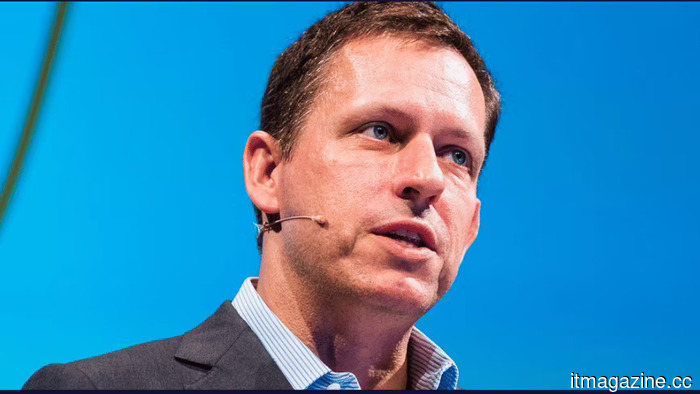 Founders Fund's investment in SpaceX has now surpassed a value of $50 billion.
Founders Fund has invested approximately $600 million in SpaceX over almost two decades. Based on the IPO valuation, the value of Founders Fund's stake in SpaceX exceeds $50 billion, at least on paper.
Founders Fund's investment in SpaceX has now surpassed a value of $50 billion.
Founders Fund has invested approximately $600 million in SpaceX over almost two decades. Based on the IPO valuation, the value of Founders Fund's stake in SpaceX exceeds $50 billion, at least on paper.
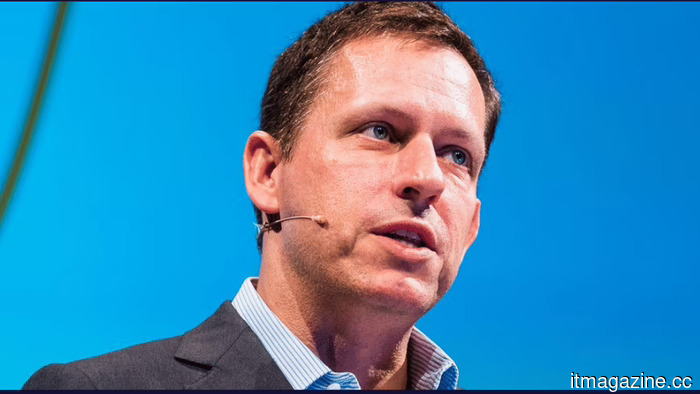 Founders Fund's investment in SpaceX is now valued at more than $50 billion.
Founders Fund has invested approximately $600 million in SpaceX over the course of nearly two decades. At the valuation associated with the IPO, the value of Founders Fund's stake in SpaceX is over $50 billion, theoretically.
Founders Fund's investment in SpaceX is now valued at more than $50 billion.
Founders Fund has invested approximately $600 million in SpaceX over the course of nearly two decades. At the valuation associated with the IPO, the value of Founders Fund's stake in SpaceX is over $50 billion, theoretically.
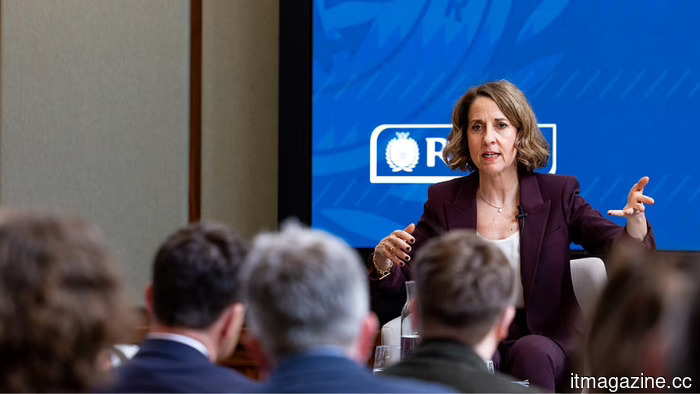 UK technology leader urges pension funds to support AI startups.
Liz Kendall promises legal changes to direct institutional capital towards British tech companies, yet American firms continue to hold a dominant position in AI contracts from the UK government.
UK technology leader urges pension funds to support AI startups.
Liz Kendall promises legal changes to direct institutional capital towards British tech companies, yet American firms continue to hold a dominant position in AI contracts from the UK government.
 The current Series E values the neobank at a level lower than its peak in 2021.
The ongoing Series E values the US neobank at $1.5 billion, which is a third less than its peak in 2021, despite a 70% increase in revenue for the third consecutive year. The aim is to go public.
The current Series E values the neobank at a level lower than its peak in 2021.
The ongoing Series E values the US neobank at $1.5 billion, which is a third less than its peak in 2021, despite a 70% increase in revenue for the third consecutive year. The aim is to go public.
The technology leader in the UK is advocating for pension funds to invest in AI startups.
Liz Kendall promises legal changes aimed at directing institutional capital toward British technology companies; however, American firms continue to prevail in securing AI contracts from the UK government.