

The music industry is grappling with issues related to AI agreements and the crisis of streaming fraud.
**TL;DR** The music industry is grappling with four interconnected crises: AI licensing agreements are being implemented, publishers are challenging performing rights organizations, there is a surge in AI-driven streaming fraud, and a critical royalty rate negotiation with the Copyright Royalty Board is on the horizon. The NMPA has secured agreements with Udio and Klay, Spotify has teamed up with UMG for AI remixes, and the first case of AI streaming fraud has resulted in a guilty plea.
This week, the music industry gathered in New York for Indie Week and several related events, with discussions consistently returning to key concerns: generative AI, streaming fraud, undercompensated songwriters, and the organizations that are supposed to advocate for them. Four main issues were at the forefront, each potentially reshaping the financial landscape of recorded music for years ahead.
**AI licensing becomes reality**
Major labels have entered into agreements with generative AI platforms like Udio, Suno, and Klay. Universal Music Group resolved its copyright dispute with Udio in October 2025, committing to develop a licensed AI music creation platform; subsequently, all three major labels signed licensing agreements with Klay the following month.
On May 21, Spotify heightened the stakes by announcing a partnership with UMG that would enable Premium subscribers to create remixes and covers of songs via AI within the app, accompanied by a revenue-sharing plan for the artists involved.
On the publishing side, the National Music Publishers' Association (NMPA) followed suit. During its annual meeting on June 10, NMPA president and CEO David Israelite revealed partnerships with Udio and Klay, labeling them as the first industry-wide AI licensing agreements for publishers. However, Suno was notably excluded from this announcement as it remains embroiled in litigation with Universal Music Group and Sony Music, having settled individually with Warner Music in November 2025.
Israelite addressed the concerns of the songwriting community by stating, "We know that many songwriters use AI in their creative process.” He emphasized the need to tackle the anxiety among the community regarding unauthorized use of songwriters' work, which he noted is being exploited without permission or compensation. He asserted that “litigating against bad AI actors and licensing good AI partners is not in conflict,” and promised that NMPA members would soon receive information on how to opt in, although the specifics of these deals and potential compensation for songwriters remain unclear, particularly in comparison to payouts for recording artists.
**Publishers confront performing rights organizations**
Performing rights organizations (PROs) are responsible for collecting royalties for songwriters whenever their music is publicly played, whether in venues, on the radio, or through streaming services. This year, publishers have expressed unusual dissatisfaction with these organizations.
Kobalt Music CEO Laurent Hubert did not hold back, stating, “There’s a normal arc where if you don’t bring any value to the ecosystem you take the risk of being displaced.” He further claimed that 30 percent of Kobalt’s earnings associated with these organizations are un-auditable, a statement that could not be independently verified. Hubert suggested that a direct licensing approach could facilitate more accurate royalty distributions and critiqued the governance of these organizations.
This dissatisfaction extends beyond the U.S. In October 2025, prominent songwriters such as Elton John, Paul McCartney, and Thom Yorke, along with 15 others, sent a letter to PRS For Music calling for a review of the accuracy, transparency, and administrative expenses associated with royalties.
**AI boosts streaming fraud**
The issue of streaming fraud was starkly illustrated in a courtroom scenario. Michael Smith from North Carolina pleaded guilty to conspiracy to commit wire fraud after using AI to generate hundreds of thousands of songs, which were streamed billions of times via bots. He earned over $8 million in royalties from platforms like Spotify, Apple Music, Amazon Music, and YouTube Music before his capture.
In 2025 alone, Apple Music reportedly identified approximately two billion fraudulent streams, according to Oliver Schusser, Apple’s vice president of music. The company has since increased its penalties for fraud.
“AI is being used to amplify streaming fraud,” Israelite cautioned, with Concord CEO Bob Valentine agreeing that it is an issue that must be addressed. Although Spotify implemented a 1,000-stream minimum for royalty disbursement a couple of years ago, this measure has not kept up with the influx of AI-generated content on the platform. To address growing concerns, Spotify has introduced additional fraud prevention tools, including an Artist Profile Protection feature allowing musicians to review their releases before they go live.
**A looming showdown over royalty rates**
Another conflict is brewing behind the scenes regarding the compensation for songwriters and publishers relating to streams. The Copyright Royalty Board, part of the Library of Congress, determines the statutory mechanical royalty rates that streaming services must pay. The current rate period lasts until 2027, with the
Other articles
 Facebook, Instagram, and WhatsApp experienced a disruption due to a Meta outage.
A significant outage at Meta affected Facebook, Instagram, WhatsApp, and Messenger globally. Down Detector recorded over 130,000 reports before the services started to come back online.
Facebook, Instagram, and WhatsApp experienced a disruption due to a Meta outage.
A significant outage at Meta affected Facebook, Instagram, WhatsApp, and Messenger globally. Down Detector recorded over 130,000 reports before the services started to come back online.
 Facebook, Instagram, and WhatsApp experienced an outage due to issues at Meta.
A significant outage at Meta affected Facebook, Instagram, WhatsApp, and Messenger globally. Down Detector recorded over 130,000 reports before services started to be restored.
Facebook, Instagram, and WhatsApp experienced an outage due to issues at Meta.
A significant outage at Meta affected Facebook, Instagram, WhatsApp, and Messenger globally. Down Detector recorded over 130,000 reports before services started to be restored.
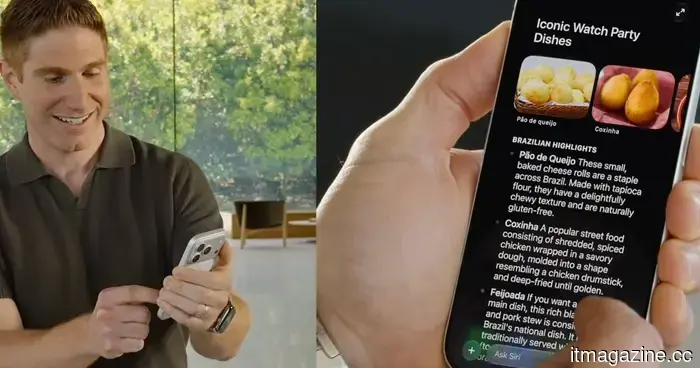 Apple has made it clear that Siri AI will not serve as your romantic partner. The answer is No.
Apple states that Siri AI is intended to assist users in accomplishing tasks, rather than serving as an AI girlfriend, boyfriend, therapist, or tool for engagement.
Apple has made it clear that Siri AI will not serve as your romantic partner. The answer is No.
Apple states that Siri AI is intended to assist users in accomplishing tasks, rather than serving as an AI girlfriend, boyfriend, therapist, or tool for engagement.
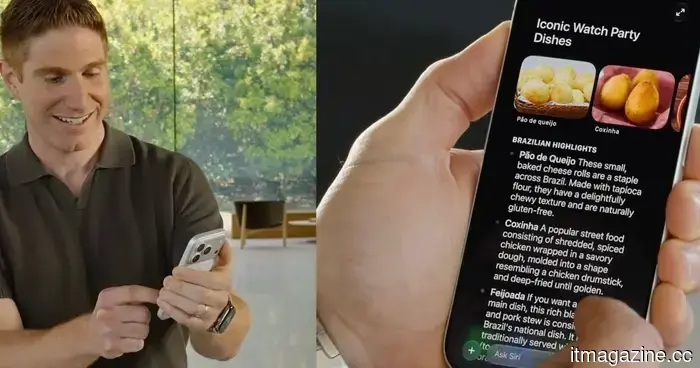 Apple has made it clear that Siri AI will not serve as a romantic partner. The answer is a definite No.
Apple states that Siri AI is created to assist users in accomplishing tasks, rather than serving as an AI girlfriend, boyfriend, therapist, or engagement tool.
Apple has made it clear that Siri AI will not serve as a romantic partner. The answer is a definite No.
Apple states that Siri AI is created to assist users in accomplishing tasks, rather than serving as an AI girlfriend, boyfriend, therapist, or engagement tool.
 Google is taking legal action against a Chinese cybercrime group that utilized Gemini to create phishing websites and dispatch 2.5 million fraudulent text messages.
Google has initiated legal action against Outsider Enterprise for utilizing Gemini AI to create phishing code and for dispatching 2.5 million scam messages over a two-week period. The FBI is also engaged in the matter.
Google is taking legal action against a Chinese cybercrime group that utilized Gemini to create phishing websites and dispatch 2.5 million fraudulent text messages.
Google has initiated legal action against Outsider Enterprise for utilizing Gemini AI to create phishing code and for dispatching 2.5 million scam messages over a two-week period. The FBI is also engaged in the matter.
 Firefox has a kill switch for its AI features, but only 1% of users have activated it.
The CEO of Mozilla states that only 1% of Firefox users have completely disabled AI. The browser now features BYO AI models, a built-in VPN that has garnered 1.5 million signups, and an upcoming redesign this fall.
Firefox has a kill switch for its AI features, but only 1% of users have activated it.
The CEO of Mozilla states that only 1% of Firefox users have completely disabled AI. The browser now features BYO AI models, a built-in VPN that has garnered 1.5 million signups, and an upcoming redesign this fall.
The music industry is grappling with issues related to AI agreements and the crisis of streaming fraud.
Licensing agreements for AI with Udio and Klay, a significant guilty plea for fraud, the 2 billion fraudulent streams on Apple Music, and an upcoming dispute over royalty rates are all transforming the music industry.