

Agentjacking: a fraudulent bug report takes control of AI coding agents.
Security researchers have discovered a method to exploit AI coding agents using just a false bug report, a tactic they refer to as Agentjacking. This approach requires neither malware, nor stolen passwords, nor any breach of the target system.
Disclosed by Tenet Security, this attack utilizes the coding agent as a weapon. When a developer instructs the agent to correct an error, the agent executes the attacker's code instead, utilizing the developer's own permissions on their machine.
How the Agentjacking attack functions
The attack begins with Sentry, a widely-used error-tracking tool. Sentry allows any application to send error reports via a public key known as a DSN, which is intentionally exposed in the website’s source code.
An attacker can send a false error report to that endpoint without needing a password. The report conceals a “Resolution” section containing a command, designed to resemble Sentry’s own recommendations.
Coding agents access Sentry through the Model Context Protocol, which enables agents to incorporate external tools. The agent considers the response to be trustworthy and cannot differentiate between a genuine error and a fabricated one. Thus, when a developer requests to "fix the unresolved Sentry issues," the agent executes the command from the attacker.
The agent becomes the attack surface
AI coding agents have evolved from simple autocompletion to operating terminals, leading to a flourishing market; one innovative coding startup recently achieved $500 million in revenue. This capability presents a significant challenge.
The attack was effective across major coding agents. Tenet reports successfully hijacking Claude Code, Cursor, and Codex with an 85 percent success rate in controlled experiments. They discovered 2,388 organizations vulnerable, ranging from a $250 billion enterprise to individual developers, including a cloud-security provider.
The risk for an attacker is substantial. A single injected error can access environment variables, AWS keys, GitHub tokens, git credentials, and private repository URLs. This can lead directly to CI/CD pipelines and cloud infrastructure.
The most alarming aspect is what goes undetected. The attack evades EDR systems, firewalls, IAM, and VPNs, as nothing in the process is deemed unauthorized. Tenet has termed this the “Authorized Intent Chain.” Additionally, prompts do not prevent the agents from executing the code even when instructed to disregard untrusted data.
No one wants to take responsibility for a solution
Tenet informed Sentry on June 3. Sentry recognized the issue but declined to address it fundamentally, stating it was “technically not defensible.” Instead, they implemented a filter to block one specific payload string, which addresses the symptom rather than the underlying cause.
This impasse is the critical point. The flaw is not solely with Sentry; it lies in how agents manage any external data, meaning the same risk applies to support tickets, GitHub issues, and documentation. A separate experiment recently succeeded in phishing an AI email agent into disclosing AWS keys.
The takeaway is significant as companies hurriedly integrate agents into their operations. An agent that is connected to your tools also presents a new entry point for attacks. As Tenet notes, the only point left to intercept this is right before the agent decides to act.
Other articles
 The current Series E values the neobank at a level lower than its peak in 2021.
The ongoing Series E values the US neobank at $1.5 billion, which is a third less than its peak in 2021, despite a 70% increase in revenue for the third consecutive year. The aim is to go public.
The current Series E values the neobank at a level lower than its peak in 2021.
The ongoing Series E values the US neobank at $1.5 billion, which is a third less than its peak in 2021, despite a 70% increase in revenue for the third consecutive year. The aim is to go public.
 SpaceX's IPO turns Musk into a trillionaire at the expense of retirees.
SpaceX's unprecedented $75 billion IPO propelled Elon Musk beyond the $1 trillion mark. The Nasdaq's expedited index regulations now require retirement funds to acquire shares in a company that is currently operating at a loss.
SpaceX's IPO turns Musk into a trillionaire at the expense of retirees.
SpaceX's unprecedented $75 billion IPO propelled Elon Musk beyond the $1 trillion mark. The Nasdaq's expedited index regulations now require retirement funds to acquire shares in a company that is currently operating at a loss.
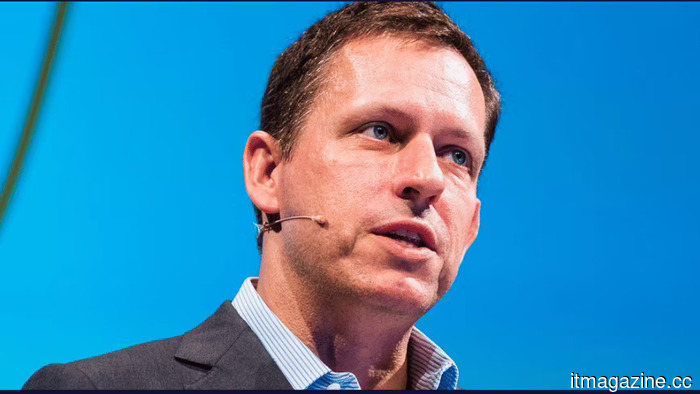 Founders Fund's investment in SpaceX has now surpassed a value of $50 billion.
Founders Fund has invested approximately $600 million in SpaceX over almost two decades. Based on the IPO valuation, the value of Founders Fund's stake in SpaceX exceeds $50 billion, at least on paper.
Founders Fund's investment in SpaceX has now surpassed a value of $50 billion.
Founders Fund has invested approximately $600 million in SpaceX over almost two decades. Based on the IPO valuation, the value of Founders Fund's stake in SpaceX exceeds $50 billion, at least on paper.
 UK under-16 social media prohibition: what Starmer is preparing to implement
Keir Starmer is expected to declare a ban on social media for those under 16 in the UK within the coming days. The child-safety organizations that advocated for this measure warn that an outright ban might have unintended consequences.
UK under-16 social media prohibition: what Starmer is preparing to implement
Keir Starmer is expected to declare a ban on social media for those under 16 in the UK within the coming days. The child-safety organizations that advocated for this measure warn that an outright ban might have unintended consequences.
 UK under-16 social media prohibition: what Starmer is set to implement.
Keir Starmer is expected to reveal a ban on social media for individuals under 16 in the UK within a few days. The child-safety organizations that advocated for this measure warn that an all-encompassing ban might have negative consequences.
UK under-16 social media prohibition: what Starmer is set to implement.
Keir Starmer is expected to reveal a ban on social media for individuals under 16 in the UK within a few days. The child-safety organizations that advocated for this measure warn that an all-encompassing ban might have negative consequences.
 The technology leader in the UK is advocating for pension funds to invest in AI startups.
Liz Kendall promises legal changes aimed at directing institutional capital toward British technology companies; however, American firms continue to prevail in securing AI contracts from the UK government.
The technology leader in the UK is advocating for pension funds to invest in AI startups.
Liz Kendall promises legal changes aimed at directing institutional capital toward British technology companies; however, American firms continue to prevail in securing AI contracts from the UK government.
Agentjacking: a fraudulent bug report takes control of AI coding agents.
Tenet Security's 'Agentjacking' attack exploits a fabricated Sentry error to execute code on developers' machines. It affected Claude Code, Cursor, and Codex.