

Revolutionary coffee-making technique employs sound, eliminates the need for hot water, and lowers energy costs.
Researchers at UNSW Sydney have discovered a method to brew espresso-quality coffee without heating the water. This technique replaces the traditional use of hot water and high pressure with ultrasonic sound waves, and in blind taste tests with 100 frequent coffee drinkers, participants were unable to distinguish between the two brewing methods.
**How It Works**
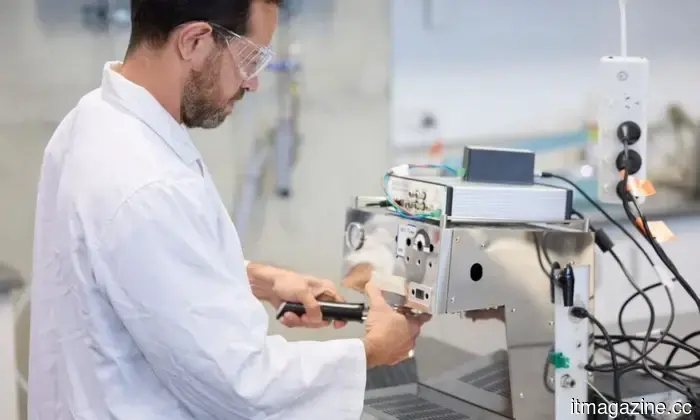
Dr. Francisco Trujillo and his team at UNSW’s School of Chemical Engineering transformed a conventional espresso machine filter basket into an ultrasonic reactor. A transducer mounted on the side of the basket emits high-frequency sound waves that vibrate through both the coffee grounds and the water simultaneously.
These vibrations initiate acoustic cavitation, a phenomenon where tiny bubbles form and collapse rapidly against coffee particles, breaking them apart and releasing flavor compounds, oils, and caffeine into the room-temperature water. The entire process is completed in less than three minutes.
The study, published in the Journal of Food Engineering, included a randomized blind evaluation of four beverages: traditional espresso, ultrasonic espresso, traditional filter coffee, and ultrasonic filter coffee. Participants reported no significant difference between the two espresso methods, with ultrasonic coffee even receiving higher ratings for pleasantness in bitterness.
**Energy Savings at Scale**
According to UNSW, the ultrasonic brewing approach reduces energy consumption by as much as 75% compared to standard espresso brewing. The researchers believe the greatest potential lies at the industrial level, where large-scale manufacturers of ready-to-drink coffee could achieve notable decreases in both energy expenditure and processing time. Additionally, the system can create a concentrate that can later be diluted for cold brew and milk-based drinks.
Trujillo previously applied a similar ultrasound system to produce cold-brew coffee in under three minutes, although that technique resulted in a significantly different, lower-caffeine beverage. The latest research expands this method to achieve full espresso strength.
The idea of ultrasonic extraction isn’t entirely new to the beverage industry; a machine called Teamosa attempted to use a similar concept for tea brewing years ago, but it did not achieve widespread popularity.
---
**This tiny sensor could aid self-driving cars and robots in low-light situations**
Researchers at Penn State have developed a light-adaptive photomemristor inspired by the human eye, achieving over 95% visual accuracy in varying light conditions. This sensor component could enhance the reliability of cameras in autonomous vehicles and robots when dealing with fluctuating lighting. The findings, published on Monday in Nature Communications, mimic how the human eye adjusts to contrasting brightness.
**Biology as a Blueprint**
---
**A chemical bath could restore your old EV battery to near-full capacity**
Researchers at Cornell have created a recycling process that rejuvenates spent lithium-ion batteries to 95% of their original capacity while reducing recycling costs by over half.
Your next smartphone or electric vehicle might utilize a recycled battery that performs almost like a new one, thanks to a new technique developed at Cornell University that revives depleted lithium-ion cells to up to 95% of their initial capacity while cutting recycling expenses by 56%.
**A bath instead of a shredder**
---
**The best new ChatGPT feature is one many will not utilize**
For years, discussions surrounding AI have focused on its capabilities, including browsing the web, analyzing documents, connecting to applications, conducting research, and increasingly operating on your behalf. However, as AI systems grow more advanced, another question becomes pressing: what occurs when an AI assistant is manipulated into revealing sensitive information?
OpenAI’s new Lockdown Mode addresses this concern. Available for all ChatGPT account types, Lockdown Mode is an optional security feature intended for individuals and organizations managing sensitive data. While it offers enhanced protection against certain data theft risks, it restricts access to some of ChatGPT’s most powerful functionalities.




Other articles
 If you're relying on AI tools such as ChatGPT to verify news, there is some negative information for you.
Researchers at MIT caution that an overreliance on AI chatbots such as ChatGPT for verifying news facts could diminish users' skills in independently identifying misinformation.
If you're relying on AI tools such as ChatGPT to verify news, there is some negative information for you.
Researchers at MIT caution that an overreliance on AI chatbots such as ChatGPT for verifying news facts could diminish users' skills in independently identifying misinformation.
 AT&T's daily plans allow you to access cellular services on your iPad, regardless of whether you are an existing customer.
AT&T has introduced the Unlimited Day Pass, a $3 per day unlimited data option for qualifying iPads, which also includes devices not owned by AT&T customers.
AT&T's daily plans allow you to access cellular services on your iPad, regardless of whether you are an existing customer.
AT&T has introduced the Unlimited Day Pass, a $3 per day unlimited data option for qualifying iPads, which also includes devices not owned by AT&T customers.
 Mercedes-Benz ventures into defense by introducing anti-drone vehicles.
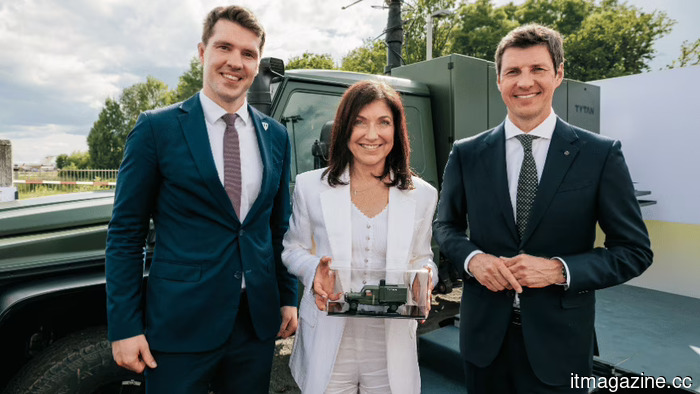
Mercedes-Benz has entered into a memorandum of understanding with the Munich-based startup Tytan to develop mobile anti-drone vehicles, becoming the latest European automaker to pursue opportunities stemming from Europe's rearmament surge.
Mercedes-Benz ventures into defense by introducing anti-drone vehicles.
Mercedes-Benz has entered into a memorandum of understanding with the Munich-based startup Tytan to develop mobile anti-drone vehicles, becoming the latest European automaker to pursue opportunities stemming from Europe's rearmament surge.
 Mercedes-Benz ventures into the defense sector with vehicles designed to counter drones.
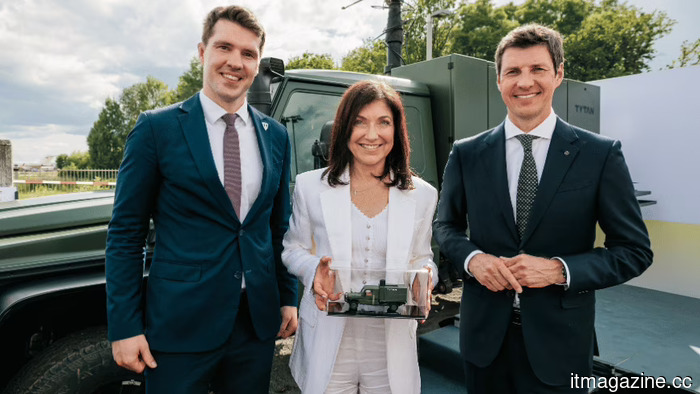
Mercedes-Benz has entered into a Memorandum of Understanding with the Munich-based startup Tytan to develop mobile anti-drone vehicles, becoming the latest European automaker to pursue the continent's rearmament surge.
Mercedes-Benz ventures into the defense sector with vehicles designed to counter drones.
Mercedes-Benz has entered into a Memorandum of Understanding with the Munich-based startup Tytan to develop mobile anti-drone vehicles, becoming the latest European automaker to pursue the continent's rearmament surge.
 ShopAgentic secures €1.9M in funding for agentic commerce.
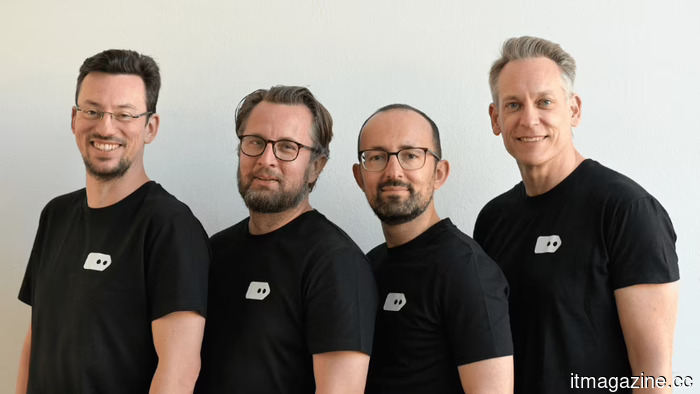
The German startup ShopAgentic secured €1.9 million in funding, co-led by May Ventures and Greenfield Capital, to develop commerce infrastructure for AI shopping agents.
ShopAgentic secures €1.9M in funding for agentic commerce.
The German startup ShopAgentic secured €1.9 million in funding, co-led by May Ventures and Greenfield Capital, to develop commerce infrastructure for AI shopping agents.
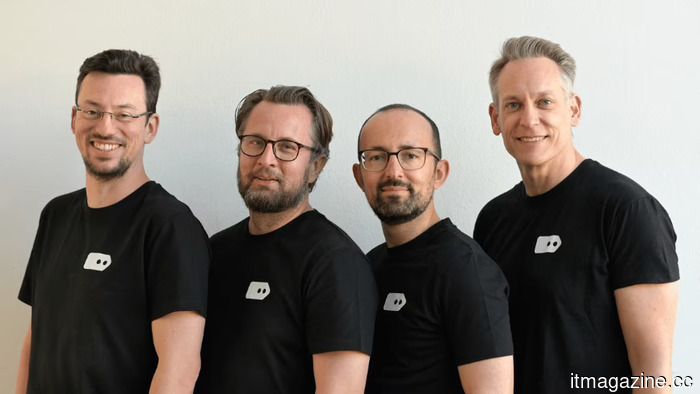 ShopAgentic secures €1.9M for agentic commerce.
The German startup ShopAgentic has secured €1.9 million in funding, co-led by May Ventures and Greenfield Capital, to develop commerce infrastructure for AI shopping agents.
ShopAgentic secures €1.9M for agentic commerce.
The German startup ShopAgentic has secured €1.9 million in funding, co-led by May Ventures and Greenfield Capital, to develop commerce infrastructure for AI shopping agents.
Revolutionary coffee-making technique employs sound, eliminates the need for hot water, and lowers energy costs.
Researchers at UNSW Sydney have created an ultrasonic brewing technique that produces espresso-strength coffee using room-temperature water, reducing energy usage by as much as 75%. Moreover, 100 blind taste-testers were unable to distinguish it from traditional espresso.