
Mercedes-Benz ventures into defense by introducing anti-drone vehicles.
Mercedes-Benz is intensifying its involvement in the defence sector. The automaker has entered into a memorandum of understanding with TYTAN Technologies, a Munich-based counter-drone startup, to create vehicle-based systems capable of detecting and neutralizing hostile drones, utilizing its G-Class SUV and Sprinter van as the foundation. Mercedes describes the defence sector as “a strategic growth field.”
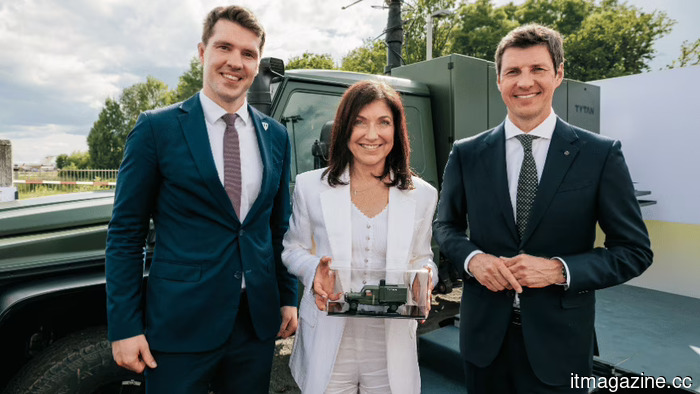
This agreement, announced at the ILA Berlin air show with the presence of Germany’s economy minister, combines Mercedes’s vehicle platforms with TYTAN’s sensors, artificial intelligence, and interceptor drones. They showcased a prototype of a jointly developed vehicle-mounted system at the event.
At this stage, the partnership is exploratory; the agreement lays the groundwork to “assess potential applications” and pursue “future industrial implementation,” while adhering to export-control and defence regulations, rather than establishing a definitive production order.
Transitioning from automotive to defence
Mercedes is not embarking on this venture from scratch, as it has been producing military and government variants of the G-Class for several years. However, it is increasingly committing to the defence market as Europe reasserts its military capabilities and its primary automotive business faces challenges from sluggish demand, Chinese competition, and tariffs. Berlin has explicitly encouraged its industrial base to shift towards defence.
Katherina Reiche, the economy minister present during the signing, emphasized that this initiative enhances “Germany’s technological sovereignty,” while Mercedes board member Michael Schiebe stated that the company would provide “robust and reliable base vehicles,” as TYTAN contributes its “drone, sensor, and mission technology.”
For TYTAN, a deep-tech firm whose interceptors have been tested in Ukraine, the partnership offers significant industrial capabilities. “The threat is real; every day we observe overflights above critical infrastructure in Germany and Europe,” remarked co-founder and CEO Balázs Nagy, who aims to defend against drone threats “not in 2029, but today.” The company is reportedly launching a factory in Munich with plans to produce thousands of interceptors monthly.
This collaboration coincides with a notable market surge. Counter-drone systems are among the fastest-growing sectors in defence technology, with analysts predicting that the market will expand from approximately $6.6 billion in 2025 to nearly $20 billion by 2030. Europe is racing to develop its capabilities in this area.
TNW has monitored this growth, from Berlin’s Stark to specialists in counter-drone technology like Norway’s Stendr, and established companies such as Rheinmetall stepping in alongside startups.
The agreement remains a memorandum of understanding, and much of the discussion regarding production volumes and timelines reflects the aspirations of the partners rather than confirmed orders. However, the significance is evident: a company that sold over 2.1 million vehicles last year is now looking to equip them with drone interception technology, and in the current context of Europe, this appears to be more of a calculated strategy than a mere sidestep.
Другие статьи
 Research shows that TikTok's "Not Interested" button becomes ineffective in just a few minutes.
A recent study conducted by Northeastern University discovered that TikTok's "Not Interested" button becomes ineffective rapidly, as flagged content reappears on users' feeds within minutes after they cease using it.
Musk's xAI and SpaceX face a lawsuit over noise from their data center.
Residents of Mississippi have initiated a class action with 10,000 participants against Musk's xAI and SpaceX due to 'unavoidable' noise from a $20 billion gas plant that powers AI data centers.
Coupang faces a historic fine of $409 million due to a data breach in South Korea.
South Korea's privacy authority imposed a fine of 624.7 billion won ($409 million) on Coupang following the revelation by a former employee that 33.7 million customer accounts were compromised in the nation's largest data breach.
Research shows that TikTok's "Not Interested" button becomes ineffective in just a few minutes.
A recent study conducted by Northeastern University discovered that TikTok's "Not Interested" button becomes ineffective rapidly, as flagged content reappears on users' feeds within minutes after they cease using it.
Musk's xAI and SpaceX face a lawsuit over noise from their data center.
Residents of Mississippi have initiated a class action with 10,000 participants against Musk's xAI and SpaceX due to 'unavoidable' noise from a $20 billion gas plant that powers AI data centers.
Coupang faces a historic fine of $409 million due to a data breach in South Korea.
South Korea's privacy authority imposed a fine of 624.7 billion won ($409 million) on Coupang following the revelation by a former employee that 33.7 million customer accounts were compromised in the nation's largest data breach.
 China’s Workers' Daily advocates for protections for workers in the AI sector.
The official newspaper of China's trade union calls on regulators to safeguard workers amidst the rise of AI, cautioning that 70 million jobs are at risk of being displaced and advocating for oversight of algorithms.
China’s Workers' Daily advocates for protections for workers in the AI sector.
The official newspaper of China's trade union calls on regulators to safeguard workers amidst the rise of AI, cautioning that 70 million jobs are at risk of being displaced and advocating for oversight of algorithms.
 ShopAgentic secures €1.9M for agentic commerce.
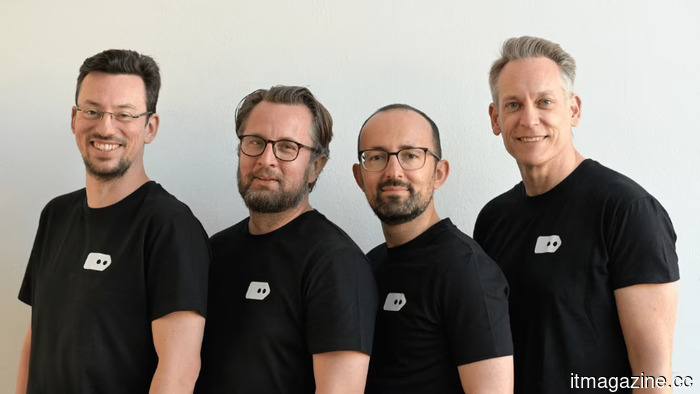
The German startup ShopAgentic has secured €1.9 million in funding, co-led by May Ventures and Greenfield Capital, to develop commerce infrastructure for AI shopping agents.
ShopAgentic secures €1.9M for agentic commerce.
The German startup ShopAgentic has secured €1.9 million in funding, co-led by May Ventures and Greenfield Capital, to develop commerce infrastructure for AI shopping agents.
 Meta restricts Manus' access to data systems and starts to reverse the agreement.
Meta established a data firewall and instructed employees to wind down Manus after Beijing mandated the reversal of the $2 billion acquisition. The founders are aiming for $1 billion for a buyback.
Meta restricts Manus' access to data systems and starts to reverse the agreement.
Meta established a data firewall and instructed employees to wind down Manus after Beijing mandated the reversal of the $2 billion acquisition. The founders are aiming for $1 billion for a buyback.
Mercedes-Benz ventures into defense by introducing anti-drone vehicles.
Mercedes-Benz has entered into a memorandum of understanding with the Munich-based startup Tytan to develop mobile anti-drone vehicles, becoming the latest European automaker to pursue opportunities stemming from Europe's rearmament surge.