
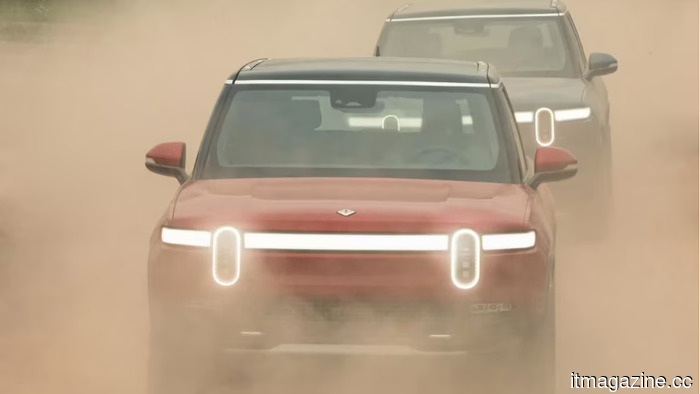
Rivian starts R2 deliveries, viewing the contracting US EV market as a chance for growth.
Rivian commenced deliveries of its R2 SUVs on Tuesday, aiming for 20,000 to 25,000 units by year-end as it leverages a reduced number of EV competitors in the US and seeks to establish a pathway for robotaxis. The initial R2 SUVs were handed over to customers, marking a significant phase for the company, which has spent billions trying to demonstrate its capability to produce electric vehicles at scale. The R2's starting price is $57,990 for the Performance trim with the Launch Package, notably higher than the $45,000 price point Rivian announced when it unveiled the vehicle in 2024. A sub-$50,000 variant is not anticipated until 2027, with a base model around $45,000 expected later that same year, leaving the most affordable configurations unavailable at a time when budget-friendly EVs are diminishing in the US market.
Rivian is projecting 20,000 to 25,000 R2 deliveries by the close of 2026, a target that would make it one of the fastest EV launches in US history if met. Production has begun at the Normal, Illinois factory, currently operating on a single shift, with plans for a second shift later in the year. The company's overall delivery guidance for 2026 suggests a total of 62,000 to 67,000 vehicles, indicating that R1 and commercial van volumes will remain steady at about 42,000 units, with the R2 driving the growth.
Founder and CEO RJ Scaringe sees the R2 as “perhaps the most important thing we’ve launched to date” and regards the challenging US EV landscape as an opportunity. The Trump administration's weakening of environmental regulations that pushed automakers toward electrification, coupled with Congress's removal of the $7,500 federal EV tax credit from the One Big Beautiful Bill Act, effective September 2025, has left most traditional automakers to abandon or halt US EV initiatives, resulting in minimal federal purchasing support for electric vehicles in 2026, alongside declining sales for Tesla.
This decreasing competition presents the opportunity Scaringe is relying on. With fewer new EVs entering American showrooms, the R2 has the potential to attract buyers with limited options, particularly in the mid-size SUV market where it competes with the Tesla Model Y. However, the success of this strategy hinges on whether buyers are willing to pay $58,000 for an electric SUV without the benefit of a federal tax credit, in a climate where the average new vehicle price exceeds $48,000.
The R2 also plays a critical role in Rivian's goals for autonomous driving. In December, the company introduced a custom 5nm autonomy processor capable of performing up to 1,600 trillion operations per second, along with plans to incorporate lidar sensors in future R2 models. Rivian’s Autonomy+ system, bundled with the Launch Package, offers hands-free assisted driving on 3.5 million miles of roads across the US and Canada.
The company envisions the R2 eventually achieving full self-driving capabilities, which it is pursuing alongside a $1.25 billion partnership with Uber announced in March. This collaboration includes an initial investment of $300 million and the acquisition of 10,000 fully autonomous R2 robotaxis, with an option for as many as 40,000 additional units, as noted in Uber’s investor information. The rollout for commercial deployment is planned for San Francisco and Miami by 2028, expanding to 25 cities by 2031, an ambitious timeframe given that Rivian has yet to showcase a fully autonomous vehicle and because the regulatory framework for robotaxi operations is still lacking in many US cities.
In tandem, Rivian is constructing a new factory in Stanton Springs, Georgia, following a reduction of its Department of Energy loan from $6.57 billion to $4.5 billion during the Trump administration's review of Biden-era EV commitments. The initial production capacity of the Georgia plant has been elevated to 300,000 vehicles annually by combining what was initially a two-phase construction plan into a single phase. Production is expected to commence in late 2028, with the facility responsible for manufacturing the R2, the smaller R3, and robotaxis for the Uber collaboration.
Despite these developments, Rivian's financial status remains unstable. The company recorded its first full-year positive gross profit in 2025, amounting to $144 million, yet still incurred a net loss of $3.63 billion. In the first quarter of 2026, revenue was approximately $1.4 billion, an 11% increase year-over-year, with $119 million in gross profit, but an adjusted EBITDA loss of $329 million and negative free cash flow of $526 million.
At the end of the quarter, Rivian had $4.83 billion in cash reserves, aided by a $1 billion share acquisition by Volkswagen, which became Rivian's largest shareholder in
Other articles
 Two Russian APT groups are taking advantage of a WinRAR vulnerability that was fixed almost a year ago to target Ukraine.
Gamaredon and SHADOW-EARTH-066 are taking advantage of CVE-2025-8088 in WinRAR to capture credentials and documents from Ukrainian targets, almost a year following the release of a patch.
Two Russian APT groups are taking advantage of a WinRAR vulnerability that was fixed almost a year ago to target Ukraine.
Gamaredon and SHADOW-EARTH-066 are taking advantage of CVE-2025-8088 in WinRAR to capture credentials and documents from Ukrainian targets, almost a year following the release of a patch.
 Rem3dy Health secures £14 million in funding, achieving a valuation of £84 million, with plans to expand its 3D-printed personalized vitamins internationally.
Birmingham's Rem3dy Health secured £14M from Suntory, Apollo Hospitals, and Estrella Galicia to grow its 3D-printed personalized nutrition brand, Nourished.
Rem3dy Health secures £14 million in funding, achieving a valuation of £84 million, with plans to expand its 3D-printed personalized vitamins internationally.
Birmingham's Rem3dy Health secured £14M from Suntory, Apollo Hospitals, and Estrella Galicia to grow its 3D-printed personalized nutrition brand, Nourished.
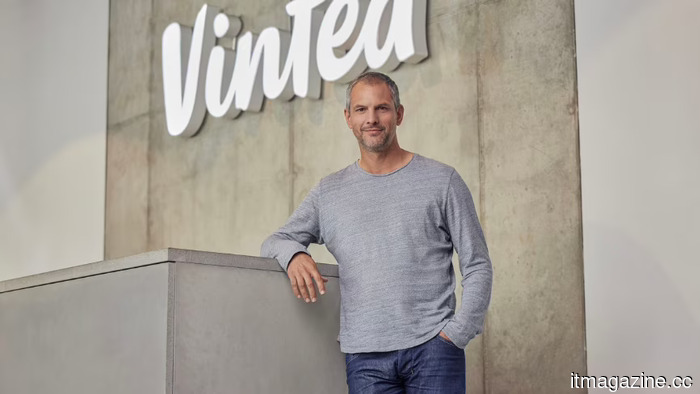 The CEO of Vinted states that the US is a
Vinted's CEO Adam Jay states that secondhand shopping is "here to stay," as the €8 billion Lithuanian marketplace expands into the US following a reported revenue of €1.1 billion in 2025.
The CEO of Vinted states that the US is a
Vinted's CEO Adam Jay states that secondhand shopping is "here to stay," as the €8 billion Lithuanian marketplace expands into the US following a reported revenue of €1.1 billion in 2025.
 Rem3dy Health secures £14M at an £84M valuation to expand the global reach of its 3D-printed personalized vitamins.
Birmingham's Rem3dy Health secured £14M in funding from Suntory, Apollo Hospitals, and Estrella Galicia to grow its 3D-printed personalized nutrition brand, Nourished.
Rem3dy Health secures £14M at an £84M valuation to expand the global reach of its 3D-printed personalized vitamins.
Birmingham's Rem3dy Health secured £14M in funding from Suntory, Apollo Hospitals, and Estrella Galicia to grow its 3D-printed personalized nutrition brand, Nourished.
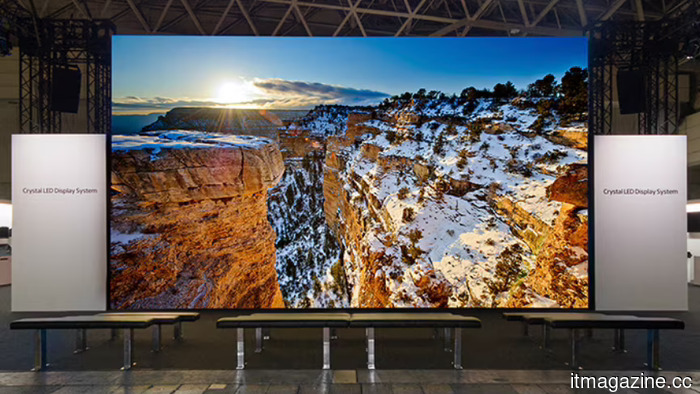 Sony's 135-inch Crystal LED UNIFY is a boardroom screen that can be set up in just one hour.
Sony introduced the Crystal LED UNIFY, a 135-inch dvLED display designed for boardrooms that can be set up by two individuals in one hour. It is scheduled for release in early 2027.
Sony's 135-inch Crystal LED UNIFY is a boardroom screen that can be set up in just one hour.
Sony introduced the Crystal LED UNIFY, a 135-inch dvLED display designed for boardrooms that can be set up by two individuals in one hour. It is scheduled for release in early 2027.
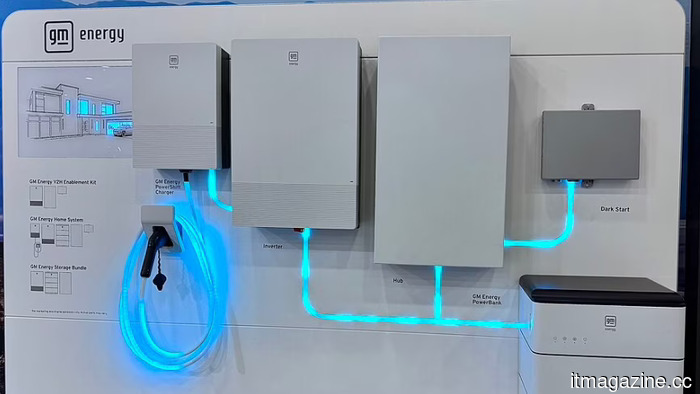 From automobiles to data centers, GM expands into energy storage through three new battery agreements.
GM collaborated with Peak Energy on sodium-ion batteries and extended its agreement with Redwood Materials to provide energy storage solutions for data centers and the grid.
From automobiles to data centers, GM expands into energy storage through three new battery agreements.
GM collaborated with Peak Energy on sodium-ion batteries and extended its agreement with Redwood Materials to provide energy storage solutions for data centers and the grid.
Rivian starts R2 deliveries, viewing the contracting US EV market as a chance for growth.
On Tuesday, Rivian began delivering R2 SUVs to customers, aiming for 20,000 to 25,000 deliveries by the end of the year amidst a challenging US market with fewer new EV competitors.