
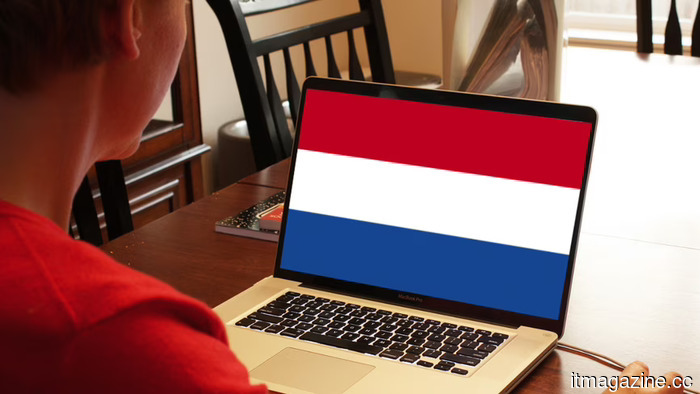
Netherlands broadens investment scrutiny to include AI and biotechnology.
The Netherlands will begin screening foreign investments in AI, biotech, and four other tech sectors starting January 2027, impacting hundreds of companies. This decision follows the controversy surrounding Nexperia and the recent blockage of an acquisition by a US cloud provider.
The Dutch government is set to broaden its investment screening framework to include six new technology areas, such as artificial intelligence, effective from 1 January 2027. According to the Ministry of Economic Affairs, this change will affect numerous companies.
Economic Affairs Minister Heleen Herbert stated, “The Netherlands is a target for cyber activities, espionage, and sabotage. While we aim for an open economy, we must remain alert to potential risks.”
What’s changing
The updated regulations will include AI, advanced materials, nanotechnology, sensor and navigation technology, nuclear technology for medical applications, and biotechnology, adding to the existing law that already addresses semiconductors and quantum computing.
Foreign investors looking to acquire or hold substantial stakes in Dutch companies within these sectors will be required to undergo a government review. The government has the authority to block transactions it considers a threat to national security.
The Nexperia incident
This expansion comes after years of debate over foreign acquisitions of strategically important Dutch assets. The 2023 screening law was implemented too late to prevent the takeover of chipmaker Nexperia by Chinese-held Wingtech, resulting in a high-profile conflict between the government and the company's Chinese stakeholders that is still in legal proceedings.
The lesson was evident: screening systems must encompass the appropriate sectors prior to a deal’s finalization, rather than afterward. AI was notably absent from the initial 2023 legislation.
The Solvinity case
Recently, the government intervened to block the acquisition of cloud services firm Solvinity by the American company Kyndryl. Solvinity manages sensitive data belonging to Dutch citizens, and this action highlighted that the screening process applies to partners as well as rivals.
This distinction is significant for AI firms, as the Netherlands is home to some of Europe’s leading AI research. The new rules will impose the same scrutiny on foreign investments in these companies, irrespective of the investor’s country.
The European landscape
The Netherlands is part of a growing trend among European nations tightening investment screenings for AI and emerging technologies. The EU's technology sovereignty initiative introduced in May includes new limitations on US cloud providers managing European government data and a wider framework for assessing foreign investment in crucial technologies.
The revised regulations will be subject to review by the Dutch Parliament before implementation. Although this parliamentary process is typically a formality, it may result in amendments or delays. No specific companies have been identified as potential subjects of future screenings.
Other articles
 UK allocates £1.3 billion for AI hardware, skills development, and reform of the justice system.
The UK revealed a £1.1 billion AI Hardware Plan, along with a £200 million adoption package, AI legal assistants, and a Homelessness Data Lab during London Tech Week. The supercomputer is set to arrive in 2030.
UK allocates £1.3 billion for AI hardware, skills development, and reform of the justice system.
The UK revealed a £1.1 billion AI Hardware Plan, along with a £200 million adoption package, AI legal assistants, and a Homelessness Data Lab during London Tech Week. The supercomputer is set to arrive in 2030.
 A humanoid robot ascended a volcano, aided by some very human assistance.
A humanoid robot called Pemba made it to the summit of Ecuador's Chimborazo, but the ascent also highlighted the limitations of robot autonomy, particularly when humans needed to transport it over more challenging terrain.
A humanoid robot ascended a volcano, aided by some very human assistance.
A humanoid robot called Pemba made it to the summit of Ecuador's Chimborazo, but the ascent also highlighted the limitations of robot autonomy, particularly when humans needed to transport it over more challenging terrain.
 SoftBank surpasses Toyota for the first time since the dot-com boom.
SoftBank momentarily surpassed Toyota to become Japan's most valuable company for the first time since February 2000. Meanwhile, Kioxia climbed from the 154th position to the top three within a year. Is the AI surge reminiscent of the year 2000?
SoftBank surpasses Toyota for the first time since the dot-com boom.
SoftBank momentarily surpassed Toyota to become Japan's most valuable company for the first time since February 2000. Meanwhile, Kioxia climbed from the 154th position to the top three within a year. Is the AI surge reminiscent of the year 2000?
 The EU has instructed Meta to reinstate access to its WhatsApp AI competitor within five days.
The EU instructed Meta to reinstate WhatsApp access for competing AI assistants within five days. Meta plans to appeal this decision. Potential fines could amount to 10% of its global revenue, and no deadline for the investigation has been established.
The EU has instructed Meta to reinstate access to its WhatsApp AI competitor within five days.
The EU instructed Meta to reinstate WhatsApp access for competing AI assistants within five days. Meta plans to appeal this decision. Potential fines could amount to 10% of its global revenue, and no deadline for the investigation has been established.
 iPadOS 27: All the details about the new features coming to your iPad.
iPadOS 27 will be released this fall, featuring a brand-new Siri AI, enhanced photo tools, simplified Shortcuts, and a more organized Safari. Here’s all the information we have so far regarding the upcoming updates for your iPad.
iPadOS 27: All the details about the new features coming to your iPad.
iPadOS 27 will be released this fall, featuring a brand-new Siri AI, enhanced photo tools, simplified Shortcuts, and a more organized Safari. Here’s all the information we have so far regarding the upcoming updates for your iPad.
 reMarkable Paper Pure review: A fantastic digital writing surface that I adore, yet also find frustrating.
The reMarkable Paper Pure provides the finest digital canvas for note-taking that I've encountered recently. However, this impressive device is limited by a constraining software experience.
reMarkable Paper Pure review: A fantastic digital writing surface that I adore, yet also find frustrating.
The reMarkable Paper Pure provides the finest digital canvas for note-taking that I've encountered recently. However, this impressive device is limited by a constraining software experience.
Netherlands broadens investment scrutiny to include AI and biotechnology.
Starting in January 2027, the Netherlands will incorporate AI, biotechnology, nanotechnology, and three additional sectors into its investment screening process, impacting hundreds of companies following the Nexperia incident.