

The US encourages NATO partners to allocate defense budgets to substitute Huawei.
The United States has identified a new approach to utilize Europe’s increasing defense budgets: eliminating Huawei. However, whether its allies are receptive to this idea remains uncertain.
Joshua Young, the State Department’s coordinator for China, informed officials in Brussels last month that NATO member countries should allocate defense-related funds—which contribute towards the alliance's spending goals—to remove Huawei equipment and substitute it with alternatives from other vendors, as reported by Bloomberg.
While Young did not specify which countries he was referring to, one individual suggested his comments were directed at Germany. The response was lukewarm.
These remarks originated from a relatively lower-ranking diplomat, and allies, accustomed to mixed signals from the Trump administration, did not react immediately, according to sources familiar with the closed meeting. The State Department chose not to provide a comment.
The proposal builds on NATO's evolving financial framework. Last year, almost all member countries agreed to increase their defense expenditure to 5 percent of GDP, with 3.5 percent allocated for fundamental military requirements and an additional 1.5 percent for defense-related sectors, responding to a demand from President Trump. A NATO official clarified that this latter category can indeed fund network security initiatives, including vendor replacements, which is the opportunity Washington aims to leverage.
However, Europe remains divided. The European Commission has classified Huawei and ZTE as “high-risk suppliers” and seeks stricter regulation through an updated Cybersecurity Act, yet Germany and Spain are resisting a ban at the EU level, favoring national authority and concerned about potential backlash from Beijing.
Germany has already struggled with the financial implications, having considered compensating Deutsche Telekom and other providers with public funds to eliminate Chinese technology.
The magnitude of the task explains the hesitance. Chinese suppliers reportedly account for approximately 30 to 40 percent of Europe's 5G infrastructure, and a complete removal would represent the largest mandatory replacement of telecommunications equipment in European history. By framing this expenditure as a defense expense, the U.S. presents allies with both a means to finance it and justification for doing so.
There is also discord regarding what qualifies under this category. American officials have criticized allies for expanding the 1.5 percent designation to include items only vaguely related to defense; Italy had previously proposed considering a significant bridge in Sicily before retracting.
Network security is a more straightforward argument, and the matter will reemerge when NATO leaders convene in Turkey next month.
Currently, it remains a suggestion rather than an official policy, put forth by a mid-level official and met with indifference. However, it reframes the politically sensitive issue of removing Chinese technology as something akin to a NATO responsibility. If this narrative takes hold, countries with significant Huawei equipment may find it easier to justify the expense, even as discussions in Brussels continue over the fundamental principle.
Other articles
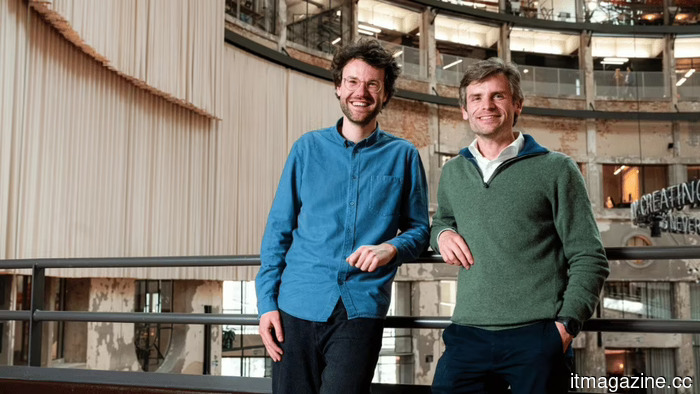 Companion.energy secures €7.8M for real-time energy solutions for businesses.
Ghent's Companion.energy has secured €7.8 million in funding, with Realyze Ventures and Pi Labs as the leading investors, aimed at automating real-time enterprise energy and expanding its operations into Germany and Spain.
Companion.energy secures €7.8M for real-time energy solutions for businesses.
Ghent's Companion.energy has secured €7.8 million in funding, with Realyze Ventures and Pi Labs as the leading investors, aimed at automating real-time enterprise energy and expanding its operations into Germany and Spain.
 Cosine mobilizes UK leaders to develop a national AI model.
During London Tech Week, the UK's Cosine secured partnerships with BT, HSBC, BAE, and others to develop Lumen Sovereign, a UK-based frontier AI model that will be trained on the Isambard-AI supercomputer.
Cosine mobilizes UK leaders to develop a national AI model.
During London Tech Week, the UK's Cosine secured partnerships with BT, HSBC, BAE, and others to develop Lumen Sovereign, a UK-based frontier AI model that will be trained on the Isambard-AI supercomputer.
 Cosine rallies UK leaders to develop a sovereign AI model.
During London Tech Week, Britain's Cosine secured commitments from BT, HSBC, BAE, and others to develop Lumen Sovereign, a UK-based frontier AI model utilizing the Isambard-AI supercomputer for training.
Cosine rallies UK leaders to develop a sovereign AI model.
During London Tech Week, Britain's Cosine secured commitments from BT, HSBC, BAE, and others to develop Lumen Sovereign, a UK-based frontier AI model utilizing the Isambard-AI supercomputer for training.
 AI determines which online stores are visible to you, overlooking many of them.
A research of 9,720 ecommerce stores revealed that Google Gemini suggested nothing for 60% of these stores. The successful stores weren’t necessarily the largest brands, but rather those whose product data was comprehensible to AI.
AI determines which online stores are visible to you, overlooking many of them.
A research of 9,720 ecommerce stores revealed that Google Gemini suggested nothing for 60% of these stores. The successful stores weren’t necessarily the largest brands, but rather those whose product data was comprehensible to AI.
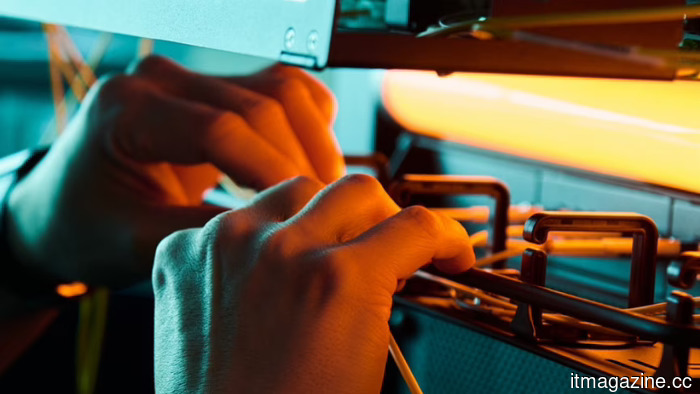 Oriole launches its first completely photonic AI network, claiming an 81% reduction.
UK-based startup Oriole Networks is implementing the first large-scale pure photonic AI network in collaboration with AMD, asserting a power reduction of 81% and less than 1% GPU idle time at the ARIA lab in the UK.
Oriole launches its first completely photonic AI network, claiming an 81% reduction.
UK-based startup Oriole Networks is implementing the first large-scale pure photonic AI network in collaboration with AMD, asserting a power reduction of 81% and less than 1% GPU idle time at the ARIA lab in the UK.
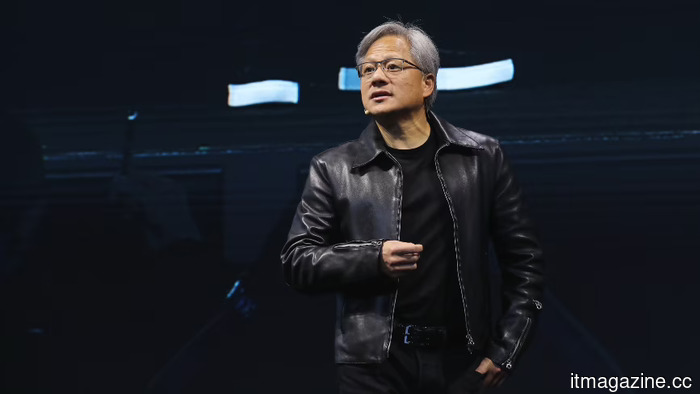 Nvidia and Hyundai are intensifying their focus on robotics with regards to Atlas.
Following discussions in Seoul, Nvidia and Hyundai are strengthening their partnership in physical-AI, centered around Boston Dynamics' Atlas humanoid and a $5.9 billion Korean "AI Valley."
Nvidia and Hyundai are intensifying their focus on robotics with regards to Atlas.
Following discussions in Seoul, Nvidia and Hyundai are strengthening their partnership in physical-AI, centered around Boston Dynamics' Atlas humanoid and a $5.9 billion Korean "AI Valley."
The US encourages NATO partners to allocate defense budgets to substitute Huawei.
A US official advised allies to allocate NATO defense budgets to remove Huawei equipment from their networks, but the suggestion failed to gain traction as Europe remains divided on implementing a ban.