
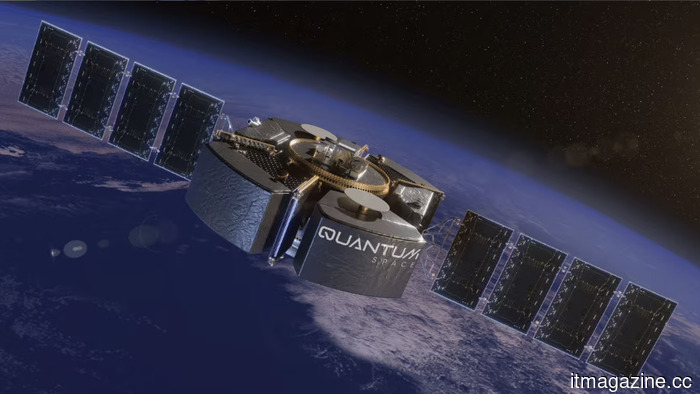
Former NASA chief takes Quantum Space public with a valuation of $1.2 billion.
The last time Jim Bridenstine influenced America's space aspirations, he was at the helm of NASA. Now, he is confident that he can develop the technology for the next stage of the space race and is seeking public investors to support it.
Quantum Space, the Maryland startup Bridenstine currently heads, is preparing to go public through a merger with a special purpose acquisition company, Inflection Point Acquisition Corp. VI, in a deal that values the combined entity at approximately $1.2 billion. The transaction involves a $300 million private investment, will list the company on Nasdaq under the ticker “QSPC,” and is projected to finalize in the last quarter of 2026.
The background is noteworthy. Bridenstine was NASA's administrator from 2018 to 2021, overseeing the agency's initiatives to open spaceflight to commercial entities. Quantum Space was co-founded by its executive chairman, Kam Ghaffarian, a seasoned space entrepreneur with other ventures that include the lunar-lander firm Intuitive Machines, the commercial space station developer Axiom Space, and the nuclear company X-energy.
At the core of the company is Ranger, a maneuverable spacecraft platform designed to operate across various orbits, from low Earth orbit to cislunar space—the area between Earth and the Moon. The primary focus is on mobility, allowing spacecraft to reposition between different orbital regimes, a feature sought after by national-security clients who need to relocate assets in response to threats, as well as civil and commercial operators.
The approach is intentionally geopolitical. As the US and China vie for dominance in orbit and around the Moon, maneuverable spacecraft have become a strategic necessity, and Quantum Space aims to be a provider of the required hardware for this competition. Bridenstine’s government experience and his connections in Washington add to the appeal.
Opting for a SPAC route instead of a traditional IPO enables the company to raise capital and list more quickly, although such arrangements have a mixed history. This move coincides with a surge in interest in space on public markets, as investors have been flocking to space stocks in anticipation of SpaceX’s significant listing, making a former NASA leader with a defense-oriented spacecraft narrative well-positioned to ride that wave.
There remains much to demonstrate. Quantum Space's most ambitious technologies are still forthcoming, SPAC valuations often appear overly optimistic in retrospect, and the deal awaits shareholder approval before it can be finalized.
However, the gamble is evident: the next space race will involve more than just rockets and satellites; it will include agile spacecraft capable of operating where needed, and a former NASA administrator may be the ideal individual to bring them into reality.
Other articles
 Google and Nvidia are considering Intel as a secondary option to TSMC for AI chip production.
Google has placed an order for over 3 million TPUs from Intel for 2028, while Nvidia is evaluating its 18A manufacturing process, reflecting a rare show of trust in the struggling US semiconductor industry as TSMC faces challenges.
Google and Nvidia are considering Intel as a secondary option to TSMC for AI chip production.
Google has placed an order for over 3 million TPUs from Intel for 2028, while Nvidia is evaluating its 18A manufacturing process, reflecting a rare show of trust in the struggling US semiconductor industry as TSMC faces challenges.
 Amazon's agreement with Corning indicates that fiber is the new limitation for AI.
Amazon is investing billions in Corning for optical fiber to connect its AI data centers in the US, marking the glassmaker's third major AI deal of 2026, following agreements with Meta and Nvidia.
Amazon's agreement with Corning indicates that fiber is the new limitation for AI.
Amazon is investing billions in Corning for optical fiber to connect its AI data centers in the US, marking the glassmaker's third major AI deal of 2026, following agreements with Meta and Nvidia.
 What if Pokémon Go existed in real life? This application allows you to document every animal you encounter in the real world.
A newly launched iOS app named Gotcha transforms your iPhone into a personal Pokédex. Just aim your phone at any animal, capture it, and gather a variety of creatures, ranging from everyday animals to rare discoveries.
What if Pokémon Go existed in real life? This application allows you to document every animal you encounter in the real world.
A newly launched iOS app named Gotcha transforms your iPhone into a personal Pokédex. Just aim your phone at any animal, capture it, and gather a variety of creatures, ranging from everyday animals to rare discoveries.
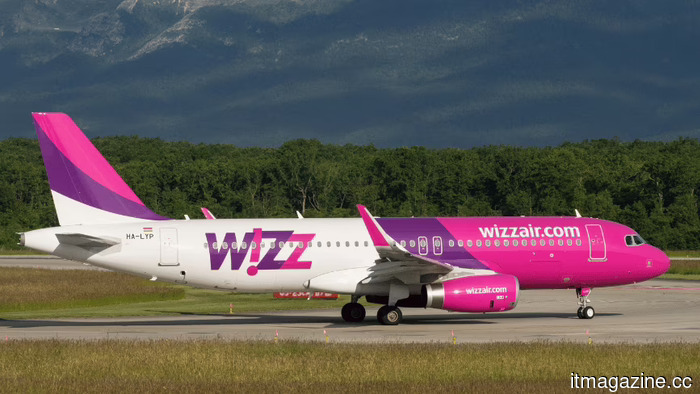 Wizz Air will install Starlink Wi-Fi on its aircraft starting in 2027.
Wizz Air is set to become the first European low-cost airline to provide Starlink in-flight internet starting in 2027, taking a financial risk that competitors Ryanair and EasyJet have so far steered clear of.
Wizz Air will install Starlink Wi-Fi on its aircraft starting in 2027.
Wizz Air is set to become the first European low-cost airline to provide Starlink in-flight internet starting in 2027, taking a financial risk that competitors Ryanair and EasyJet have so far steered clear of.
 Meta takes NSO to court again over spyware related to WhatsApp.
Meta is seeking contempt charges against NSO Group, claiming that the developer of Pegasus continued to target WhatsApp despite a permanent injunction, and that it thwarted new phishing attempts.
Meta takes NSO to court again over spyware related to WhatsApp.
Meta is seeking contempt charges against NSO Group, claiming that the developer of Pegasus continued to target WhatsApp despite a permanent injunction, and that it thwarted new phishing attempts.
 Google and Nvidia are considering Intel as an alternative to TSMC for AI chip production.
Google has placed an order for over 3 million TPUs from Intel for the year 2028, while Nvidia is evaluating its 18A technology, reflecting a rare show of confidence in the struggling US foundry as TSMC faces challenges.
Google and Nvidia are considering Intel as an alternative to TSMC for AI chip production.
Google has placed an order for over 3 million TPUs from Intel for the year 2028, while Nvidia is evaluating its 18A technology, reflecting a rare show of confidence in the struggling US foundry as TSMC faces challenges.
Former NASA chief takes Quantum Space public with a valuation of $1.2 billion.
Quantum Space, founded by Jim Bridenstine, is going public through a $1.2 billion SPAC merger aimed at developing maneuverable spacecraft for the upcoming space race, with plans to list on Nasdaq under the ticker QSPC.