
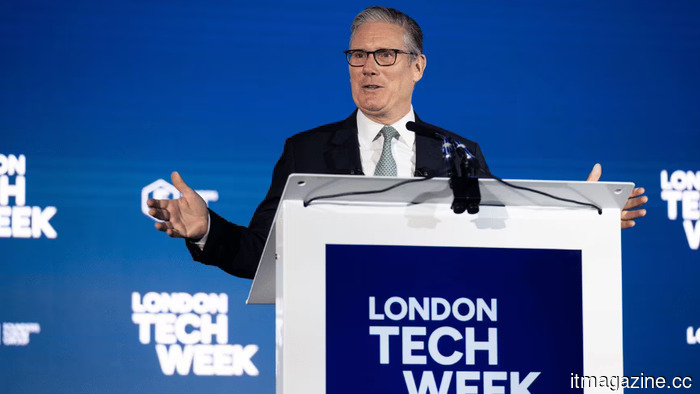
AMD, Nebius, and Starmer invest billions into UK artificial intelligence at LTW.
London Tech Week commenced, as is often the case with such events, with an announcement of investment commitments. By the conclusion of the first morning, the UK had secured several billion pounds in AI investments, primarily directed towards the less glamorous aspects of computing infrastructure.
Prime Minister Keir Starmer initiated the keynote speeches by unveiling a new national AI compute strategy, which includes a £400 million budget to acquire specialized AI chips and enhance the country’s computing capabilities, all framed within his vision of enabling British companies to “start here, scale here, and stay here.”
The more substantial investments came from the private sector. AMD pledged up to £2 billion over five years to support high-performance computing in collaboration with the University of Cambridge and Imperial College, while also investing directly in UK startups, with CEO Lisa Su delivering the announcement on stage.
Cloud provider Nebius committed about £1.7 billion to boost AI capabilities in the UK, financing three new installations of Nvidia infrastructure, which will reach a capacity of 65 megawatts by 2027, alongside an expansion of its London R&D center.
London's mayor, Sadiq Khan, contributed a smaller yet distinct commitment of £12 million aimed at assisting small businesses in the city with the actual adoption of AI through readiness assessments and mentorship, as opposed to developing the technology. The Prince of Wales is expected to speak later in the week, linking technology to his Homewards initiative addressing homelessness.
This activity unfolds against the backdrop of a UK tech sector now valued at £1.2 trillion, according to Tech Nation, with British AI startups raising over £8.2 billion in venture capital in just the first half of 2026, which approaches half of the total tech investment across Europe as per the Prime Minister's assessment. Europe’s IT expenditure is anticipated to increase by 8.2 percent this year, reaching $1.3 trillion, marking its fastest growth in five years.
For a nation concerned about being sandwiched between the US and China, these figures serve as a valuable counterpoint.
However, underlying the optimism is a familiar tension. Much of the funding is focused on computing infrastructure, predominantly reliant on American technology, including AMD chips and Nvidia hardware utilized in Nebius's data centers.
The UK's sovereign AI aspirations, though genuine, still rely heavily on US suppliers, a dependence that the launch of Cosine's home-grown “Lumen Sovereign” model that same week was explicitly made to address. Building capacity in Britain does not equate to owning the entire technology stack.
Nevertheless, for one morning at Olympia, the trajectory was evident and resonant. With support from government funding, billions from a US chipmaker, and the infrastructure from a cloud company, the UK is positioning itself as the hub for Europe’s AI development. The lingering question, as always, is whether this will translate into lasting companies, jobs, and innovations or simply lead to an increase in outsourced computing resources.
London Tech Week is scheduled to continue until June 10, with additional pitches and investment pledges expected to roll in.
Other articles
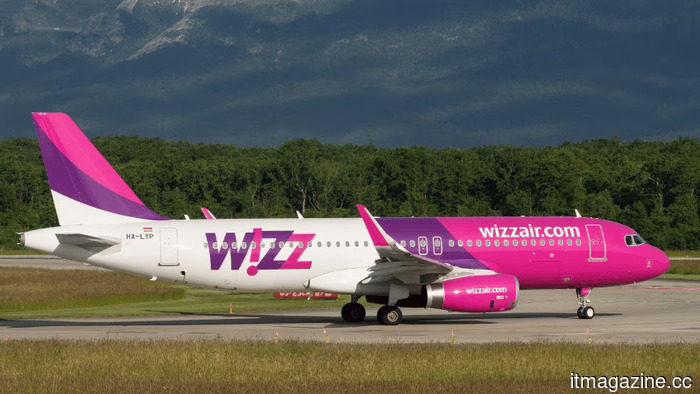 Wizz Air plans to implement Starlink Wi-Fi on its aircraft starting in 2027.
Wizz Air will become the first budget airline in Europe to provide Starlink in-flight internet starting in 2027, taking a financial risk that rivals Ryanair and EasyJet have thus far chosen to steer clear of.
Wizz Air plans to implement Starlink Wi-Fi on its aircraft starting in 2027.
Wizz Air will become the first budget airline in Europe to provide Starlink in-flight internet starting in 2027, taking a financial risk that rivals Ryanair and EasyJet have thus far chosen to steer clear of.
 Meta takes NSO to court again over spyware related to WhatsApp.
Meta is seeking contempt charges against NSO Group, claiming that the developer of Pegasus continued to target WhatsApp despite a permanent injunction, and that it thwarted new phishing attempts.
Meta takes NSO to court again over spyware related to WhatsApp.
Meta is seeking contempt charges against NSO Group, claiming that the developer of Pegasus continued to target WhatsApp despite a permanent injunction, and that it thwarted new phishing attempts.
 Meta takes NSO to court again regarding WhatsApp spyware.
Meta is seeking to hold NSO Group in contempt, asserting that the creator of Pegasus continued to target WhatsApp in violation of a permanent injunction and that it thwarted new phishing attempts.
Meta takes NSO to court again regarding WhatsApp spyware.
Meta is seeking to hold NSO Group in contempt, asserting that the creator of Pegasus continued to target WhatsApp in violation of a permanent injunction and that it thwarted new phishing attempts.
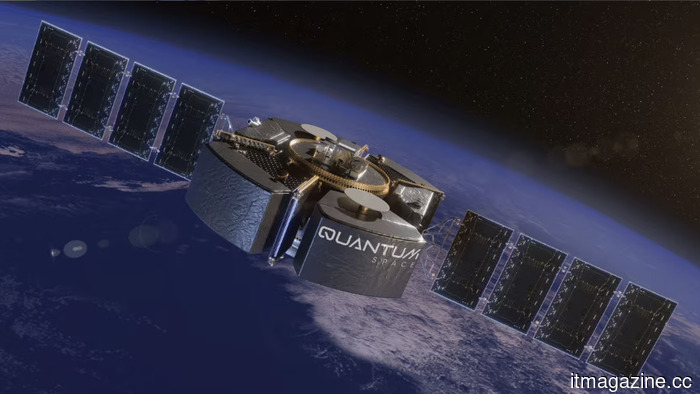 Former NASA chief takes Quantum Space public with a valuation of $1.2 billion.
Quantum Space, founded by Jim Bridenstine, is going public through a $1.2 billion SPAC merger aimed at developing maneuverable spacecraft for the upcoming space race, with plans to list on Nasdaq under the ticker QSPC.
Former NASA chief takes Quantum Space public with a valuation of $1.2 billion.
Quantum Space, founded by Jim Bridenstine, is going public through a $1.2 billion SPAC merger aimed at developing maneuverable spacecraft for the upcoming space race, with plans to list on Nasdaq under the ticker QSPC.
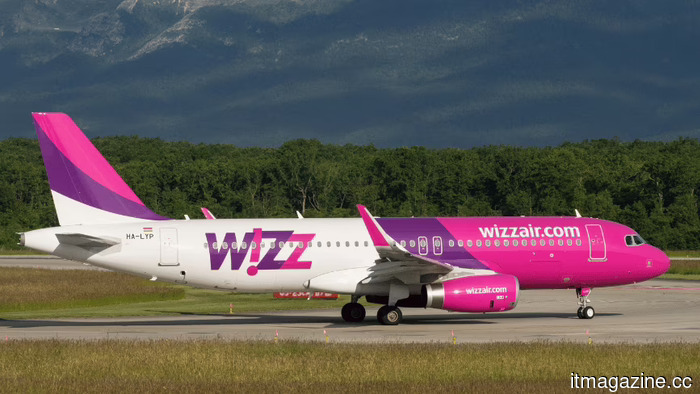 Wizz Air will install Starlink Wi-Fi on its aircraft starting in 2027.
Wizz Air is set to become the first European low-cost airline to provide Starlink in-flight internet starting in 2027, taking a financial risk that competitors Ryanair and EasyJet have so far steered clear of.
Wizz Air will install Starlink Wi-Fi on its aircraft starting in 2027.
Wizz Air is set to become the first European low-cost airline to provide Starlink in-flight internet starting in 2027, taking a financial risk that competitors Ryanair and EasyJet have so far steered clear of.
 Top 7 HRIS for Expanding Companies: A 2026 Update
From HiBob's modular mid-market platform to Rippling's integration of HR and IT, these HRIS systems are designed for companies expanding beyond 100 employees.
Top 7 HRIS for Expanding Companies: A 2026 Update
From HiBob's modular mid-market platform to Rippling's integration of HR and IT, these HRIS systems are designed for companies expanding beyond 100 employees.
AMD, Nebius, and Starmer invest billions into UK artificial intelligence at LTW.
At London Tech Week 2026, AMD has committed £2 billion, and Nebius has pledged £1.7 billion toward AI initiatives in the UK, complementing Starmer’s £400 million computing initiative as Britain aims to become Europe’s AI center.