

Top 7 HRIS for Expanding Companies: A 2026 Update
Many HRIS platforms present a vision for growth but soon become a limitation. The system that managed onboarding for your initial 50 hires may struggle when you reach 200. Reports that sufficed for one location might not support operations across three countries. The performance review module you neglected when you had 30 employees is now a reminder of your needs for something that effectively manages calibration among 300 employees.
Growing organizations do not fail in HR due to poor tool selection; they fail because they choose tools designed for their past, not their future. The optimal HRIS for expanding companies should seamlessly incorporate new complexities (like international payroll, multi-entity structures, workforce planning) without necessitating complete migrations every time the employee count increases significantly.
Here are seven platforms designed for dynamic organizations, assessed on their ability to adapt to an expanding organizational structure.
What growing organizations actually require from an HRIS
Organizations in growth phases encounter specific challenges that distinguish their HRIS needs from those of stable enterprises or early-stage startups. Before evaluating particular platforms, consider the following framework to direct your assessment.
Capacity for adding capabilities without starting anew
The most challenging migration is one that is unexpected. Growing organizations require modular platforms allowing payroll, talent management, compensation, and workforce planning to align with organizational growth. A platform that compels upfront purchases or mandates a complete replacement at 200 employees does not pass the scalability assessment.
Preparedness for international operations before it’s critical
Firms planning to hire internationally within the next 18 months should select an HRIS that ensures multi-country compliance, localized workflows, and either inherent international payroll or a validated global payroll hub. Retrofitting international capabilities onto a domestic-only platform can be costly and fraught with errors.
Infrastructure for culture and engagement
As teams grow, culture can suffer unless systems are established to preserve it. HRIS platforms equipped with engagement surveys, performance management tools, recognition features, and internal communication capabilities grant growing companies an advantage over those using multiple separate tools.
Immediate visibility into workforce expenses
CFOs in expanding companies require integrated headcount planning, compensation analysis, and budget forecasting within the same system used for managing people data. Exporting data from an HRIS into a spreadsheet for finance reviews can become unmanageable at scale.
1. HiBob
Ideal for: mid-market companies needing a unified platform for HR, talent, payroll, and planning
HiBob's Bob is tailored for mid-sized organizations that require more than basic employee data but do not want the complexity of an enterprise HCM suite. Its modular framework begins with Bob Core (people database, organizational charts, workflows, approvals) and enables firms to integrate talent management, hiring, compensation, workforce planning, or payroll suites as they expand. There is no enforced migration at 200 employees or a necessity for another platform exchange at 500.
Bob efficiently manages native US payroll, including federal and state tax filing, while the Global Payroll Hub connects with local providers in other markets via no-code setup. AI is interwoven in hiring (CV summaries, job description creation), performance reviews (manager summaries), and compensation (scenario modeling). Organizations with 100 to 1,000 employees gain the most benefit from Bob, particularly those frequently opening new offices or countries. It achieves a G2 rating of 4.5/5 from over 1,811 reviews.
Where Bob encounters limitations
The lack of published pricing can complicate comparisons for buyers considering different vendors before scheduling demos. Native payroll services are available only for the US and UK; other countries utilize the Global Payroll Hub. Organizations with intricate ERP integration needs may find Bob's connector marketplace does not yet provide the extensive variety available from traditional enterprise platforms.
Pricing
Modular pricing is based on suite selection and headcount, beginning with the Core module. Reach out to HiBob for a tailored quote.
2. Rippling
Ideal for: tech-savvy companies seeking to manage HR and IT in a single solution
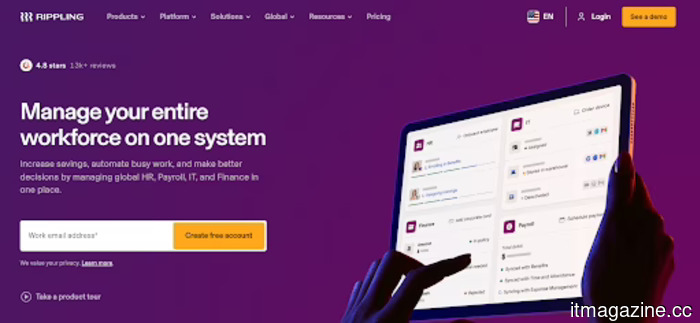
Rippling's platform relies on an employee graph that connects HR records to IT assets, application access, and financial information. Onboarding a new hire through Rippling can provision a laptop, assign software licenses, enroll in benefits, and initiate payroll in one automated workflow. The platform is operative in over 180 countries and boasts a G2 rating of 4.8/5 from 12,635 reviews.
For expanding organizations, Rippling's appeal lies in consolidation. Rather than managing separate vendors for HR, IT, and expense management, a single platform handles all three. The app management layer is especially useful for tech firms facing challenges related to SaaS license proliferation when surpassing 200 employees.
Where Rippling has constraints
The initial setup process requires considerable time, and several G2 reviewers describe the onboarding process as challenging, especially for HR teams lacking technical expertise. Mobile functionality also receives mixed reviews compared to its desktop variant. Additionally, pricing can be complex: the $8/user/month base increases as modules are added, leading to unexpected final invoices based

Other articles
 7 top HRIS for expanding companies: 2026 summary
From HiBob's modular mid-market platform to Rippling's integration of HR and IT, these HRIS systems are designed for companies that are growing beyond 100 employees.
7 top HRIS for expanding companies: 2026 summary
From HiBob's modular mid-market platform to Rippling's integration of HR and IT, these HRIS systems are designed for companies that are growing beyond 100 employees.
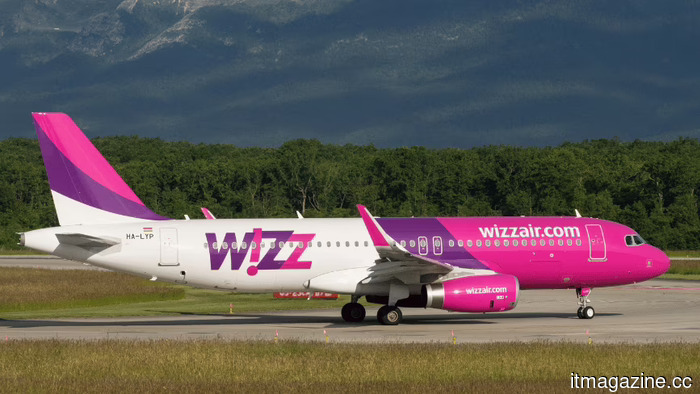 Wizz Air will install Starlink Wi-Fi on its aircraft starting in 2027.
Wizz Air is set to become the first European low-cost airline to provide Starlink in-flight internet starting in 2027, taking a financial risk that competitors Ryanair and EasyJet have so far steered clear of.
Wizz Air will install Starlink Wi-Fi on its aircraft starting in 2027.
Wizz Air is set to become the first European low-cost airline to provide Starlink in-flight internet starting in 2027, taking a financial risk that competitors Ryanair and EasyJet have so far steered clear of.
 Meta takes NSO to court again regarding WhatsApp spyware.
Meta is seeking to hold NSO Group in contempt, asserting that the creator of Pegasus continued to target WhatsApp in violation of a permanent injunction and that it thwarted new phishing attempts.
Meta takes NSO to court again regarding WhatsApp spyware.
Meta is seeking to hold NSO Group in contempt, asserting that the creator of Pegasus continued to target WhatsApp in violation of a permanent injunction and that it thwarted new phishing attempts.
 AMD, Nebius, and Starmer invest billions into UK artificial intelligence at LTW.
At London Tech Week 2026, AMD has committed £2 billion, and Nebius has pledged £1.7 billion toward AI initiatives in the UK, complementing Starmer’s £400 million computing initiative as Britain aims to become Europe’s AI center.
AMD, Nebius, and Starmer invest billions into UK artificial intelligence at LTW.
At London Tech Week 2026, AMD has committed £2 billion, and Nebius has pledged £1.7 billion toward AI initiatives in the UK, complementing Starmer’s £400 million computing initiative as Britain aims to become Europe’s AI center.
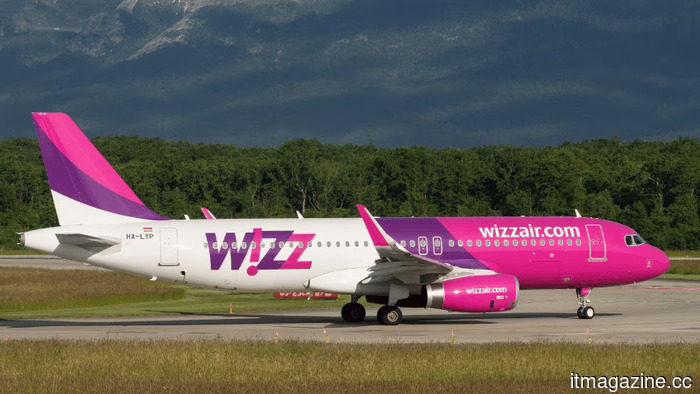 Wizz Air plans to implement Starlink Wi-Fi on its aircraft starting in 2027.
Wizz Air will become the first budget airline in Europe to provide Starlink in-flight internet starting in 2027, taking a financial risk that rivals Ryanair and EasyJet have thus far chosen to steer clear of.
Wizz Air plans to implement Starlink Wi-Fi on its aircraft starting in 2027.
Wizz Air will become the first budget airline in Europe to provide Starlink in-flight internet starting in 2027, taking a financial risk that rivals Ryanair and EasyJet have thus far chosen to steer clear of.
 Have you ever been curious about the data your iPhone applications are collecting? This app reveals everything in detail.
Loupe reveals the concealed fingerprinting signals that any iPhone application can access, including language settings, battery information, installed applications, and persistent identifiers.
Have you ever been curious about the data your iPhone applications are collecting? This app reveals everything in detail.
Loupe reveals the concealed fingerprinting signals that any iPhone application can access, including language settings, battery information, installed applications, and persistent identifiers.
Top 7 HRIS for Expanding Companies: A 2026 Update
From HiBob's modular mid-market platform to Rippling's integration of HR and IT, these HRIS systems are designed for companies expanding beyond 100 employees.