

The UK intends to purchase AI chips from domestic companies to prevent them from relocating to the US.
**TL;DR** The UK government plans to make "strategic purchases" of AI chips from British companies to retain them within the country. Technology Secretary Liz Kendall aims to develop a £37 billion chip industry with a 5% share of the global market.
The UK government is set to directly purchase AI chips from British tech firms to ensure they remain in the country. At London Tech Week, Technology Secretary Liz Kendall will present plans for these "strategic purchases" of semiconductor equipment from UK-based companies, according to a report by the Telegraph. This initiative includes access to taxpayer-backed funding and investment in skills to keep the workforce in Britain.
This announcement is part of a larger AI hardware strategy aimed at capturing 5% of the global chip market, potentially generating around £37 billion in revenue and creating tens of thousands of jobs. The government has already allocated £100 million via ARIA’s scaling compute programme, which includes £50 million designated for a scaling inference lab where British startups can test and validate their hardware.
The necessity for this initiative is evident, as the UK continues to lose its top chip companies to foreign acquisitions. For instance, SoftBank purchased Graphcore in 2024, while Qualcomm acquired Alphawave IP for $2.4 billion last year. In 2023, Arm, the UK's leading chip designer, opted for a New York listing. Each of these exits has diminished the UK's ability to sustain its semiconductor industry.
"This technology is too critical to rely entirely on other nations, particularly in sectors such as defense, financial services, and healthcare," Kendall remarked in a January speech at Bloomberg when she announced £1 billion in funding to enhance the UK's AI research computing capacity twenty-fold.
The strategic chip purchases would position the government as a buyer, not just a regulator, ensuring guaranteed demand for British firms. Six UK companies have already been granted access to government-funded supercomputers to progress their AI models, with the government retaining a right of first refusal for future investments. Fractile, a British inference chip startup that recently secured $220 million and is reportedly in discussions with Anthropic, is among the firms this strategy seeks to support.
These plans also address concerns about foreign dependency in government procurement. A recent parliamentary report cautioned against allowing US firm Palantir to have a significant presence in the UK public sector and noted a rising reliance on Microsoft and AWS. The HMRC’s £175 million AI contract with London-based Quantexa was an early indication of the government’s preference for domestic suppliers.
Whether the strategic purchases alone can prevent another Graphcore from being sold overseas remains uncertain. The UK has the engineering talent and research capabilities but lacks the domestic demand and patient capital to foster the growth of companies locally, instead of selling to SoftBank or Qualcomm at the first substantial offer.
Other articles
 OpenAI introduces Lockdown Mode in ChatGPT to prevent data theft resulting from prompt injection attacks.
ChatGPT's new Lockdown Mode turns off live browsing, agent mode, and deep research to prevent attackers from extracting data via prompt injection.
OpenAI introduces Lockdown Mode in ChatGPT to prevent data theft resulting from prompt injection attacks.
ChatGPT's new Lockdown Mode turns off live browsing, agent mode, and deep research to prevent attackers from extracting data via prompt injection.
 The UK intends to purchase AI chips from domestic companies to prevent them from relocating to the US.
Tech Secretary Liz Kendall is set to declare "strategic acquisitions" of semiconductor equipment from UK firms during London Tech Week, with the goal of establishing a £37 billion chip sector.
The UK intends to purchase AI chips from domestic companies to prevent them from relocating to the US.
Tech Secretary Liz Kendall is set to declare "strategic acquisitions" of semiconductor equipment from UK firms during London Tech Week, with the goal of establishing a £37 billion chip sector.
 Google's updated AI response system may simplify the texting experience.
Google Messages is said to be trialing a new feature called “tap to draft,” which utilizes AI to create longer and more contextually relevant text responses within conversations.
Google's updated AI response system may simplify the texting experience.
Google Messages is said to be trialing a new feature called “tap to draft,” which utilizes AI to create longer and more contextually relevant text responses within conversations.
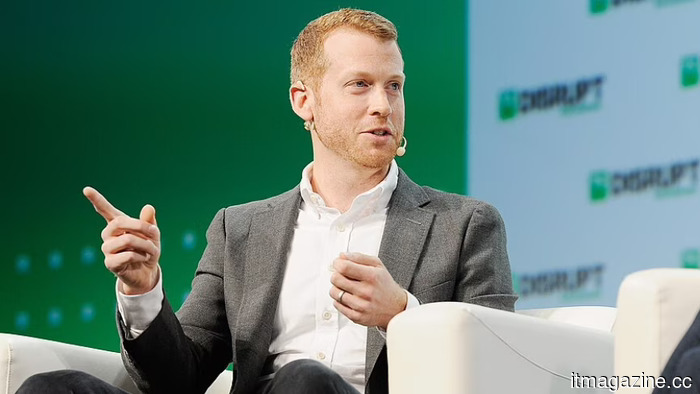 Kyle Vogt's Bot Company is facing a lawsuit for converting an Airbnb into a robotics laboratory.
The Bot Company is accused of reserving a home in San Francisco under misleading circumstances and utilizing it as a research and development lab for home robots. The property owner is suing for $12,000.
Kyle Vogt's Bot Company is facing a lawsuit for converting an Airbnb into a robotics laboratory.
The Bot Company is accused of reserving a home in San Francisco under misleading circumstances and utilizing it as a research and development lab for home robots. The property owner is suing for $12,000.
 Trump signs a memorandum placing the 'most advanced AI' under military control and prohibiting vendors from shutting it down.
Trump's recent security memorandum speeds up the implementation of military AI, mandates an update to the autonomous weapons directive, and prohibits companies from deactivating deployed models.
Trump signs a memorandum placing the 'most advanced AI' under military control and prohibiting vendors from shutting it down.
Trump's recent security memorandum speeds up the implementation of military AI, mandates an update to the autonomous weapons directive, and prohibits companies from deactivating deployed models.
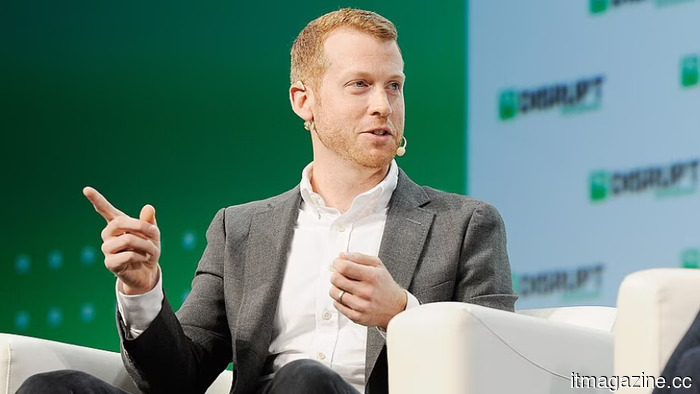 Kyle Vogt's Bot Company is facing a lawsuit for converting an Airbnb into a robot laboratory.
The Bot Company reportedly rented a house in San Francisco under deceitful circumstances and utilized it as a research and development lab for domestic robots. The homeowner is seeking $12,000 in damages.
Kyle Vogt's Bot Company is facing a lawsuit for converting an Airbnb into a robot laboratory.
The Bot Company reportedly rented a house in San Francisco under deceitful circumstances and utilized it as a research and development lab for domestic robots. The homeowner is seeking $12,000 in damages.
The UK intends to purchase AI chips from domestic companies to prevent them from relocating to the US.
Tech Secretary Liz Kendall is set to reveal "strategic purchases" of semiconductor equipment from UK firms during London Tech Week, with the goal of establishing a £37 billion chip industry.