
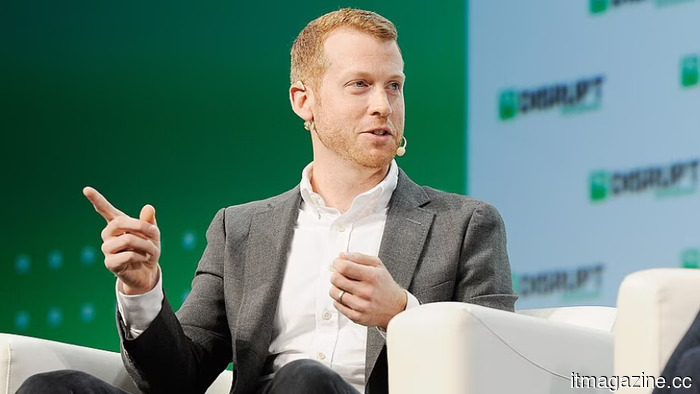
Kyle Vogt's Bot Company is facing a lawsuit for converting an Airbnb into a robot laboratory.
Kyle Vogt's Bot Company is facing a lawsuit for allegedly using an Airbnb property as a hidden robot lab. The host, Sean Donovan, discovered a six-foot robot prototype inside and is seeking $12,000 in damages.
Donovan, who rents out his home in San Francisco's Portola neighborhood, claims that workers booked his property under false pretenses in April, posing as remote employees from Thailand. He is requesting $12,383 as compensation.
What Donovan found was far from a group of digital nomads. Using his outdoor Ring camera, he saw more than 30 individuals coming and going over an 11-night period, and he overheard some discussing their “shifts,” he told SFGate.
During a visit to take out the trash, he noticed bundles of wires leading into the house. Following the wires, he found a six-foot robot, which he described as resembling a “borg” from Star Trek or a large “Roomba with treads.” The Bot Company, which focuses on creating household chore robots, has revealed very little about its prototypes publicly.
The damage to his property was significant. A 70-year-old family dining table was scratched and water-marked, a Franciscan pottery set went missing, a bathroom tile was chipped, a coffee table was damaged, and a mug was glued back together after breaking. Additionally, an entire shoe rack was missing. “They came in and put everything back in a new place,” Donovan shared with SFGate. “Silverware in a new drawer or a different room.”
Vogt co-founded The Bot Company in 2024 with Paril Jain, former head of Tesla’s AI division. The startup has raised over $300 million, including a $150 million funding round led by Greenoaks, and is valued at about $2 billion, although it has disclosed very little about its products.
Vogt’s previous venture was less successful; he was CEO of Cruise, GM’s robotaxi division, which was closed in 2024 following several safety incidents. GM incorporated the technical team and shifted focus to autonomous driving for personal vehicles.
Testing household robots in real environments can be valid since domestic settings are messy, unpredictable, and contain breakable objects. However, conducting such tests without the consent of the property owner and under false pretenses is problematic. The lawsuit claims unauthorized commercial R&D activities, including robotic prototype testing and filming for profit.
Other robotics companies testing in real-world environments have also faced criticism, with robotaxi operators being scrutinized for using public roads as unofficial test tracks. The Bot Company seems to have applied this approach to a private residence, resulting in significant property damage and an unintended reveal of a prototype they likely intended to remain hidden.
Other articles
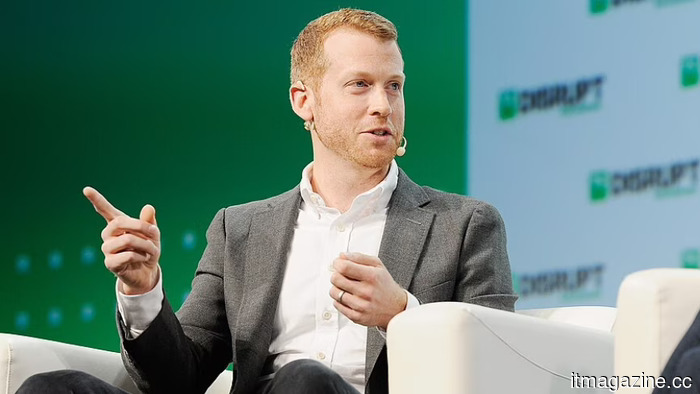 Kyle Vogt's Bot Company is facing a lawsuit for converting an Airbnb into a robotics laboratory.
The Bot Company is accused of reserving a home in San Francisco under misleading circumstances and utilizing it as a research and development lab for home robots. The property owner is suing for $12,000.
Kyle Vogt's Bot Company is facing a lawsuit for converting an Airbnb into a robotics laboratory.
The Bot Company is accused of reserving a home in San Francisco under misleading circumstances and utilizing it as a research and development lab for home robots. The property owner is suing for $12,000.
 Google's updated AI response system may simplify the texting experience.
Google Messages is said to be trialing a new feature called “tap to draft,” which utilizes AI to create longer and more contextually relevant text responses within conversations.
Google's updated AI response system may simplify the texting experience.
Google Messages is said to be trialing a new feature called “tap to draft,” which utilizes AI to create longer and more contextually relevant text responses within conversations.
 OpenAI has introduced Lockdown Mode to ChatGPT to prevent data theft resulting from prompt injection attacks.
ChatGPT's new Lockdown Mode turns off live browsing, agent mode, and deep research to prevent attackers from extracting data via prompt injection.
OpenAI has introduced Lockdown Mode to ChatGPT to prevent data theft resulting from prompt injection attacks.
ChatGPT's new Lockdown Mode turns off live browsing, agent mode, and deep research to prevent attackers from extracting data via prompt injection.
 OpenAI introduces Lockdown Mode in ChatGPT to prevent data theft resulting from prompt injection attacks.
ChatGPT's new Lockdown Mode turns off live browsing, agent mode, and deep research to prevent attackers from extracting data via prompt injection.
OpenAI introduces Lockdown Mode in ChatGPT to prevent data theft resulting from prompt injection attacks.
ChatGPT's new Lockdown Mode turns off live browsing, agent mode, and deep research to prevent attackers from extracting data via prompt injection.
 Trump signs a memorandum that places 'the most advanced AI' under military control and prohibits suppliers from withdrawing support.
Trump's latest security memo speeds up the implementation of military AI, directs an update for autonomous weapons guidelines, and prohibits companies from deactivating deployed models.
Trump signs a memorandum that places 'the most advanced AI' under military control and prohibits suppliers from withdrawing support.
Trump's latest security memo speeds up the implementation of military AI, directs an update for autonomous weapons guidelines, and prohibits companies from deactivating deployed models.
 Trump signs a memorandum placing the 'most advanced AI' under military control and prohibiting vendors from shutting it down.
Trump's recent security memorandum speeds up the implementation of military AI, mandates an update to the autonomous weapons directive, and prohibits companies from deactivating deployed models.
Trump signs a memorandum placing the 'most advanced AI' under military control and prohibiting vendors from shutting it down.
Trump's recent security memorandum speeds up the implementation of military AI, mandates an update to the autonomous weapons directive, and prohibits companies from deactivating deployed models.
Kyle Vogt's Bot Company is facing a lawsuit for converting an Airbnb into a robot laboratory.
The Bot Company reportedly rented a house in San Francisco under deceitful circumstances and utilized it as a research and development lab for domestic robots. The homeowner is seeking $12,000 in damages.