

Don't expect to see Meta's Muse Spark AI appearing in your phone applications in the near future.
Meta's anticipated AI model might not launch as quickly as the company initially planned. A report by The Wall Street Journal indicates that Meta has postponed the release of its upcoming primary AI model, internally dubbed "Muse Spark," generating concerns about the company's AI goals and preparedness.
These delays are reportedly due to worries regarding performance, reliability, and internal conflicts about whether the model can compete with swiftly evolving rivals such as OpenAI, Google, and Anthropic.
This is significant because Meta has spent the past two years positioning itself as a major contender in the generative AI sector. The company has integrated AI assistants into Facebook, Instagram, WhatsApp, Messenger, and even hardware like Ray-Ban smart glasses. However, despite its aggressive launch strategy, the next significant advancement in Meta’s AI ecosystem seems to be falling further behind schedule.
Meta's AI ambitions are facing challenges
The report mentions that Meta initially aimed for Muse Spark to be a more sophisticated multimodal AI capable of managing text, images, reasoning, and app-level interactions at a much higher standard than what current Meta AI offerings provide.
The company was reportedly set to release the model to developers for the creation of AI-powered tools in third-party apps and services. Nonetheless, internal engineers and executives seem increasingly worried that the model does not measure up to competitors in crucial areas such as reasoning capability and overall performance reliability.
The delays underscore how fiercely competitive the AI landscape has become. Organizations are no longer just striving to build functional chatbots; they are in a race to develop AI systems that could potentially replace search engines, drive operating systems, automate workflows, and eventually function as comprehensive digital assistants.
Meta CEO Mark Zuckerberg has consistently stated that AI is one of the company’s key long-term focuses. Reports suggest that the company is investing tens of billions of dollars on AI infrastructure, chips, and data centers to support its future models.
However, despite these expenditures, Meta is under pressure from competitors advancing rapidly. OpenAI is continually expanding the ChatGPT ecosystem, Google is deeply integrating Gemini into Android and Workspace, and companies like Anthropic are drawing in more enterprise clients.
The significance of the delay
For regular users, this delay implies that the more sophisticated AI experiences hinted at by Meta may take longer to surface in apps like Instagram, WhatsApp, and Facebook. This matters because Meta’s ecosystem provides it with a unique advantage that few rivals possess: billions of active users engaging with its platforms on a daily basis. An effective AI rollout within Meta's apps could significantly change how people search, communicate, create content, shop, and interact online.
Simultaneously, the delays reflect a broader reality in the current AI industry. Creating large AI models is one challenge; delivering reliable, scalable, consumer-ready AI products is quite another.
What lies ahead
Meta has not officially announced a release schedule for Muse Spark, and the company may continue refining the model before introducing it to external developers. The greater concern for Meta is timing. The pace of AI competition is unusually fast, and every postponement allows rivals additional time to reinforce their ecosystems and user engagement.
Currently, Meta's AI aspirations are substantial. Yet, if the reports hold true, the company is confronting a lesson that much of the tech sector is experiencing: in AI, enthusiasm often develops faster than actual products.
Other articles
 Open-ear earbuds are finally functioning like true daily companions.
Shokz OpenDots 2 enhances the case for open-ear earbuds for everyday use, boasting improved audio quality, lighter clip-on comfort, more intuitive controls, extended battery life, and some omitted details at launch.
Open-ear earbuds are finally functioning like true daily companions.
Shokz OpenDots 2 enhances the case for open-ear earbuds for everyday use, boasting improved audio quality, lighter clip-on comfort, more intuitive controls, extended battery life, and some omitted details at launch.
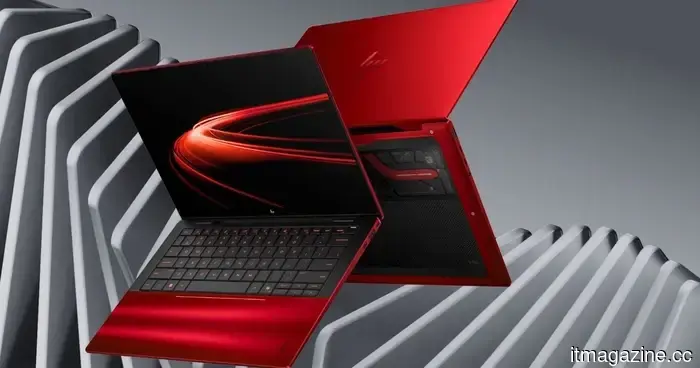 HP and Ferrari created a stunning red laptop, and I can't take my eyes off it.
The HP Limited Edition Scuderia Ferrari AI PC is priced at $5,599 and will be available for purchase in the United States beginning June 12.
HP and Ferrari created a stunning red laptop, and I can't take my eyes off it.
The HP Limited Edition Scuderia Ferrari AI PC is priced at $5,599 and will be available for purchase in the United States beginning June 12.
 Open-ear earbuds are finally functioning like true everyday devices.
Shokz OpenDots 2 enhances the case for open-ear earbuds in daily use, featuring improved audio performance, a lighter clip-on design for comfort, more intuitive controls, extended battery life, and some details that were not provided at launch.
Open-ear earbuds are finally functioning like true everyday devices.
Shokz OpenDots 2 enhances the case for open-ear earbuds in daily use, featuring improved audio performance, a lighter clip-on design for comfort, more intuitive controls, extended battery life, and some details that were not provided at launch.
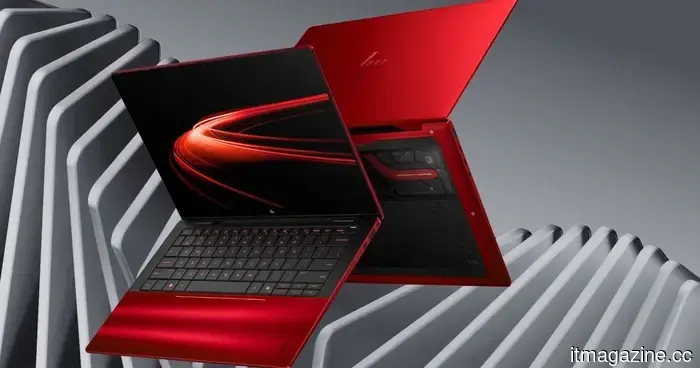 HP and Ferrari created a stunning red laptop that I can't take my eyes off.
The HP Limited Edition Scuderia Ferrari AI PC is priced at $5,599 and will be available for purchase in the United States beginning June 12.
HP and Ferrari created a stunning red laptop that I can't take my eyes off.
The HP Limited Edition Scuderia Ferrari AI PC is priced at $5,599 and will be available for purchase in the United States beginning June 12.
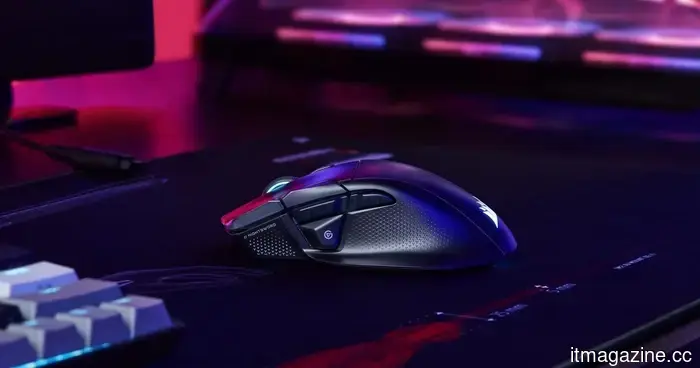 Corsair has integrated the essence of the Elgato Stream Deck into a shortcut key on its Nightsword v2 mouse.
The Corsair Nightsword v2 Wireless SD integrates Elgato Stream Deck shortcuts right into a gaming mouse, featuring a specific button for macros, application controls, and streaming commands.
Corsair has integrated the essence of the Elgato Stream Deck into a shortcut key on its Nightsword v2 mouse.
The Corsair Nightsword v2 Wireless SD integrates Elgato Stream Deck shortcuts right into a gaming mouse, featuring a specific button for macros, application controls, and streaming commands.
 Cash App has introduced a wand for payments, as scanning and tapping on phones have become quite dull.
Cash App has introduced the Cash App Wand, a $25 keychain accessory equipped with NFC technology that functions like a debit card at any contactless payment terminal.
Cash App has introduced a wand for payments, as scanning and tapping on phones have become quite dull.
Cash App has introduced the Cash App Wand, a $25 keychain accessory equipped with NFC technology that functions like a debit card at any contactless payment terminal.
Don't expect to see Meta's Muse Spark AI appearing in your phone applications in the near future.
Meta's upcoming major AI model might not be launched as soon as the company initially anticipated. A report by The Wall Street Journal indicates that Meta has postponed the rollout of its flagship AI model, referred to internally as “Muse Spark,” multiple times, prompting new concerns regarding the company's ambitions and preparedness in the AI space. The delays are said to […]