

Synthesia collaborates with Cinder to enhance moderation prior to rendering a frame.
The AI video company is enhancing its moderation infrastructure specifically designed for AI-generated content, reinforcing a screen-at-creation approach it has implemented since 2017. Synthesia determines whether a video can be created prior to its actual existence. On June 4, the London-based AI video company, which enables users to create avatar-led videos from scripts, revealed that it is expanding its trust and safety framework by collaborating with Cinder, a firm focused on moderation infrastructure for AI-generated content. This partnership strengthens a model that Synthesia has utilized since its inception: evaluating the request rather than the completed file.
This method is what makes the company unique. Traditionally, online platforms have relied on post-publication detection, hosting content and waiting for reports of violations. In contrast, Synthesia reviews every script according to its policies right at the generation stage, before any frame is rendered by the model.
Cinder integrates into this process by acting as an internal agent that conducts a secondary review of each model decision, collecting context and escalating to a human reviewer only when there is a significant decision to be made. Each action taken by a reviewer helps retrain the system, and Cinder’s classifiers support over 100 languages right from the start.
The rationale behind the partnership is based on volume. In 2025, Synthesia’s automated tools evaluated more than 11.5 million pieces of content, removing 841,957 that breached its policies. Additionally, manual reviews handled another 382,792 items, with 70,272 being discarded.
The volume of automated reviews increased approximately 77% year-on-year, rising from 6.56 million to 11.58 million items, while the content reaching human reviewers dropped from 792,586 to 441,086. This strategy is intentional: address clear-cut cases with machines and allocate human reviewers to handle appeals and uncertainties. In 2025, the firm processed 12,450 user appeals, leading to a reversal of about 31% upon review.
Synthesia views safety as a commercial advantage rather than a burden. Its clientele is predominantly composed of enterprises, including over 60% of the Fortune 100 from sectors like financial services, healthcare, defense, and the public sector—customers for whom a platform capable of producing deepfakes would be unusable. The company is accredited with ISO 27001, ISO 42001, and ISO 27701 certifications, and it publishes an annual responsible-creation report called Futuresafe.
A recent external evaluation provided tangible support for this stance. When the Belgian public broadcaster RTBF explored AI video tools for a report named IA, la fabrique à arnaques (AI, the scam factory), Synthesia successfully prevented the creation of non-consensual deepfakes, political propaganda, racist content, and cryptocurrency investment scams, while several competitor platforms generated these types of content.
For a company that has built its reputation by denying specific requests, having an independent broadcaster document its refusals represents a validation that marketing cannot replicate.
According to the company, the partnership with Cinder is aimed at maintaining that record as the product progresses. As Synthesia introduces new types of avatars, languages, and platforms, its trust and safety team seeks moderation that keeps pace with its roadmap rather than lagging behind.
Whether the joint system will be able to cope with the scale that Synthesia is aiming for is a question that only future Futuresafe reports can resolve. The underlying assumption behind the announcement predates the partnership: in AI video, the safest moment to reject a request is before any creation occurs.

Other articles
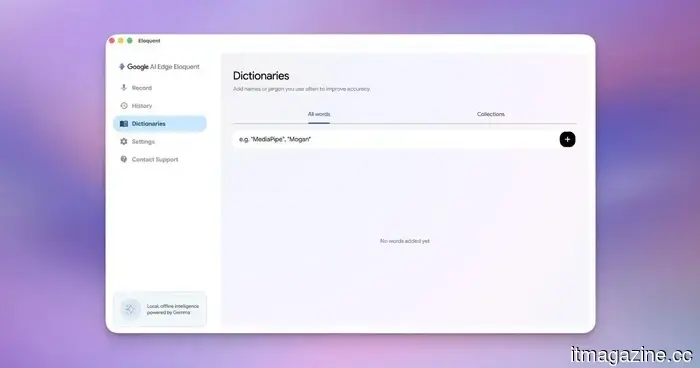 Google aims to eliminate your pricey voice transcription subscription.
Google AI Edge Eloquent is a complimentary dictation application for Mac that converts and refines your spoken words on the device, without any subscription fees, cloud usage, or privacy issues.
Google aims to eliminate your pricey voice transcription subscription.
Google AI Edge Eloquent is a complimentary dictation application for Mac that converts and refines your spoken words on the device, without any subscription fees, cloud usage, or privacy issues.
 Google's latest AI application aims to substitute infinite scrolling with personal narratives from your own life.
Google's latest app, Dreambeans, operates while you sleep and presents a brief selection of AI-generated stories about your life every morning.
Google's latest AI application aims to substitute infinite scrolling with personal narratives from your own life.
Google's latest app, Dreambeans, operates while you sleep and presents a brief selection of AI-generated stories about your life every morning.
 Google Photos on Android now offers a dedicated space for your personalized stickers.
Google Photos on Android is introducing a dedicated Stickers folder within the Collections tab, which will automatically save all custom stickers you create. This update aligns the Android app's features with those of iOS, which received this folder back in January.
Google Photos on Android now offers a dedicated space for your personalized stickers.
Google Photos on Android is introducing a dedicated Stickers folder within the Collections tab, which will automatically save all custom stickers you create. This update aligns the Android app's features with those of iOS, which received this folder back in January.
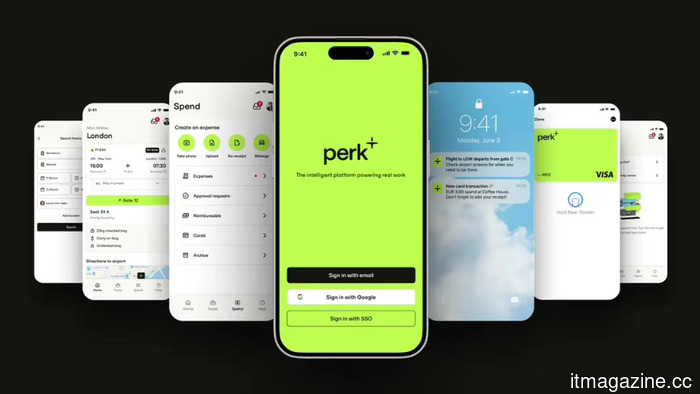 Perk secures a $300 million credit facility to advance its AI platform in the United States.
Perk, which was previously known as TravelPerk, has secured a $300 million private credit facility led by Neuberger Specialty Finance to support investment in AI and the launch of a spending platform in the US.
Perk secures a $300 million credit facility to advance its AI platform in the United States.
Perk, which was previously known as TravelPerk, has secured a $300 million private credit facility led by Neuberger Specialty Finance to support investment in AI and the launch of a spending platform in the US.
 Nintendo is revamping the Switch 2 to allow users to replace the battery on their own.
Nintendo has announced that it is working on a version of the Switch 2 specifically for the EU, featuring a user-replaceable battery, in response to a regulation set to be enforced in February 2027.
Nintendo is revamping the Switch 2 to allow users to replace the battery on their own.
Nintendo has announced that it is working on a version of the Switch 2 specifically for the EU, featuring a user-replaceable battery, in response to a regulation set to be enforced in February 2027.
 EU technology sovereignty initiative limits US cloud services and introduces Chips Act 2.0.
Europe's tech sovereignty initiative limits access for US cloud providers concerning government data and initiates Chips Act 2.0 to promote advanced semiconductor manufacturing.
EU technology sovereignty initiative limits US cloud services and introduces Chips Act 2.0.
Europe's tech sovereignty initiative limits access for US cloud providers concerning government data and initiates Chips Act 2.0 to promote advanced semiconductor manufacturing.
Synthesia collaborates with Cinder to enhance moderation prior to rendering a frame.
Synthesia is enhancing its trust and safety framework with Cinder, introducing an AI agent that reviews every script prior to the avatars creating video content.