
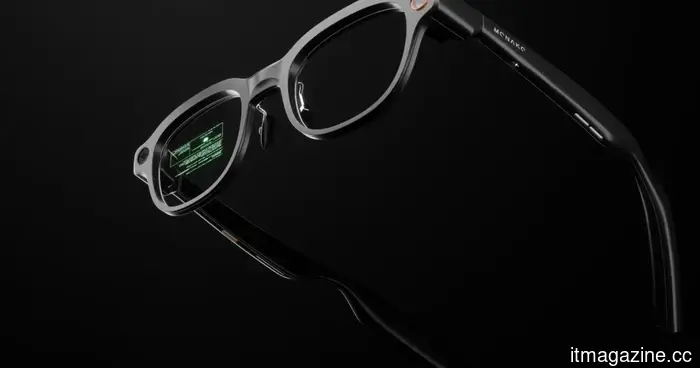
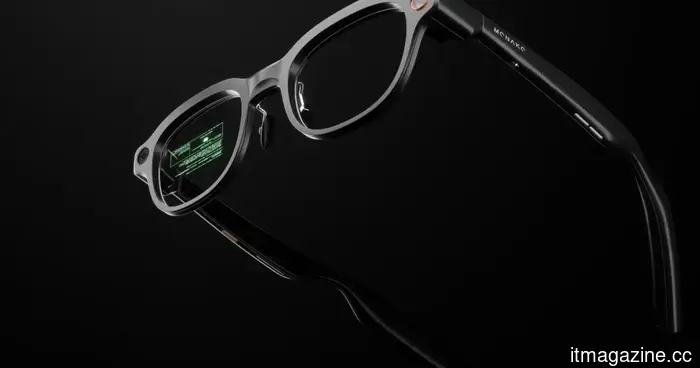
Monako Glass transforms smart glasses into the most unusual new coding workstation to date.
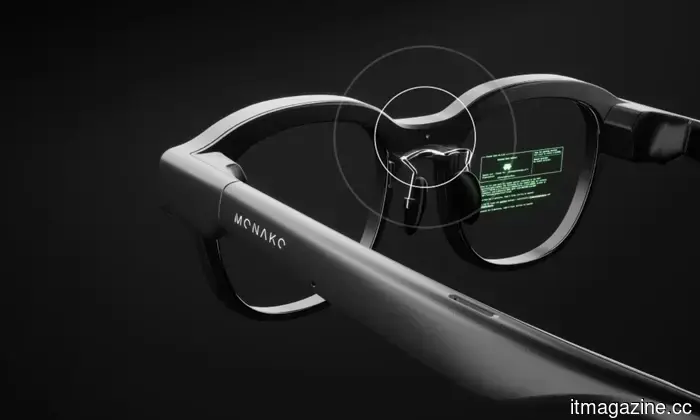
Monako Glass merges Linux, a waveguide display, cameras, speakers, and AI coding-agent connections within a 48-gram frame. The company is putting a strong emphasis on input methods, featuring a bone conduction microphone and a gesture system named Vision Engine.
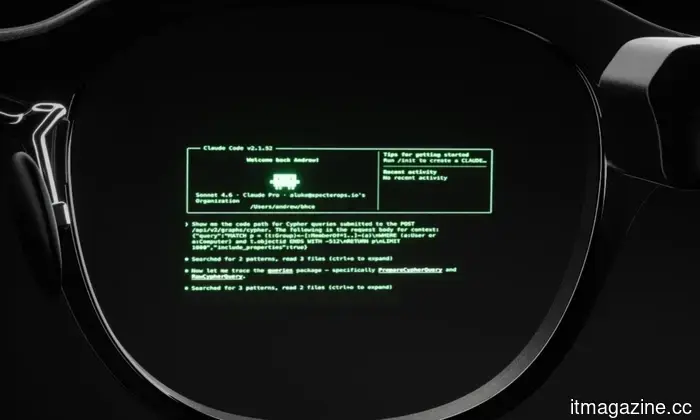
The list of tools extends beyond just coding. Monako includes Claude Code, Codex, Unreal Engine, Blender, After Effects, and other applications, suggesting that the glasses function more like a wearable control interface for both technical and creative tasks.
Introducing Monako Glass 👓 The first wearable Linux computer designed in the form of glasses. It can run Claude Code, Codex, and any coding agent from anywhere. pic.twitter.com/DFDKuP6xux— Candy樂兒 (@candyyueliu) June 3, 2026
The purchasing details are still not fully clear. Monako has presented a $19 reservation option, but the complete price, shipping date, battery life, processor, memory, storage, and regions supported remain unspecified.
Can coding glasses perform actual tasks?
The strongest case for Monako Glass revolves around enabling quick management of agent-driven tasks. A developer could monitor progress, approve steps, submit prompts, or review outputs without needing to return to a full desktop setup.
Monako
This workflow aligns better with the hardware than the notion of replacing laptops. Monako claims the microphone captures nasal vibrations to function effectively in noisy settings, while the Vision Engine translates small gestures into digital commands.
Those assertions require practical validation. Battery life will determine if the glasses are suitable for extended use beyond quick checks. Display quality will ascertain whether outputs from agents are legible. Input methods must demonstrate their speed, precision, and application support in real-world scenarios.
Could this serve as an agent terminal?
Monako Glass seems most credible as a wearable terminal for AI coding agents. This role is more limited than that of a fully functional workstation but appears more plausible.
Monako refers to its operating system as MonoOS, a Linux-based platform for smart glasses featuring a Lua application layer and an embedded Rive animation runtime. The company claims agents can generate Lua applications on demand without compilation, a bold assertion for a device designed to be worn.
Monako
A more tangible promise is interoperability. Monako illustrates workflows that connect the glasses to cloud sandboxes and local Macs or PCs, indicating a front-end interface for tasks performed across various platforms.
Will Monako validate its concept?
Monako now needs to demonstrate how all of these features function beyond the polished promotional materials. The primary concern is how tasks are distributed between the glasses, cloud sandboxes, and a local computer.
Privacy issues also require clarification. A wearable camera alters expectations, particularly for hardware meant to be used outside of a traditional desk environment. Monako has not provided clear information about camera controls or visibility indicators.
It would be prudent to wait for complete specifications, availability, and hands-on evaluations before considering Monako Glass as a revolutionary tool for coding. If it indeed simplifies the oversight of coding agents, this unconventional workstation concept could hold genuine potential.
Other articles
 CEO of Databricks: The year 2026 is
Databricks CEO Ali Ghodsi mentioned that the $134 billion company plans to forgo initial public offerings in 2026, as SpaceX, Anthropic, and OpenAI are attracting over $200 billion in public funding.
CEO of Databricks: The year 2026 is
Databricks CEO Ali Ghodsi mentioned that the $134 billion company plans to forgo initial public offerings in 2026, as SpaceX, Anthropic, and OpenAI are attracting over $200 billion in public funding.
 Meta introduces Creator Assistant AI for Facebook content creators.
Meta's Creator Assistant evaluates creator performance and clarifies what is effective and the reasons behind it. Reels translated by AI now attract over 500 million viewers each week.
Meta introduces Creator Assistant AI for Facebook content creators.
Meta's Creator Assistant evaluates creator performance and clarifies what is effective and the reasons behind it. Reels translated by AI now attract over 500 million viewers each week.
 An AI fitness coach monitors your muscle mechanics during workouts to help prevent beginner injuries.
BioCoach is an innovative AI prototype that monitors your workouts via your camera, creates a 3D model of your skeleton, and suggests which joint angles need adjustment.
An AI fitness coach monitors your muscle mechanics during workouts to help prevent beginner injuries.
BioCoach is an innovative AI prototype that monitors your workouts via your camera, creates a 3D model of your skeleton, and suggests which joint angles need adjustment.
 Monako Glass transforms smart glasses into an incredibly unique coding workstation.
Monako Glass integrates Linux and AI coding-agent support into smart glasses, but its success hinges on its ability to simplify developer tasks without claiming to substitute for a laptop.
Monako Glass transforms smart glasses into an incredibly unique coding workstation.
Monako Glass integrates Linux and AI coding-agent support into smart glasses, but its success hinges on its ability to simplify developer tasks without claiming to substitute for a laptop.
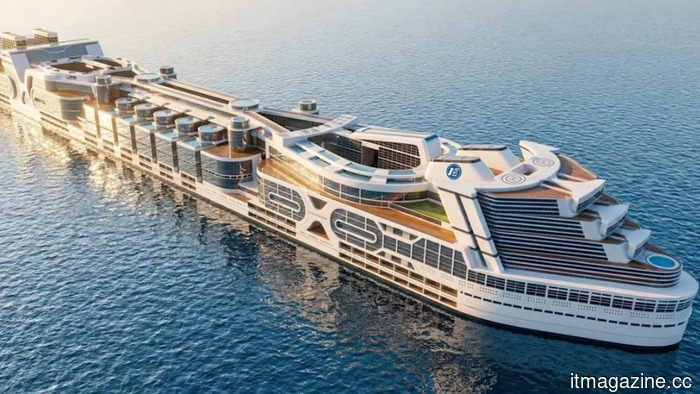 Freedom Ship: the maritime city that's been anticipated for three decades
The Freedom Ship, a nuclear-powered vessel measuring a mile in length and capable of holding 80,000 residents, has returned with updated renderings and a price of £12 billion, though funding is not yet secured.
Freedom Ship: the maritime city that's been anticipated for three decades
The Freedom Ship, a nuclear-powered vessel measuring a mile in length and capable of holding 80,000 residents, has returned with updated renderings and a price of £12 billion, though funding is not yet secured.
 The AI fitness coach detects muscle movements while you work out and helps prevent beginner injuries.
BioCoach is an innovative AI prototype that observes your workouts via your camera, creates a 3D model of your skeleton, and advises you on which joint angles need adjustment.
The AI fitness coach detects muscle movements while you work out and helps prevent beginner injuries.
BioCoach is an innovative AI prototype that observes your workouts via your camera, creates a 3D model of your skeleton, and advises you on which joint angles need adjustment.
Monako Glass transforms smart glasses into the most unusual new coding workstation to date.
Monako Glass integrates Linux and AI coding-agent support into smart glasses, but its future hinges on its ability to simplify developer tasks without claiming to replace a laptop.