
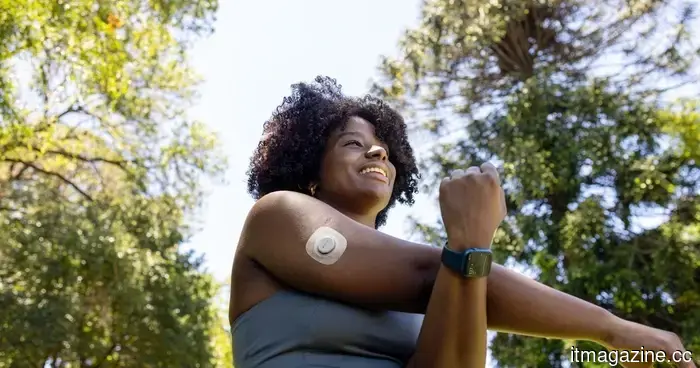
An AI fitness coach monitors your muscle mechanics during workouts to help prevent beginner injuries.
During the pandemic, the US Consumer Product Safety Commission observed a 48% increase in injuries related to at-home exercise. While one might assume that inadequate equipment was to blame, the real issue was improper technique, as many people lacked a coach to provide corrections.
Researchers from Drexel University and Michigan State University have developed a prototype that precisely addresses this challenge in real-time, utilizing your phone's camera, and it holds significant potential to evolve into a practical fitness app in the future (as reported by Tech Xplore).
What is the name of the system and how does it function?
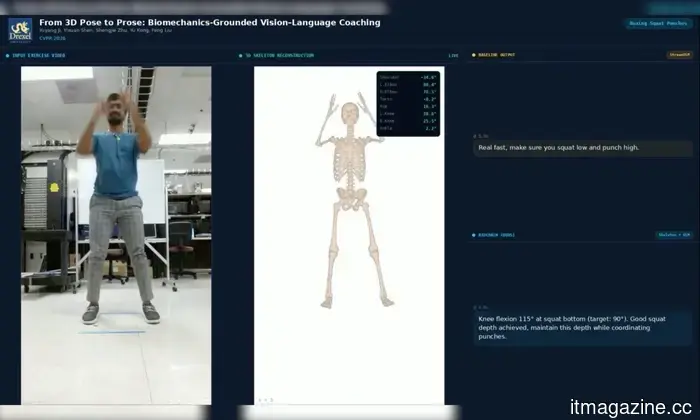
The system is named BioCoach and was showcased at the Conference on Computer Vision and Pattern Recognition in June 2026. It employs artificial intelligence and live video (through a camera) to observe your exercises, assess your body mechanics, and provide specific corrections based on biomechanics.
To accomplish this, the system analyzes video through two parallel streams: the first employs a 3D convolutional neural network to capture your visual appearance and movement patterns, while the second reconstructs your skeleton in three dimensions, examining your joint angles, range of motion, and the current phase of the movement.
Before giving feedback, BioCoach determines which joints are most engaged in the exercise you're performing. For example, during push-ups, it particularly monitors your shoulders, elbows, and wrists, delivering tailored corrections.
This is not about the standard “keep your back straight” advice that most fitness apps provide. Instead, the prototype goes further, offering anatomically precise instructions like “increase elbow flexion to 90 degrees at the bottom.”
How does it stack up against competitors?
The research team trained BioCoach using Qualcomm’s Exercise Video Dataset, which contains over 200 re-annotated videos and more than 2,400 new annotations, enabling BioCoach to clarify not only what needs to be fixed but also the reasons behind it.
BioCoach has already been evaluated against similar programs from Nvidia, ByteDance, Alibaba, Salesforce, OpenAI, and MIT, among others. It surpassed Stream-VLM, a program developed by MIT and Nvidia, in both text quality and assessed accuracy. It also demonstrated improved accuracy in anatomy-specific feedback.
Currently, the system remains a prototype, but the team is working on enhancing its capabilities to estimate joint reaction forces and muscle activation patterns, all from a video input.
Supported by the National Science Foundation, I firmly believe that BioCoach could evolve into a groundbreaking smartphone app that provides personalized corrective advice, promotes proper form and posture, and helps prevent injuries while enabling sustainable workout routines for individuals, both indoors and outdoors.
BioCoach is more sophisticated than most AI-based fitness coaches currently available.
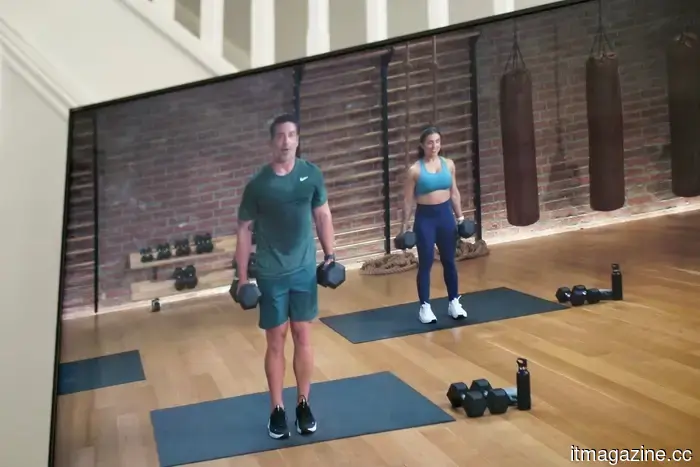
For context, both Apple Fitness+ and Mirror provide video-based workout programs, but their feedback is pre-recorded and lacks the dynamic interaction that BioCoach offers.
Peloton features a Movement-Tracking Camera in its hardware that counts repetitions and identifies issues, but it necessitates specific equipment like Bike+, Tread+, or Row+, and it does not explain the rationale behind form corrections and their benefits.
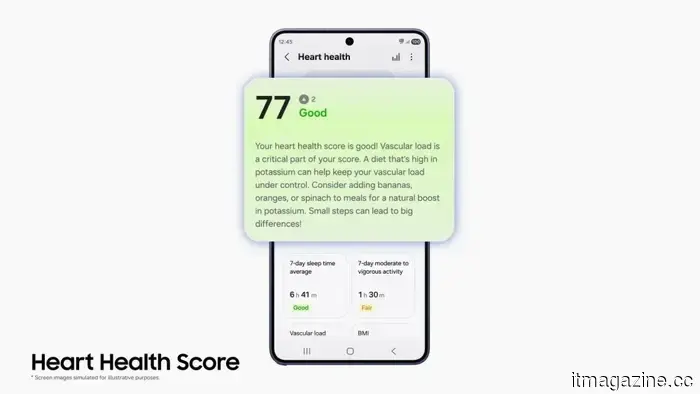
Similarly, Google’s Health Coach and Samsung Health assess biometric signals such as heart rate and activity cadence to recommend certain improvements, but they can't visually track your movement, thus failing to provide guidance on your form.
In contrast, BioCoach is the first system to integrate 3D skeletal reconstruction with a language model that explains the mechanical implications of each correction. If it eventually becomes available as a consumer app on your phone, which I sincerely hope will occur, it could deliver expert coaching to anyone equipped with a camera.
Other articles
 Meta provides a 30-minute break on employee monitoring following criticism.
Meta has reduced its MCI keystroke tracking program following a petition signed by 1,500 employees. Workers are now able to pause the tracking for a duration of 30 minutes.
Meta provides a 30-minute break on employee monitoring following criticism.
Meta has reduced its MCI keystroke tracking program following a petition signed by 1,500 employees. Workers are now able to pause the tracking for a duration of 30 minutes.
 CEO of Databricks: The year 2026 is
Databricks CEO Ali Ghodsi announces that the $134 billion company will forgo IPOs in 2026 as SpaceX, Anthropic, and OpenAI attract over $200 billion in public investment.
CEO of Databricks: The year 2026 is
Databricks CEO Ali Ghodsi announces that the $134 billion company will forgo IPOs in 2026 as SpaceX, Anthropic, and OpenAI attract over $200 billion in public investment.
 CEO of Databricks: The year 2026 is
Databricks CEO Ali Ghodsi mentioned that the $134 billion company plans to forgo initial public offerings in 2026, as SpaceX, Anthropic, and OpenAI are attracting over $200 billion in public funding.
CEO of Databricks: The year 2026 is
Databricks CEO Ali Ghodsi mentioned that the $134 billion company plans to forgo initial public offerings in 2026, as SpaceX, Anthropic, and OpenAI are attracting over $200 billion in public funding.
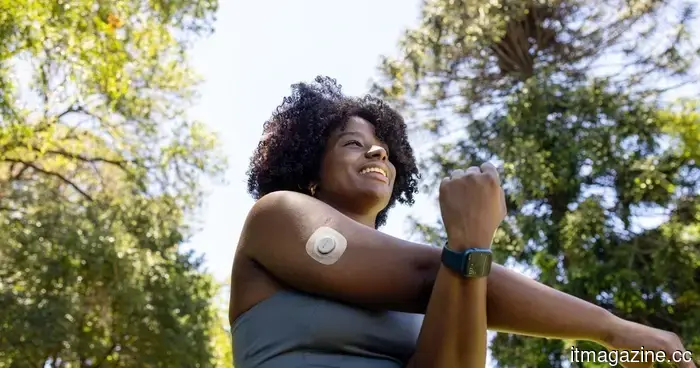 An AI fitness coach detects muscle movements while you work out and helps avoid beginner injuries.
BioCoach is an innovative AI prototype that observes your workouts via your camera, creates a 3D model of your skeleton, and advises you on which joint angles need adjustment.
A vulnerability in the Claude Code GitHub Action allowed for the hijacking of repositories.
A vulnerability in Claude Code's GitHub Action allowed attackers to circumvent permission checks using counterfeit bots and exfiltrate OIDC tokens via prompt injection.
An AI fitness coach detects muscle movements while you work out and helps avoid beginner injuries.
BioCoach is an innovative AI prototype that observes your workouts via your camera, creates a 3D model of your skeleton, and advises you on which joint angles need adjustment.
A vulnerability in the Claude Code GitHub Action allowed for the hijacking of repositories.
A vulnerability in Claude Code's GitHub Action allowed attackers to circumvent permission checks using counterfeit bots and exfiltrate OIDC tokens via prompt injection.
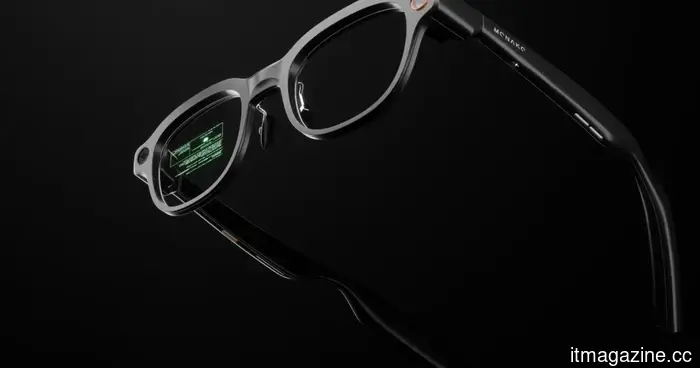 Monako Glass transforms smart glasses into the most unusual new coding workstation to date.
Monako Glass integrates Linux and AI coding-agent support into smart glasses, but its future hinges on its ability to simplify developer tasks without claiming to replace a laptop.
Monako Glass transforms smart glasses into the most unusual new coding workstation to date.
Monako Glass integrates Linux and AI coding-agent support into smart glasses, but its future hinges on its ability to simplify developer tasks without claiming to replace a laptop.
An AI fitness coach monitors your muscle mechanics during workouts to help prevent beginner injuries.
BioCoach is an innovative AI prototype that monitors your workouts via your camera, creates a 3D model of your skeleton, and suggests which joint angles need adjustment.