
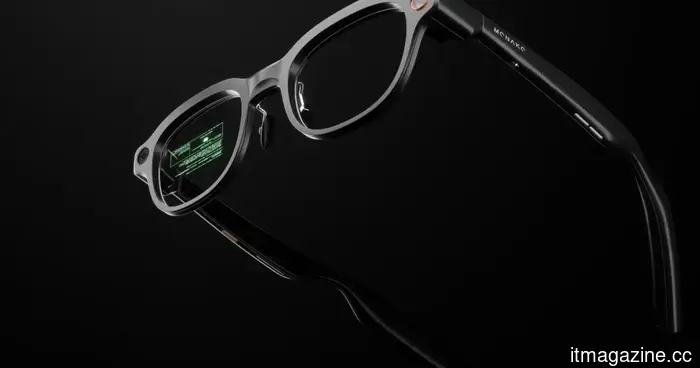
Monako Glass transforms smart glasses into an incredibly unique coding workstation.
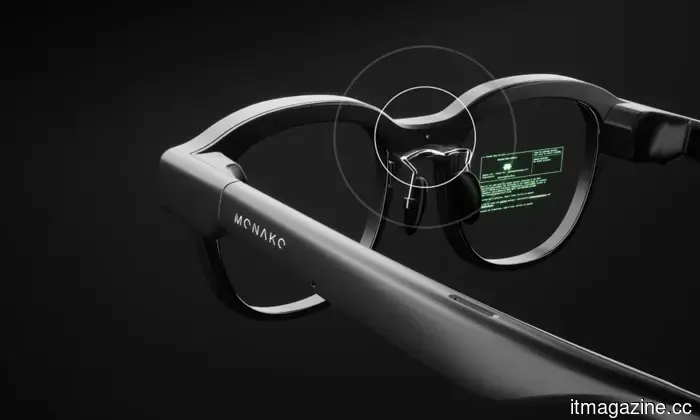
Monako Glass integrates Linux, a waveguide display, camera, speakers, and AI coding agent connectivity into a lightweight 48-gram frame. The company is emphasizing user input with a bone conduction microphone and a gesture recognition system called Vision Engine.
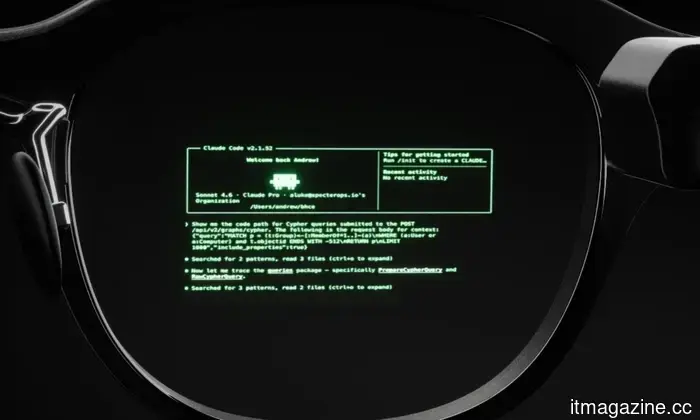
The toolset extends beyond coding capabilities. Monako mentions applications like Claude Code, Codex, Unreal Engine, Blender, After Effects, and others, suggesting the glasses serve as a wearable command interface for both technical and creative tasks.
Introducing Monako Glass 👓— the first wearable Linux computer designed as glasses. Run Claude Code, Codex, and any coding agent—wherever you go. pic.twitter.com/DFDKuP6xux— Candy樂兒 (@candyyueliu) June 3, 2026
The purchasing details remain unclear. Monako has presented a $19 reservation option, but information regarding the full price, shipping date, battery life, processor, memory, storage, and available regions is not yet fully provided.
Can coding glasses manage real tasks?
The strongest argument for Monako Glass lies in its ability to enable quick control over agent-driven tasks. A developer can monitor progress, approve steps, send prompts, or review outputs without returning to a complete desktop setup.
Monako
This workflow appears to align more closely with the hardware than the notion of replacing laptops. Monako claims that the microphone captures nasal vibrations to function effectively in noisy settings, while the Vision Engine translates small gestures into digital commands.
These assertions require practical demonstration. Battery life will determine if the glasses can endure beyond simple checks, and display quality will affect whether agent outputs are legible. Input methods must prove their speed, accuracy, and app compatibility in genuine scenarios.
Could this serve as an agent terminal?
Monako Glass seems most plausible as a wearable terminal for AI coding agents. While this role is more limited than a full workstation, it is easier to accept as a concept.
Monako refers to its operating system as MonoOS, a Linux-based system for smart glasses that includes a Lua application layer and an embedded Rive animation runtime. The company states that agents can generate Lua apps on the fly without the need for compilation, which is a bold assertion for hardware designed to be worn.
Monako
A more realistic promise is interoperability. Monako describes workflows that connect the glasses, cloud environments, and a local Mac or PC, indicating that the glasses may serve as a front end for tasks carried out across multiple platforms.
Will Monako validate the concept?
Monako now needs to demonstrate how all these features function outside of polished product presentations. The critical question is how tasks are distributed among the glasses, cloud systems, and local computers.
Privacy concerns also require transparency. A wearable camera alters expectations, particularly for devices designed to be used away from a desk. Monako has not clearly detailed camera controls or visibility indicators.
It is wise to await comprehensive specifications, availability, and hands-on evaluations before considering Monako Glass as the future of coding. If it facilitates easier oversight of coding agents, this unconventional workstation concept could find a genuine application.
Other articles
 CEO of Databricks: The year 2026 is
Databricks CEO Ali Ghodsi announces that the $134 billion company will forgo IPOs in 2026 as SpaceX, Anthropic, and OpenAI attract over $200 billion in public investment.
Ramp secures $750 million in Series F funding at a valuation of $44 billion.
Ramp secured $750 million at a valuation of $44 billion, venturing into AI token spend management as it exceeds $1 billion in annualized revenue.
CEO of Databricks: The year 2026 is
Databricks CEO Ali Ghodsi announces that the $134 billion company will forgo IPOs in 2026 as SpaceX, Anthropic, and OpenAI attract over $200 billion in public investment.
Ramp secures $750 million in Series F funding at a valuation of $44 billion.
Ramp secured $750 million at a valuation of $44 billion, venturing into AI token spend management as it exceeds $1 billion in annualized revenue.
 Publishing professionals are increasingly being targeted for impersonation.
Mark Gottlieb, EVP of Trident Media Group, cautions that AI has transformed literary agent fraud into an industry, making manuscripts, identities, and author trust into easily targeted elements for impersonation scams.
Publishing professionals are increasingly being targeted for impersonation.
Mark Gottlieb, EVP of Trident Media Group, cautions that AI has transformed literary agent fraud into an industry, making manuscripts, identities, and author trust into easily targeted elements for impersonation scams.
 Meta provides a 30-minute break on employee monitoring following criticism.
Meta has reduced its MCI keystroke tracking program following a petition signed by 1,500 employees. Workers are now able to pause the tracking for a duration of 30 minutes.
Meta provides a 30-minute break on employee monitoring following criticism.
Meta has reduced its MCI keystroke tracking program following a petition signed by 1,500 employees. Workers are now able to pause the tracking for a duration of 30 minutes.
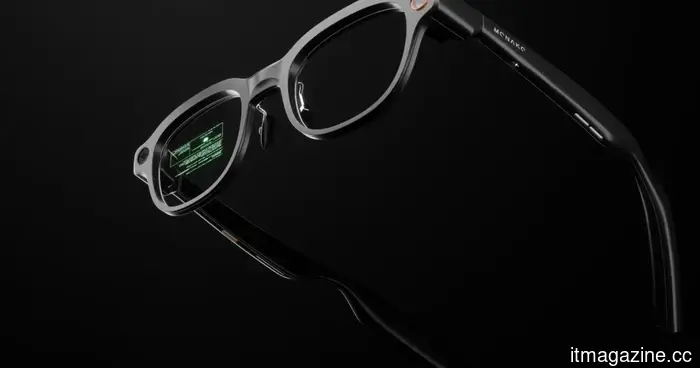 Monako Glass transforms smart glasses into the most unusual new coding workstation to date.
Monako Glass integrates Linux and AI coding-agent support into smart glasses, but its future hinges on its ability to simplify developer tasks without claiming to replace a laptop.
Monako Glass transforms smart glasses into the most unusual new coding workstation to date.
Monako Glass integrates Linux and AI coding-agent support into smart glasses, but its future hinges on its ability to simplify developer tasks without claiming to replace a laptop.
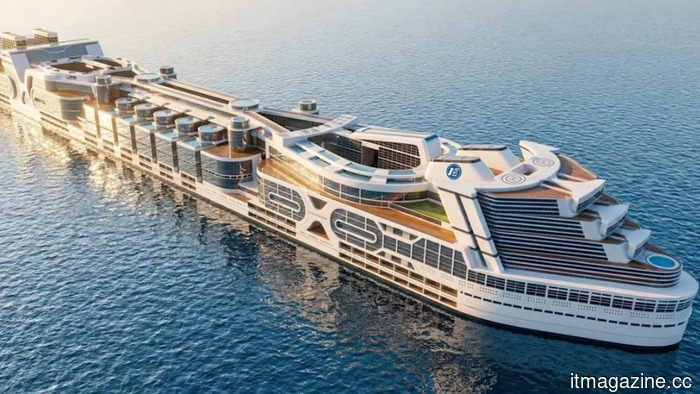 Freedom Ship: the maritime city that's been anticipated for three decades
The Freedom Ship, a nuclear-powered vessel measuring a mile in length and capable of holding 80,000 residents, has returned with updated renderings and a price of £12 billion, though funding is not yet secured.
Freedom Ship: the maritime city that's been anticipated for three decades
The Freedom Ship, a nuclear-powered vessel measuring a mile in length and capable of holding 80,000 residents, has returned with updated renderings and a price of £12 billion, though funding is not yet secured.
Monako Glass transforms smart glasses into an incredibly unique coding workstation.
Monako Glass integrates Linux and AI coding-agent support into smart glasses, but its success hinges on its ability to simplify developer tasks without claiming to substitute for a laptop.