

CEO of Databricks: The year 2026 is
Databricks CEO Ali Ghodsi has stated that 2026 is “a terrible year to go public” as SpaceX, Anthropic, and OpenAI are set to attract over $200 billion for their IPOs. The $134 billion data company has opted to hold off until a calmer period.
Three companies are planning to debut in public markets this year, potentially surpassing a combined valuation of $3 trillion. SpaceX expects to go public as soon as June 12 with a valuation of $1.77 trillion, looking to sell 555.6 million shares at a fixed price of $135 each, making it the largest IPO ever. Anthropic has submitted a filing at a $965 billion valuation, while OpenAI is preparing its own filing with a target of up to $1 trillion.
Though Databricks, valued at $134 billion and anticipated to be an IPO candidate this year, has decided to sit out. “We will be a public company,” CEO Ali Ghodsi told Bloomberg Television on Thursday, adding, “I just think this is a terrible year to go public.”
Ghodsi's reasoning is clear. With SpaceX, Anthropic, and OpenAI collectively aiming to raise over $200 billion from public investors, other tech IPOs risk being overshadowed. Institutional allocation budgets are limited, and these three massive offerings will take a large share of them.
There’s also a valuation issue. Ghodsi previously stated he wants to avoid the pitfalls that affected many tech companies in 2022, where newly public firms had to prioritize margins after their stock prices dropped. “If I wanted to have a crazy, crazy valuation, we would have gone public in the last 12 months,” he told Fortune in December. “We just want to have a fair valuation that we can continue growing into.”
Databricks has the luxury of waiting. The company raised over $4 billion during its Series L in December 2025 at its $134 billion valuation and subsequently secured an additional $1.8 billion in debt financing from JPMorgan and private credit lenders in January 2026. It has surpassed a $4.8 billion revenue run rate, growing more than 55% year over year, and is generating positive free cash flow.
The primary goal for eventually going public is to provide employee liquidity. “We want to create a market transaction mechanism for our employees,” Ghodsi noted. This is a practical issue for a company where stock options and RSUs are based on private-market evaluations that have no public-market equivalent.
Ghodsi’s decision also reflects a secondary effect of the AI IPO surge. The three significant offerings are not just capturing investor capital; they’re also taking up the resources needed to go public: banks, analysts, roadshow timelines, and media coverage. A $134 billion data platform launching in the same quarter as a $1.77 trillion rocket company would be merely a footnote, irrespective of its strong fundamentals.
Potential IPO candidates face similar dilemmas. Any company valued under $500 billion risks being completely overlooked in the discussion. Ironically, 2026 could be seen as both the best and worst year for tech IPOs: the best for a select few large enough to attract attention, and the worst for all others.
Databricks competes with public companies like Oracle and Snowflake in the data and AI infrastructure sector. By waiting, Ghodsi anticipates that a less crowded environment, possibly in 2027, will allow Databricks to secure a premium valuation instead of being perceived as merely a precursor. Given that the company has $6 billion in newly acquired capital and lacks an immediate need for funds, the patience required costs nothing except the liquidity its employees seek.
Other articles
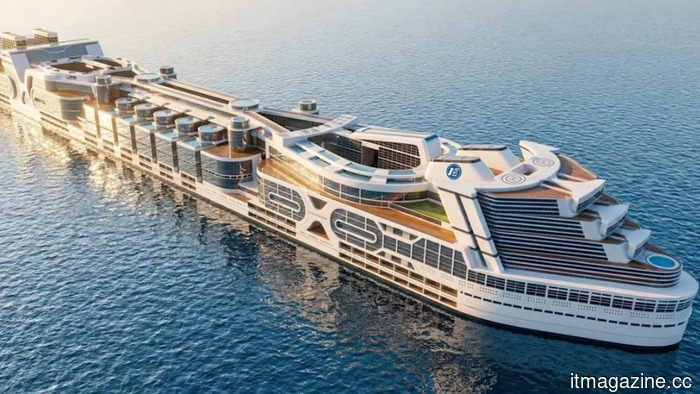 Freedom Ship: the maritime city that's been anticipated for three decades
The Freedom Ship, a nuclear-powered vessel measuring a mile in length and capable of holding 80,000 residents, has returned with updated renderings and a price of £12 billion, though funding is not yet secured.
Freedom Ship: the maritime city that's been anticipated for three decades
The Freedom Ship, a nuclear-powered vessel measuring a mile in length and capable of holding 80,000 residents, has returned with updated renderings and a price of £12 billion, though funding is not yet secured.
 Canada announces a $2.3 billion AI strategy following a papal suggestion on safety measures.
Canada pledges $2.3 billion towards sovereign AI, aiming for the creation of 250,000 jobs and the establishment of a national supercomputer by 2031; however, the strategy does not outline specific timelines for safety regulations.
Canada announces a $2.3 billion AI strategy following a papal suggestion on safety measures.
Canada pledges $2.3 billion towards sovereign AI, aiming for the creation of 250,000 jobs and the establishment of a national supercomputer by 2031; however, the strategy does not outline specific timelines for safety regulations.
 UK compels Google to provide an opt-out for publishers using AI search.
The CMA mandated that Google allow publishers to exclude AI Overviews without affecting their search rankings. Google will implement these controls worldwide.
UK compels Google to provide an opt-out for publishers using AI search.
The CMA mandated that Google allow publishers to exclude AI Overviews without affecting their search rankings. Google will implement these controls worldwide.
 Upwind, the next-generation Wiz, now covers every aspect of the AI stack.
Upwind contends that AI security cannot be added as a separate element. Its latest product integrates AI threat detection throughout all levels of cloud security, encompassing code pipelines, MCP servers, and runtime behavior.
Upwind, the next-generation Wiz, now covers every aspect of the AI stack.
Upwind contends that AI security cannot be added as a separate element. Its latest product integrates AI threat detection throughout all levels of cloud security, encompassing code pipelines, MCP servers, and runtime behavior.
 Monako Glass transforms smart glasses into the most unusual new coding workstation to date.
Monako Glass integrates Linux and AI coding-agent support into smart glasses, but its future hinges on its ability to simplify developer tasks without claiming to replace a laptop.
Monako Glass transforms smart glasses into the most unusual new coding workstation to date.
Monako Glass integrates Linux and AI coding-agent support into smart glasses, but its future hinges on its ability to simplify developer tasks without claiming to replace a laptop.
 An AI fitness coach detects muscle movements while you work out and helps avoid beginner injuries.
BioCoach is an innovative AI prototype that observes your workouts via your camera, creates a 3D model of your skeleton, and advises you on which joint angles need adjustment.
An AI fitness coach detects muscle movements while you work out and helps avoid beginner injuries.
BioCoach is an innovative AI prototype that observes your workouts via your camera, creates a 3D model of your skeleton, and advises you on which joint angles need adjustment.
CEO of Databricks: The year 2026 is
Databricks CEO Ali Ghodsi announces that the $134 billion company will forgo IPOs in 2026 as SpaceX, Anthropic, and OpenAI attract over $200 billion in public investment.