

Meta has spun off the Supernatural VR fitness application following a $400 million acquisition.
Meta is spinning off Supernatural, the VR fitness app it acquired for around $400 million in 2023 following an FTC antitrust challenge, into a new independent entity named Supernatural Health. This new company, led by the original founders, is set to relaunch this autumn with increased subscription prices.
In 2023, Meta engaged in an eight-month legal battle against the Federal Trade Commission regarding its acquisition of Within, the developer of Supernatural, which was reportedly valued at $400 million. Mark Zuckerberg even provided court testimony to support the acquisition.
Now, less than three years later, Meta is divesting the app. On June 3, it was announced that Supernatural would transition into Supernatural Health, managed by the app's original team. The updated version of the app will debut this autumn on the Meta Quest platform, while Meta’s version will be discontinued on December 3.
This case stands out as a rare instance in tech acquisitions where the product continues to exist, despite its somewhat convoluted journey.
From courtroom success to content freeze
The FTC attempted to block Meta's purchase of Within in July 2022, contending it would negatively impact competition in the emerging VR fitness sector. A federal judge disagreed, and Meta completed the acquisition in February 2023.
Initially, Supernatural flourished under Meta's ownership, offering engaging boxing and bat-swinging workouts amid immersive virtual settings. It cultivated a loyal user base, especially among older adults and those with mobility challenges who enjoyed the app's playful approach to exercise.
However, in January 2026, Meta cut approximately 1,500 jobs across Reality Labs, equating to about 10% of the division's workforce, and closed three VR game studios: Twisted Pixel, Sanzaru Games, and Armature Studio. Supernatural was placed into maintenance mode, receiving no new workouts, songs, or features, and the coaches were let go.
These layoffs were part of a broader shift away from VR towards AI-driven wearables. By May, Meta had eliminated an additional 8,000 roles companywide, reallocating substantial funds to AI infrastructure. Given that Reality Labs has incurred about $90 billion in cumulative operating losses since its inception, it was no longer a focal point of Zuckerberg's vision.
The community responded
Supernatural users voiced their dissent. A Change.org petition urged Meta to either continue investing in the app or allow the team to run it independently, funded by subscriptions. Users in Facebook community groups shared personal success stories related to weight loss, chronic pain management, and mental health improvements through the platform.
One user reflected in the public Supernatural Facebook group after the spinoff announcement, “We all felt like it was purchased to kill. I am such a sap. Why am I tearing up?”
This pattern is not unusual. Big tech firms frequently acquire products, strip them for parts or ignore them, ultimately shutting them down—a cycle so common that many websites document these failures. What makes Supernatural distinct is that Meta opted to let it go rather than simply discontinuing it.
Changes under Supernatural Health
The new company aims to reintroduce the original coaches and uphold the app’s essential character. “Same coaches, same DNA, same obsession with making fitness feel like the best part of your day,” claims Supernatural Health on its website.
However, subscription prices will increase. The yearly fee will jump from $100 to $180, and the monthly rate will rise from $10 to $20, according to Engadget. It remains to be seen if this price hike reflects the actual cost of running the service without Meta's support or if it indicates the advantages of independence.
It is also uncertain if Supernatural Health can extend its reach beyond the Meta Quest platform or how well a smaller team can keep up with the content production demands. The existing library of over 3,000 workouts will continue, but the real challenge will be whether the independent studio can manage the music licensing and production needs that a $400 million Meta acquisition previously financed.
A costly lesson in acquisition dynamics
Overall, this incident illustrates how large tech acquisitions can falter, not due to product failure, but because the acquirer's priorities change. Recently, Meta had to reverse its $2 billion acquisition of AI startup Manus after regulatory hurdles in China, resulting in the complete write-off of that investment. Similarly, the GIPHY acquisition concluded with a mandated sale from UK regulators.
Supernatural presents a less drastic version of this narrative. Meta pursued it, succeeded, and then decided it no longer desired what it had acquired.
For users who incorporated the app into their daily routines, the corporate rationale is secondary. They have regained their workout, even though it now costs nearly twice as much. Whether Supernatural Health can thrive as a small independent entity in a VR market that its previous owner is withdrawing from is a question that will take more than a single product launch to resolve.
Other articles
 The widely used Codex npm package misappropriated developer tokens for a duration of one month.
The codexui-android npm package discreetly transmitted OpenAI Codex authentication tokens to an attacker's server for a duration of one month, impacting 29,000 downloads per week.
The widely used Codex npm package misappropriated developer tokens for a duration of one month.
The codexui-android npm package discreetly transmitted OpenAI Codex authentication tokens to an attacker's server for a duration of one month, impacting 29,000 downloads per week.
 A vulnerability in GitHub.dev allows attackers to steal OAuth tokens with a single click.
A vulnerability in VS Code on GitHub.dev allows attackers to obtain complete GitHub OAuth tokens through a single malicious link, which could expose all private repositories.
A vulnerability in GitHub.dev allows attackers to steal OAuth tokens with a single click.
A vulnerability in VS Code on GitHub.dev allows attackers to obtain complete GitHub OAuth tokens through a single malicious link, which could expose all private repositories.
 A vulnerability in GitHub.dev allows attackers to obtain OAuth tokens with a single click.
A vulnerability in VS Code on GitHub.dev allows attackers to obtain complete GitHub OAuth tokens through a single malicious link, endangering all private repositories.
A vulnerability in GitHub.dev allows attackers to obtain OAuth tokens with a single click.
A vulnerability in VS Code on GitHub.dev allows attackers to obtain complete GitHub OAuth tokens through a single malicious link, endangering all private repositories.
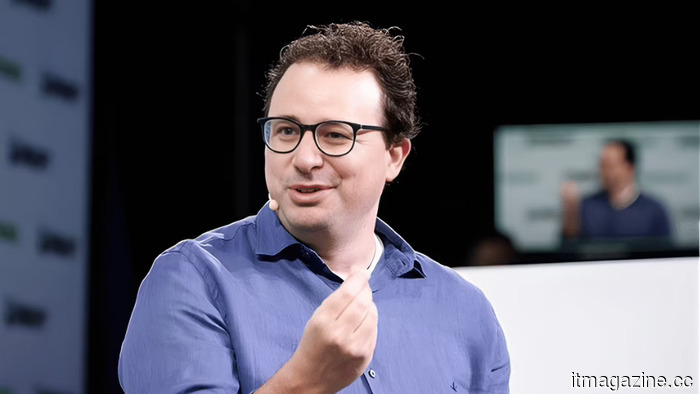 Anthropic selects Morgan Stanley and Goldman Sachs to spearhead its IPO.
Anthropic has chosen Morgan Stanley and Goldman Sachs to assist with its IPO, aiming for an October launch at a valuation of $965 billion. Meanwhile, SpaceX's filing discloses a monthly computing agreement worth $1.25 billion with Anthropic.
Anthropic selects Morgan Stanley and Goldman Sachs to spearhead its IPO.
Anthropic has chosen Morgan Stanley and Goldman Sachs to assist with its IPO, aiming for an October launch at a valuation of $965 billion. Meanwhile, SpaceX's filing discloses a monthly computing agreement worth $1.25 billion with Anthropic.
 Alphabet secures a record $85 billion in equity for AI infrastructure.
Alphabet's $85 billion equity sale, which includes $10 billion from Berkshire Hathaway, marks the largest stock offering in history, designated for AI capital expenditures.
Alphabet secures a record $85 billion in equity for AI infrastructure.
Alphabet's $85 billion equity sale, which includes $10 billion from Berkshire Hathaway, marks the largest stock offering in history, designated for AI capital expenditures.
 Hackers requested Meta’s AI chatbot to provide them with Instagram accounts, and it complied.
Summary: Hackers took control of prominent Instagram accounts by requesting Meta’s AI support chatbot to alter email addresses without verifying identities. Although Meta claims the issue has been resolved, reports indicate that the attacks persisted after the company announced the fix.
Hackers requested Meta’s AI chatbot to provide them with Instagram accounts, and it complied.
Summary: Hackers took control of prominent Instagram accounts by requesting Meta’s AI support chatbot to alter email addresses without verifying identities. Although Meta claims the issue has been resolved, reports indicate that the attacks persisted after the company announced the fix.
Meta has spun off the Supernatural VR fitness application following a $400 million acquisition.
Meta allows Supernatural VR fitness to branch out as an independent company, Supernatural Health, headed by its original founders, following a reduction in Reality Labs personnel.