
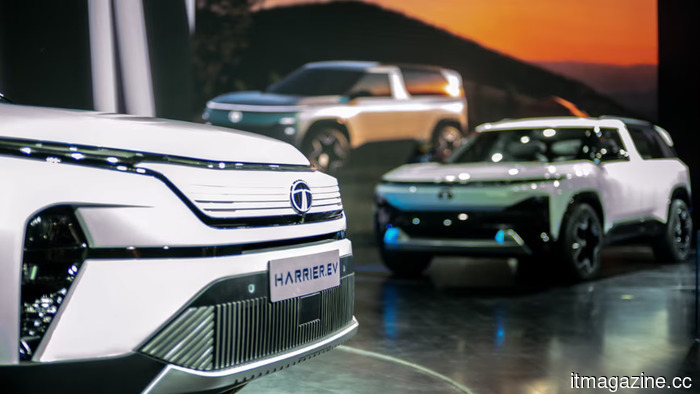
Tata licenses a Chinese electric vehicle platform to revive its halted premium initiative.
India's largest electric car manufacturer plans to utilize a Chery platform for its delayed Avinya models, marking yet another instance of an Indian company leveraging Chinese technology without a Chinese partner. Tata Motors has been facing challenges in the premium electric vehicle sector and seeks a Chinese solution. According to sources, the company intends to license a vehicle platform from Chery to expedite its delayed premium models, highlighting the current state of the global electric vehicle competition as much as Tata's own position.
Specifically, Tata will employ the Freelander platform, created through a joint venture between Chery and Jaguar Land Rover in China, to develop EVs for its premium Avinya brand at its new facility in Tamil Nadu. The initial Avinya model based on the Chery platform is expected to be released in 2027, initially shipped as a kit from China for assembly in India while sourcing local components, followed by a second EV anticipated in 2029, with the potential for two additional models thereafter.
The term "stop-gap" used by the sources is accurate. Despite being the leader in India's electric vehicle market, Tata understands that leads can be fleeting, and creating a premium EV platform from the ground up is both time-consuming and costly. Without new offerings, the company risks falling behind competitors as the Indian market begins to expand.
Licensing an existing platform allows Tata to compress years of development into a process focused on assembly and localization, granting the company precious time it can avoid spending on developing the foundational engineering independently.
What sets this deal apart from mere procurement is its context. India has implemented strict restrictions on investments from neighboring countries, primarily targeting China, making deep equity partnerships politically sensitive. Consequently, Indian automakers have found a workaround: licensing technology while steering clear of ownership arrangements. Tata gains access to Chinese electric vehicle engineering without a Chinese investor, adhering to New Delhi's concerns.
This trend reflects a broader characteristic of the global automotive industry’s relationship with China. Chinese manufacturers have rapidly advanced in the domains of EV platforms, batteries, and software, prompting established and emerging carmakers to increasingly find it more economical to acquire technology than to develop it themselves.
Globally, foreign automakers are collaborating with Chinese partners for the software and platforms they cannot develop promptly, paralleling Tata's licensing strategy in response to India’s political framework.
The Freelander platform's origin adds an interesting dimension; it arises from Chery's joint venture with Jaguar Land Rover, the British brand owned by Tata, indicating that the Indian company is, in a roundabout way, tapping into its own subsidiary's Chinese partnership to acquire necessary engineering at home. The complexities within global automotive supply chains are often tangled, and this instance serves as a clear example of that entanglement.
While the arrangement is based on information from those acquainted with the plans rather than an official announcement from Tata, timelines and product quantities are prone to change before launch. The reporting illustrates a clear trajectory: Tata has recognized that the quickest route to advance its premium EV goals is to license a Chinese platform rather than wait for its own, opting for a licensing agreement instead of a partnership. The first Avinya based on this platform is two years away, raising the question of whether this timeframe is sufficient to maintain its lead—an inquiry that this stop-gap solution aims to address.

Tata licenses a Chinese electric vehicle platform to revive its halted premium initiative.
Tata Motors intends to license a Chery platform to rejuvenate its postponed premium Avinya EVs, marking the Indian automaker's latest acquisition of Chinese technology without any equity connections.