
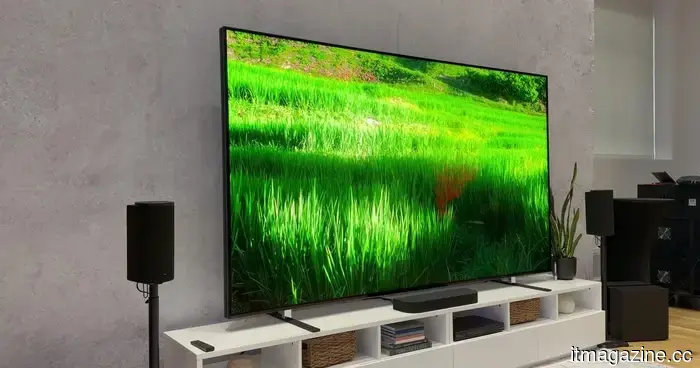
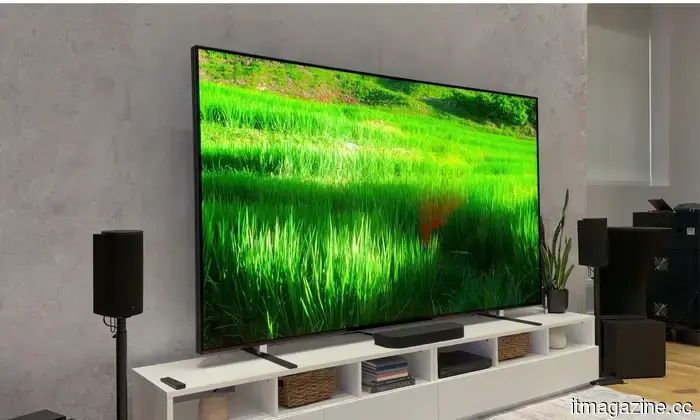
Sony's True RGB technology seeks to combine the advantages of both OLED and Mini LED.
The competition for premium TV consumers has recently centered on two technologies: OLED and Mini LED. OLED is well-known for its outstanding contrast and viewing angles, while Mini LED has enhanced brightness levels significantly. The typical dilemma involves deciding which tradeoff aligns better with your living space and viewing preferences.
Sony suggests that this conversation may shift soon. At a private media event in New York City, the company introduced a new display technology named True RGB, which reimagines TV backlighting and aims to merge some key advantages of both OLED and Mini LED.
Sony asserts that most TVs are designed for inappropriate environments.
One intriguing point made by Sony during the event focused on viewer environments rather than technical specifications. The company indicated that only 13% of viewers watch TV in the dark settings often used during product demos, in cinemas, or in professional color grading facilities. The remaining 87% watch in living rooms, family areas, and environments where lighting fluctuates constantly.
Sony argues that many high-end displays still find it challenging to balance brightness, color fidelity, and contrast when not in ideal conditions. This is the issue that True RGB aims to address.
What distinguishes True RGB?
To grasp why Sony sees this technology as significant, it's helpful to understand how most high-end TVs currently produce color.
In a conventional Mini LED or QLED display, a blue or white light source collaborates with quantum dots, phosphor layers, and LCD structures to generate the colors observed on the screen. Essentially, a large part of the color creation process occurs after the light exits the backlight.
True RGB adopts a different method. Instead of depending on a single color light source that's filtered later, Sony employs independently controlled red, green, and blue diodes within the backlight system. This means that the desired color is produced at the light source before reaching the LCD layer.
To achieve this, Sony's professional monitor engineers collaborated closely with the BRAVIA consumer team to create a new RGB Backlight Master Drive. The updated driver architecture allows for the real-time individual control of millions of tiny red, green, and blue diodes.
The most notable enhancement may be in color volume.
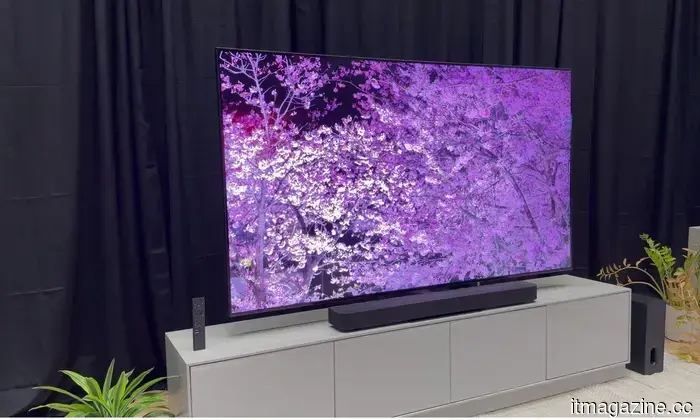
Sony conducted a series of side-by-side comparisons showing True RGB alongside competing flagship displays, examining both 100% and 90% raster windows. While many differences were noted, color volume emerged as a particularly significant factor.
The primary distinction is that True RGB produces pure red, green, and blue light directly at the source instead of using a single backlight color filtered through the display. Sony claims this enables the system to achieve much greater color expression while retaining high brightness levels. The company asserts that True RGB offers twice the color volume of the BRAVIA 9 Mini LED and up to four times that of the BRAVIA 8 OLED.
This results in a screen that can reach extreme brightness while preserving color saturation, rather than causing colors to wash out at elevated brightness levels.
Sony also emphasized viewing angles.
Viewing angles have historically been one of OLED's major advantages. Mini LED displays can lose some color accuracy when viewed from the side because much of the color generation is performed through the LCD structure.
Sony contends that True RGB mitigates this issue because color generation occurs through both the LED layer and the LCD layer, rather than relying on a single stage of the display pipeline. During demonstrations, the company illustrated side-by-side comparisons showing that colors appeared more consistent from extreme angles.
Smooth gradation aims to eliminate visible banding.
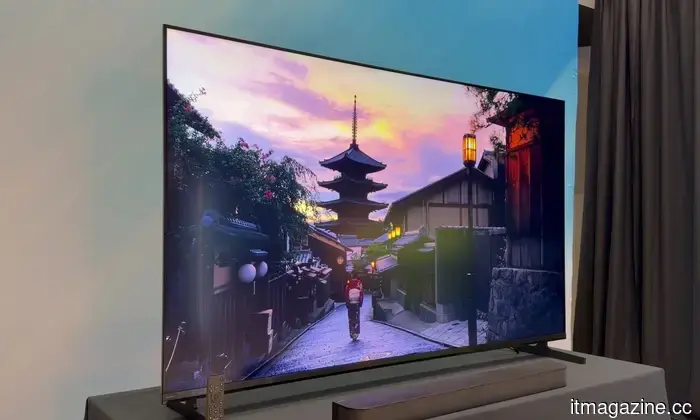
Another crucial advantage highlighted by Sony was gradation performance. Color banding can become apparent in skies, sunsets, and other scenes with subtle color transitions, especially on bright displays.
By integrating its image processing technologies with independent control of the red, green, and blue backlight system, Sony claims True RGB greatly minimizes visible banding and ensures smoother transitions between shades.
True RGB will debut in Sony's flagship TVs.
The first True RGB model will be launched as the BRAVIA 9 II, positioned at the top of Sony's range. This flagship model will come in sizes of 65, 75, 85, and 115 inches and will include features like RGB Backlight Master Drive Pro and Luminance Booster Pro. Sony asserts that this TV is engineered to align with the creative intent and brightness performance of its professional BVM studio monitors.
This technology won't be confined to the flagship line. Sony also announced the BRAVIA 7 II, which will incorporate True RGB across a wider variety of screen sizes, ranging from 50 to 98 inches. Below these models will be the company's OLED series, spearheaded by the BRAVIA 8 II and the standard BRAVIA 8.
Sony is also addressing reflections.
In conjunction with True RGB, Sony introduced an optional premium anti-glare feature called Immersive Black Screen Pro for the BRAVIA 9 II. The company explains that this patent-pending nanostructure layer is designed to absorb reflections while sustaining deep black levels
Other articles
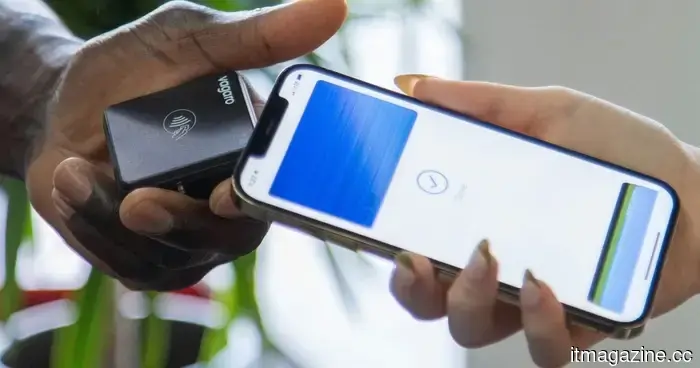 Apple may be looking to introduce a feature that allows users to split expenses in iOS 27.
Apple is said to be introducing a feature for built-in bill splitting on iPhones, enabling users to scan receipts and automatically share costs via Apple Cash.
Apple may be looking to introduce a feature that allows users to split expenses in iOS 27.
Apple is said to be introducing a feature for built-in bill splitting on iPhones, enabling users to scan receipts and automatically share costs via Apple Cash.
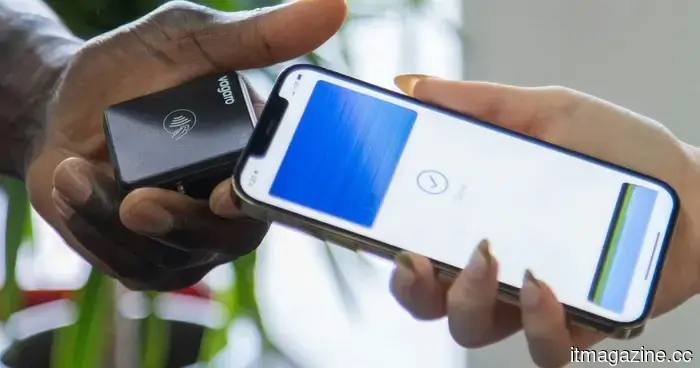 Apple may be considering the introduction of a feature that allows users to split expenses in iOS 27.
Apple is said to be introducing a feature for built-in bill splitting on iPhones, enabling users to scan receipts and automatically distribute expenses using Apple Cash.
Apple may be considering the introduction of a feature that allows users to split expenses in iOS 27.
Apple is said to be introducing a feature for built-in bill splitting on iPhones, enabling users to scan receipts and automatically distribute expenses using Apple Cash.
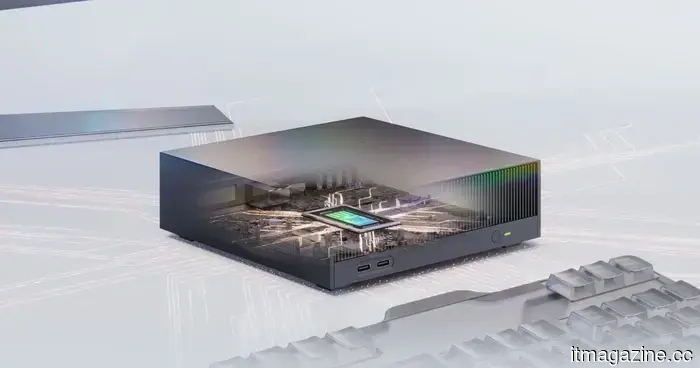 Nvidia’s RTX Spark chip is aimed at the Mac Studio, with Asus and MSI being the first to seize the opportunity.
MSI and Asus are implementing Nvidia’s new RTX Spark platform to create compact desktops centered on AI, targeting creators and professional tasks.
Nvidia’s RTX Spark chip is aimed at the Mac Studio, with Asus and MSI being the first to seize the opportunity.
MSI and Asus are implementing Nvidia’s new RTX Spark platform to create compact desktops centered on AI, targeting creators and professional tasks.
 Wondershare PDFelement: Streamline PDF Workflows with a Single Click — Save Hours Daily
Handling PDFs frequently involves a mix of OCR websites, editing applications, conversion tools, and approval systems within the same workflow. Wondershare PDFelement consolidates these processes into a single productivity-oriented workspace designed for document-intensive office activities.
Wondershare PDFelement: Streamline PDF Workflows with a Single Click — Save Hours Daily
Handling PDFs frequently involves a mix of OCR websites, editing applications, conversion tools, and approval systems within the same workflow. Wondershare PDFelement consolidates these processes into a single productivity-oriented workspace designed for document-intensive office activities.
 Wondershare PDFelement: Optimize Your PDF Workflow with One Click — Save Hours Each Day
Handling PDFs frequently involves navigating multiple OCR websites, editing tools, conversion utilities, and approval platforms within the same workflow. Wondershare PDFelement consolidates these processes into a single productivity-oriented workspace designed for document-intensive office tasks.
Wondershare PDFelement: Optimize Your PDF Workflow with One Click — Save Hours Each Day
Handling PDFs frequently involves navigating multiple OCR websites, editing tools, conversion utilities, and approval platforms within the same workflow. Wondershare PDFelement consolidates these processes into a single productivity-oriented workspace designed for document-intensive office tasks.
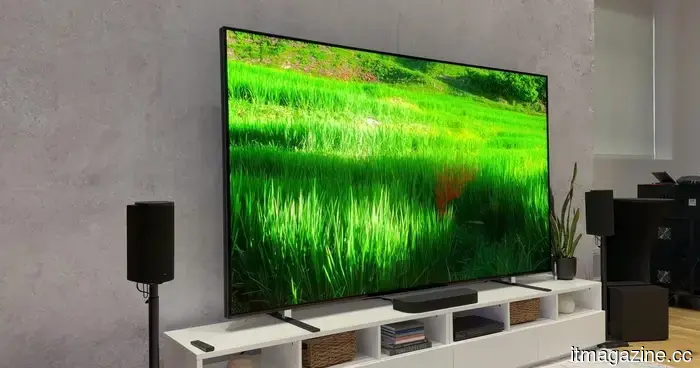 Sony's True RGB technology strives to combine the advantages of both OLED and Mini LED.
Sony has introduced True RGB, a novel display technology that utilizes independently managed red, green, and blue diodes to generate color directly at the light source. After witnessing a side-by-side demonstration with flagship displays, it is evident why Sony envisions this as the future of high-end televisions.
Sony's True RGB technology strives to combine the advantages of both OLED and Mini LED.
Sony has introduced True RGB, a novel display technology that utilizes independently managed red, green, and blue diodes to generate color directly at the light source. After witnessing a side-by-side demonstration with flagship displays, it is evident why Sony envisions this as the future of high-end televisions.
Sony's True RGB technology seeks to combine the advantages of both OLED and Mini LED.
Sony has introduced True RGB, an innovative display technology that employs separately managed red, green, and blue diodes to generate color right at the light source. Following a demonstration next to top-tier displays, it's evident why Sony sees this as a potential future for high-end televisions.