
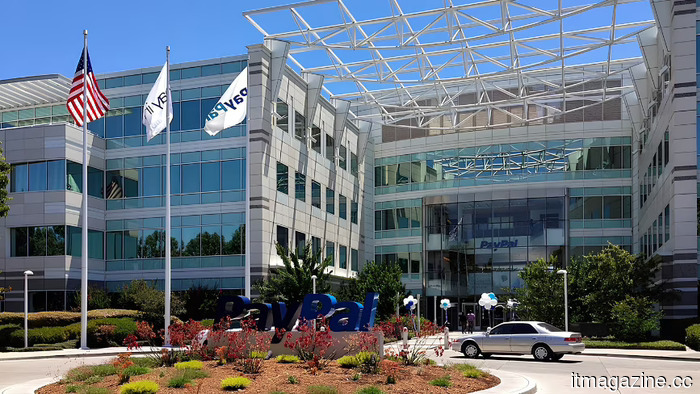
Tencent allows PayPal users to make payments using WeChat QR codes in China.
**Summary:** Tencent will enable PayPal users to make cashless payments in China by using WeChat Pay's QR code merchant network, starting with users from the US. This initiative targets foreign tourists who face challenges in navigating China's cashless economy, which saw over 35 million visitors.
Tencent has revealed that PayPal users will be able to conduct cashless transactions in China by scanning QR codes within the WeChat Pay merchant network. Initially available to US PayPal users, with plans for further market expansion, this integration links PayPal's extensive user base to the payment infrastructure prevalent across taxis, restaurants, and shops in mainland China.
This initiative addresses a critical issue for foreign visitors, as China's mobile payments dominate the economy, with WeChat Pay and Alipay handling trillions of dollars in transactions each year. Tourists lacking access to these platforms often struggle to purchase basic goods and services, as many merchants no longer accept cash and only a few take international credit cards at points of sale. While WeChat Pay and Alipay have permitted foreigners to connect international bank cards since 2019, the cumbersome onboarding process—which involves downloading Chinese apps and navigating interfaces tailored for domestic users—has hindered widespread adoption.
**Importance of PayPal:**
Integrating PayPal bypasses the onboarding challenges entirely. A US tourist arriving in Beijing won't need to download WeChat, create an account, or link to a Chinese payment platform. Instead, they can scan a WeChat Pay QR code with their existing PayPal app, allowing the transaction to be completed via WeChat Pay’s network, with charges appearing on their PayPal balance or linked card. This reduction in friction is significant for those currently struggling with the cashless systems in China.
Moreover, Tencent is waiving transaction fees for first-time users who link international bank cards to WeChat, serving as an additional incentive to promote deeper integration beyond just the PayPal route. Reportedly, transactions from foreign travelers in China saw an increase of nearly 80% year-on-year during the January-to-April period of 2026, indicating that China's broader tourism initiatives are already yielding growth in payment volumes.
**China's Tourism Strategy:**
The partnership with PayPal is part of a broader move by Beijing aimed at increasing foreign tourism following the decline in international arrivals during the pandemic. China has broadened visa-free access for travelers from many countries, including the UK, Spain, and Australia, although US travelers still need a visa unless making brief transits to third countries.
This strategy is yielding positive results. In 2025, foreign visitors to China, not counting those from Hong Kong and Taiwan, exceeded 35 million, surpassing the pre-pandemic high of nearly 32 million recorded in 2019. Tourism accounted for over 4% of China's GDP in 2024. China's technology adoption has led to more advanced digital infrastructure compared to most Western nations, but this very advancement creates challenges for visitors unfamiliar with the local digital ecosystem.
Gary Ng, a senior economist for Asia Pacific at Natixis, noted that this move aligns with a global trend of integrating payment platforms through recognized cross-border QR codes, a similar development occurring in Southeast Asia, with Singapore, Thailand, and Malaysia forming bilateral QR code payment links.
**Limited Short-term Impact:**
The actual impact of the PayPal integration hinges on the number of US travelers to China, which is still lower than pre-pandemic levels and is further limited by ongoing visa requirements. Ivan Su, a senior equity analyst at Morningstar, mentioned that the initial benefits for Tencent might be modest given these low volumes.
The competitive landscape between WeChat Pay and Alipay adds another layer. As fintech platforms globally develop cross-border payment options, both Chinese services are competing to become the preferred choice for international tourists. Alipay boasts its own international partnerships and has aggressively marketed to tourists through in-app translation and curated city guides. With Alibaba's significant resources, Alipay is well-positioned to invest in cross-border payment infrastructure.
For Tencent, the PayPal partnership is more about establishing WeChat Pay as the go-to payment method for international visitors rather than generating immediate revenue. Chinese platform companies must navigate a regulatory landscape that encourages international interaction while maintaining control over domestic data and financial flows. Linking PayPal to WeChat Pay’s merchant network meets this challenge, granting foreigners access to the payment system without direct entry into China's financial framework.
Other articles
 The Asus ROG Ally X receives a distinctive redesign featuring an OLED screen and tasteful gold accents that are not overly flashy.
The anniversary edition introduces OLED to the Ally series for the first time, featuring a 7.4-inch 120Hz panel with 1,400 nits brightness, an AMD Ryzen AI Z2 Extreme processor, and TMR joysticks.
The Asus ROG Ally X receives a distinctive redesign featuring an OLED screen and tasteful gold accents that are not overly flashy.
The anniversary edition introduces OLED to the Ally series for the first time, featuring a 7.4-inch 120Hz panel with 1,400 nits brightness, an AMD Ryzen AI Z2 Extreme processor, and TMR joysticks.
 Tencent allows PayPal users to make payments using WeChat QR codes in China.
PayPal users can now scan WeChat Pay QR codes throughout China's merchant network, eliminating the main obstacle for foreign tourists in a nation where cash has disappeared.
Tencent allows PayPal users to make payments using WeChat QR codes in China.
PayPal users can now scan WeChat Pay QR codes throughout China's merchant network, eliminating the main obstacle for foreign tourists in a nation where cash has disappeared.
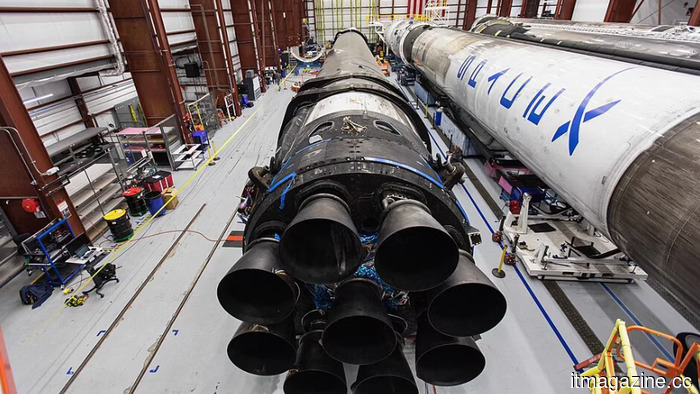 The surge in space stocks falters as the SpaceX IPO approaches and Blue Origin faces a setback.
Rocket Lab, Intuitive Machines, and AST SpaceMobile saw their shares fall by 17-23% over two days as investors get ready to exchange their space-related stocks for SpaceX once its record IPO is established.
The surge in space stocks falters as the SpaceX IPO approaches and Blue Origin faces a setback.
Rocket Lab, Intuitive Machines, and AST SpaceMobile saw their shares fall by 17-23% over two days as investors get ready to exchange their space-related stocks for SpaceX once its record IPO is established.
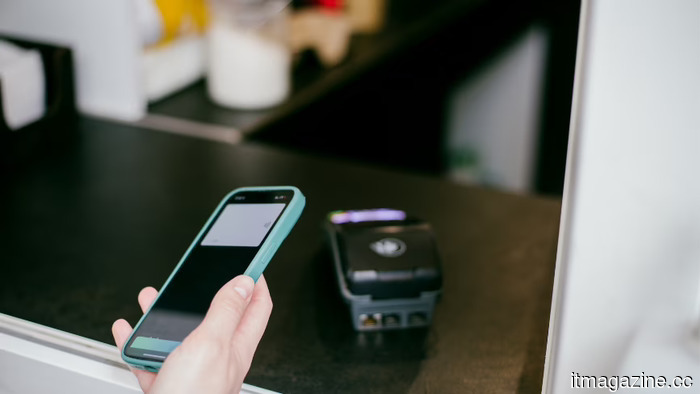 Apple prepares receipt-scanning bill splitter for iOS 27.
Apple is set to introduce a bill-splitting feature in iOS 27 that captures photos of receipts, allocates items to friends, and creates Apple Cash requests, posing a challenge to Splitwise and Venmo.
Apple prepares receipt-scanning bill splitter for iOS 27.
Apple is set to introduce a bill-splitting feature in iOS 27 that captures photos of receipts, allocates items to friends, and creates Apple Cash requests, posing a challenge to Splitwise and Venmo.
 Hackers took control of Instagram accounts by requesting password resets from Meta's AI chatbot.
The AI support bot included a hacker's email, dispatched a verification code, and provided a button for resetting the password. Access to the victim's email was not required.
Hackers took control of Instagram accounts by requesting password resets from Meta's AI chatbot.
The AI support bot included a hacker's email, dispatched a verification code, and provided a button for resetting the password. Access to the victim's email was not required.
 GoPro has cautioned that it might not endure. The AI memory shortage is harming companies that produce tangible products.
Memory prices increased by 80-115%. Revenue dropped by 26%. GoPro expressed "substantial doubt" regarding its ability to continue operations. The company is considering a sale or a shift toward defense.
GoPro has cautioned that it might not endure. The AI memory shortage is harming companies that produce tangible products.
Memory prices increased by 80-115%. Revenue dropped by 26%. GoPro expressed "substantial doubt" regarding its ability to continue operations. The company is considering a sale or a shift toward defense.
Tencent allows PayPal users to make payments using WeChat QR codes in China.
PayPal users can now scan WeChat Pay QR codes while shopping at merchants throughout China, eliminating the main barrier for foreign tourists in a country where cash is no longer prevalent.