
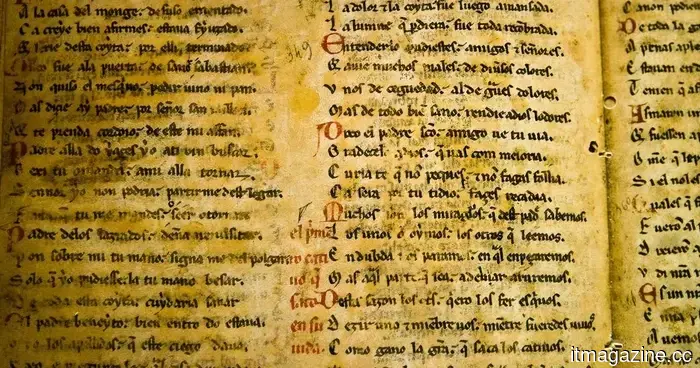
AI is now focusing on uncovering historical mysteries and is already deciphering documents that are centuries old.
Artificial intelligence has evolved beyond simply composing emails, creating images, or supporting chatbots. Researchers are increasingly employing AI to reveal historical insights from centuries-old manuscripts, damaged letters, and handwritten archives that have long baffled scholars.
A recent report by the BBC highlights how historians and computer scientists are merging machine learning with historical inquiry to decode ancient documents, including medieval diplomatic correspondence, lost love letters, and political plots.
The technology is enabling researchers to extract information from texts that are faded, incomplete, damaged, encrypted, or inscribed in challenging handwriting styles that modern scholars find hard to read.
AI is proving to be an invaluable asset for historians.
One significant advancement is the development of AI systems that recognize historical handwriting and linguistic features from various periods. Analyzing medieval documents is particularly challenging due to the significant evolution of writing styles, word spellings, and languages over the centuries.
Researchers are inputting thousands of historical texts into AI models so that the systems can learn the writing styles of different eras. Once these models are trained, they can spot patterns, restore missing words, and even forecast probable interpretations of partially damaged texts.
Some initiatives focus on diplomatic communications and governmental records, while others reveal personal narratives that have been hidden in archives for ages. The BBC report mentions that researchers have utilized AI to help interpret letters related to political intrigue, personal relationships, and medieval diplomacy.
This technology is especially beneficial as many historical archives are too extensive for manual processing by researchers. Across Europe alone, libraries and museums house millions of handwritten pages that have yet to be fully digitized or translated.
AI is also aiding scholars in examining documents previously deemed unreadable. Traditional restoration techniques have struggled with issues like faded ink, water damage, or unusual writing systems. However, machine learning models can now enhance text clarity and reconstruct missing sections more effectively.
The significance of this advancement
The ramifications extend beyond mere academic interest. Historical archives play a crucial role in shaping societal understanding of politics, culture, religion, science, and modern international relationships. AI-enhanced analysis could significantly speed up discoveries that could have previously taken decades of manual study.
Furthermore, this technology could democratize historical research by making ancient texts more searchable and available online, rather than limiting accessibility to specialists trained in obscure languages or paleography.
However, historians remain cautious. AI models can still misinterpret context, mistranslate terms, or introduce inaccuracies in the reconstruction of damaged texts. Many researchers currently view AI as a supportive tool instead of a substitute for human historians.
Looking ahead
Researchers anticipate rapid expansion in AI-assisted historical analysis over the coming years, as models improve and more archives become digitized.
Future systems might eventually aid in decoding lost languages, reconstructing damaged manuscripts with greater precision, and identifying patterns in historical records that would be challenging for humans to discern alone.
For the time being, though, this technology is already transforming how historians engage with the past. Instead of laboriously deciphering fragile documents line by line for years, researchers are starting to utilize AI as a form of historical detective — one capable of unearthing forgotten narratives concealed for centuries within paper, ink, and fading handwriting.

Other articles
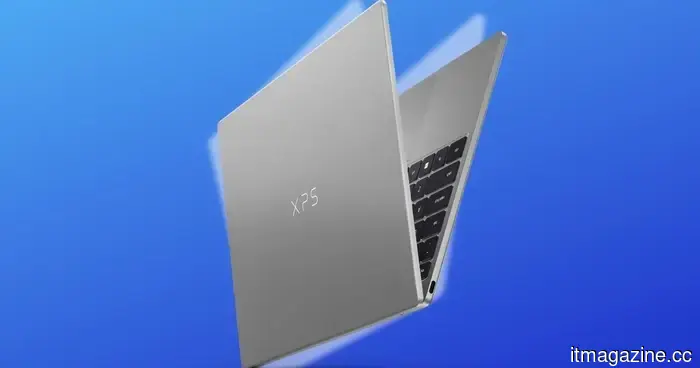 Dell unveils its slimmest and lightest XPS 13, priced at only $699, in an effort to outshine the MacBook Neo.
The Dell XPS 13 features a more vibrant 120Hz display, a backlit keyboard, quicker ports, and a biometric facial recognition option to cover the shortcomings of the MacBook Air.
Dell unveils its slimmest and lightest XPS 13, priced at only $699, in an effort to outshine the MacBook Neo.
The Dell XPS 13 features a more vibrant 120Hz display, a backlit keyboard, quicker ports, and a biometric facial recognition option to cover the shortcomings of the MacBook Air.
 Dell's Alienware has introduced the world's first 39-inch 5K OLED monitor featuring RGB screen technology.
Alienware's latest 39-inch 5K OLED monitor employs RGB stripe tandem technology to achieve a peak brightness of 1,300 nits while maintaining the deep blacks and vibrant colors that justify the purchase of OLED displays.
Dell's Alienware has introduced the world's first 39-inch 5K OLED monitor featuring RGB screen technology.
Alienware's latest 39-inch 5K OLED monitor employs RGB stripe tandem technology to achieve a peak brightness of 1,300 nits while maintaining the deep blacks and vibrant colors that justify the purchase of OLED displays.
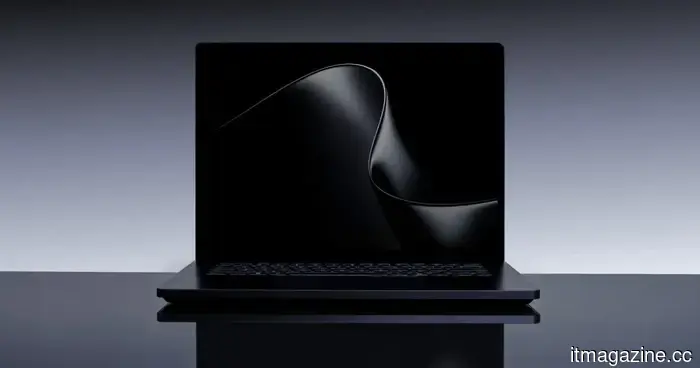 Microsoft unveils the Surface Laptop Ultra featuring Nvidia's RTX Spark chip.
Microsoft has recently unveiled the Surface Laptop Ultra, its most powerful laptop to date. It is capable of handling demanding AI tasks entirely on the device without the need for cloud support, while still lasting through the day on a single charge.
Microsoft unveils the Surface Laptop Ultra featuring Nvidia's RTX Spark chip.
Microsoft has recently unveiled the Surface Laptop Ultra, its most powerful laptop to date. It is capable of handling demanding AI tasks entirely on the device without the need for cloud support, while still lasting through the day on a single charge.
 LG Electronics has seen a fourfold increase this year, driven by a meeting with Jensen Huang regarding physical AI.
LG reached its 30% daily limit for two consecutive sessions following news that the chair of LG Group will meet with Nvidia's CEO to talk about robots and smart factories.
LG Electronics has seen a fourfold increase this year, driven by a meeting with Jensen Huang regarding physical AI.
LG reached its 30% daily limit for two consecutive sessions following news that the chair of LG Group will meet with Nvidia's CEO to talk about robots and smart factories.
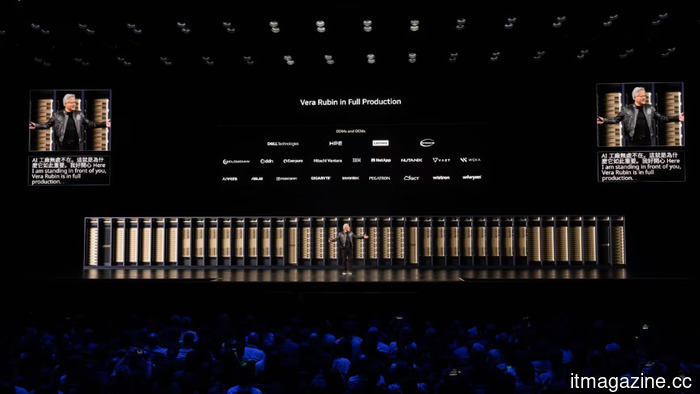 Jensen Huang kicks off Computex by announcing Vera Rubin is in production and the company's expansion into Windows PCs.
Jensen Huang announced during his Computex keynote that Vera Rubin is now in full production and introduced RTX Spark, Nvidia’s Arm-based Windows device.
Jensen Huang kicks off Computex by announcing Vera Rubin is in production and the company's expansion into Windows PCs.
Jensen Huang announced during his Computex keynote that Vera Rubin is now in full production and introduced RTX Spark, Nvidia’s Arm-based Windows device.
 US export restrictions are driving China's artificial intelligence chips to shift from GPUs to custom ASICs.
Excluded from Nvidia's top hardware, Chinese technology giants are developing specialized AI chips. Huawei is at the forefront, holding a 62% market share as the ecosystem shifts away from the Western model.
US export restrictions are driving China's artificial intelligence chips to shift from GPUs to custom ASICs.
Excluded from Nvidia's top hardware, Chinese technology giants are developing specialized AI chips. Huawei is at the forefront, holding a 62% market share as the ecosystem shifts away from the Western model.
AI is now focusing on uncovering historical mysteries and is already deciphering documents that are centuries old.
Researchers are utilizing AI to decipher ancient texts, damaged letters, and historical records that have posed challenges for human interpretation for hundreds of years.