
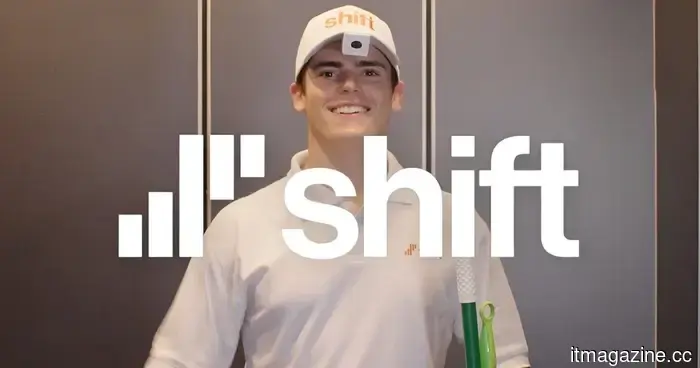
Shift will clean your home at no cost, but will keep a record of the tasks to help train robots.
Everyday household tasks are transforming into the foundational data for future domestic robots.
Shift is providing free home cleaning services, but there is a key stipulation. The company will capture these cleaning activities to create training data for upcoming home robots.
This startup based in New York is currently offering complimentary cleaning services, where a screened operator visits a home equipped with a camera while performing standard household chores. The recorded footage aids AI systems in comprehending how individuals clean in real-world environments rather than in controlled laboratory settings.
Your disorganized home serves as valuable AI training data.
AI companies have previously utilized text, images, and videos from the web for training software models. However, robots require a different type of data. They must grasp physical spaces, household items, and the complex reasoning involved in daily chores.
A robot cannot learn to clean a home solely from rehearsed lab videos. Actual homes feature cluttered surfaces, dishes piled in unusual ways, stains in corners, and items placed incorrectly. This type of disarray is what makes household videos beneficial.
Shift is not the only entity pursuing this form of physical AI data. In India, startups and data providers are already establishing businesses around this demand, compensating workers to record videos from a first-person perspective of everyday activities and supplying that content to AI companies. For robotics firms, common human tasks are turning into valuable training resources.
This scenario begins to feel somewhat dystopian.
Cleaning may just be the beginning. In their promotional video, Shift mentions plans to eventually expand into plumbing, cooking, and construction.
Today, we’re introducing Shift. We're starting by offering free cleaning services for apartments in New York City. Here’s how it operates: you book a Shift cleaning, a vetted operator arrives at your home wearing one of our devices, they clean, then leave, and you are charged nothing. In return, we record...
For many years, concerns about AI have primarily focused on office-related positions. Writers, coders, designers, and customer service teams have already felt the impact, and in some instances, that anxiety has translated into job losses.
Trade professions have largely been exempt from this discussion because physical work is more challenging to automate. A chatbot can compose an email, but it cannot repair a leaky pipe or tidy up a disorganized kitchen. Companies like Shift are attempting to bridge that gap by gathering footage of individuals performing those specific tasks.
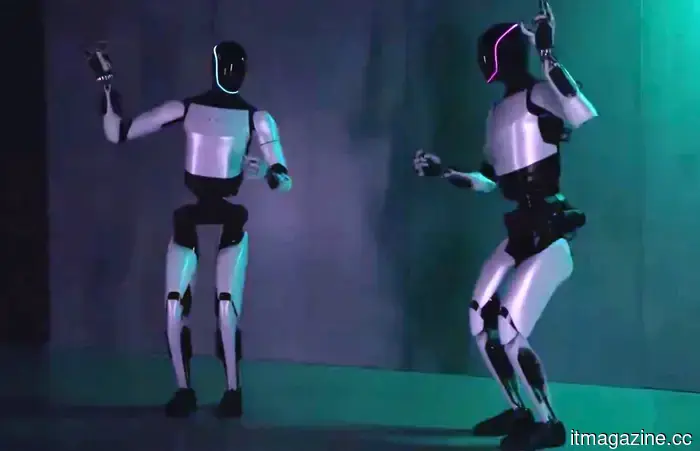
AI and robotics may still require time to achieve the same efficiency and precision as human workers. However, observing companies collect this type of data to train advanced robots feels reminiscent of the opening scene of a dystopian sci-fi film that does not end favorably for humanity.
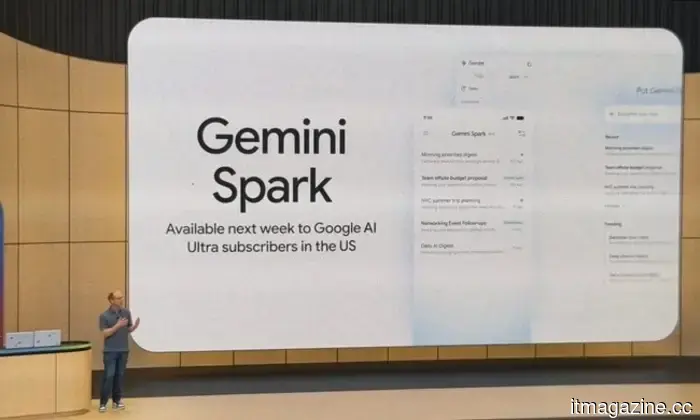
Gemini Spark is currently being rolled out with the hope that you will place your trust in an AI more than in individual apps.
For years, AI assistants have primarily existed in chat interfaces. You pose a question, they provide an answer, and the interaction concludes. Google seems poised to expand this concept significantly with Gemini Spark, a new AI agent now being made available to all Google AI Ultra subscribers in the U.S. Rather than opening several apps and managing tasks manually, you assign the task to Gemini Spark and allow it to operate in the background.
According to Google, Gemini Spark can autonomously navigate your digital environment, managing tasks even when your phone or laptop is powered off. Users can either observe its actions in real-time or permit it to operate quietly behind the scenes. Importantly, Google emphasizes that the system remains under user control and is designed to request approval before executing significant actions.
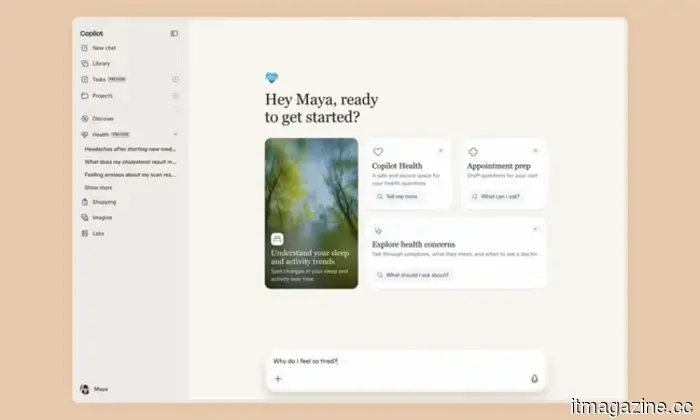
Microsoft aims for Copilot to address all your health-related inquiries and maintain your medical records.
Copilot Health is Microsoft's most personalized AI feature to date. It has been developed in collaboration with 250 medical professionals and is specifically designed not to replace your doctor.
Copilot Health is currently in preview, and Microsoft’s goal for it is evident: an AI assistant that understands your health background, interprets your fitness data, and helps you navigate your medical records seamlessly, all in one platform. Copilot Health serves as a dedicated area within the Copilot chatbot at copilot.microsoft.com/health where you can receive answers to your health-related queries.
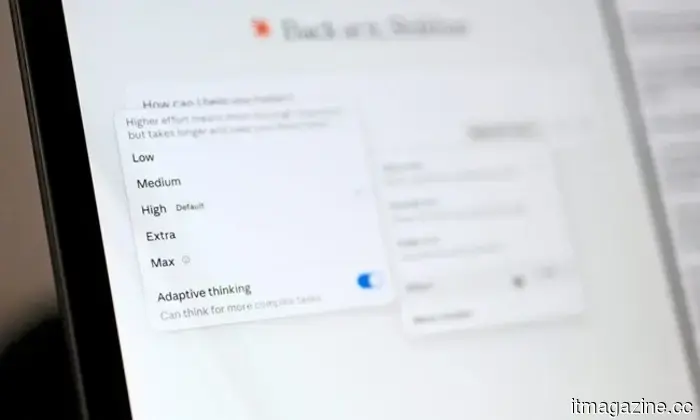
Now users of Claude can select how thoroughly the AI thinks before responding to their questions.
For the first time, Claude users have the option to choose whether their AI assistant responds quickly or engages in deeper thought.
Anthropic has just launched Claude Opus 4.8, and while the benchmark enhancements are genuine, the most significant alteration for everyday users is considerably simpler. Users can now instruct Claude on the intensity of its thought process before it answers a question. Furthermore, dynamic workflows are now available in research preview for Enterprise, Team, and Max plan users.

Other articles
 Anthropic identified eight companies that were illicitly selling its shares. Following the negative response, it discreetly eliminated four of them.
The initial warning caused publicly traded funds to plummet and instigated panic among investors. During the same week it retracted the list, Anthropic secured $65 billion at a valuation of $965 billion.
Anthropic identified eight companies that were illicitly selling its shares. Following the negative response, it discreetly eliminated four of them.
The initial warning caused publicly traded funds to plummet and instigated panic among investors. During the same week it retracted the list, Anthropic secured $65 billion at a valuation of $965 billion.
 Google Drive can now scan your documents in batches and alleviate some of your other frustrations as well.
Google Drive's updated document scanner allows you to scan a stack of pages in a single smooth motion, automatically corrects blurry images, and omits duplicates.
Google Drive can now scan your documents in batches and alleviate some of your other frustrations as well.
Google Drive's updated document scanner allows you to scan a stack of pages in a single smooth motion, automatically corrects blurry images, and omits duplicates.
 Your power bank is likely experiencing overheating issues, but TORRAS has resolved that.
TORRAS's MiniMag Pro utilizes semi-solid-state battery technology inspired by the electric vehicle industry to address the primary issue of heat in portable charging.
Your power bank is likely experiencing overheating issues, but TORRAS has resolved that.
TORRAS's MiniMag Pro utilizes semi-solid-state battery technology inspired by the electric vehicle industry to address the primary issue of heat in portable charging.
 MSI’s Triple Mode OLED monitor is a highlight of Computex, and I truly can't wait to see it.
The MSI MPG OLED 322URDX36 is recognized as the world's first gaming monitor with Triple Mode capability, allowing transitions between 4K at 360Hz, 2K at 520Hz, and FHD at 680Hz.
MSI’s Triple Mode OLED monitor is a highlight of Computex, and I truly can't wait to see it.
The MSI MPG OLED 322URDX36 is recognized as the world's first gaming monitor with Triple Mode capability, allowing transitions between 4K at 360Hz, 2K at 520Hz, and FHD at 680Hz.
 Social media firms compensated a school district with an amount exceeding its yearly budget to prevent going to trial.
Financial information regarding the Breathitt County settlement shows the cost of preventing the initial school addiction trial. An additional 1,300 districts are on standby.
Social media firms compensated a school district with an amount exceeding its yearly budget to prevent going to trial.
Financial information regarding the Breathitt County settlement shows the cost of preventing the initial school addiction trial. An additional 1,300 districts are on standby.
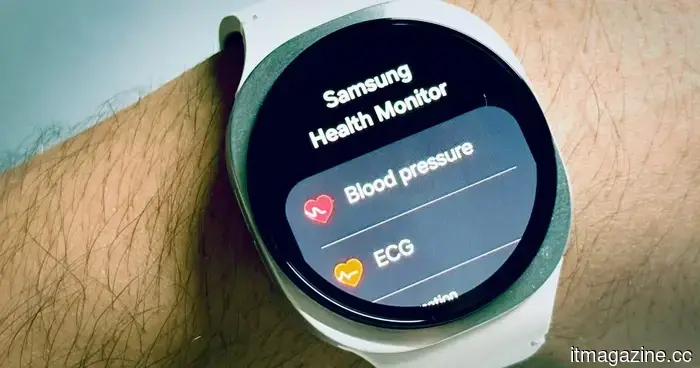 Samsung's Galaxy Watch is set to become significantly more intelligent in interpreting your health information.
Your Galaxy Watch may soon improve its ability to connect information. Samsung's upcoming update might transform the way you utilize your health data.
Samsung's Galaxy Watch is set to become significantly more intelligent in interpreting your health information.
Your Galaxy Watch may soon improve its ability to connect information. Samsung's upcoming update might transform the way you utilize your health data.
Shift will clean your home at no cost, but will keep a record of the tasks to help train robots.
Your untidy home might hold more value for AI companies than you realize. Shift is offering to clean it at no cost and use the recordings to train robots.