
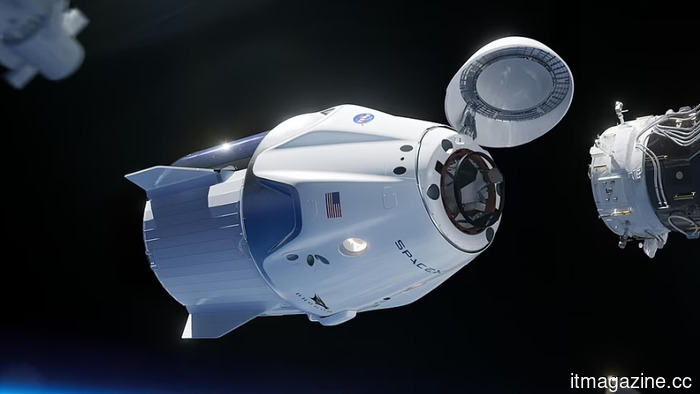
SpaceX has recently secured its second Golden Dome contract, valued at $4.16 billion.
TL;DR: SpaceX secured a $4.16 billion contract from the Space Force for missile-tracking satellites, bringing its total to $6.45 billion in Golden Dome contracts, following a $2.29 billion award earlier in the week.
On Friday, the US Space Force awarded SpaceX a $4.16 billion contract for the construction of satellites that will track foreign aircraft and missiles. This initiative, known as Space-Based Advanced Moving Target Indicator (SB-AMTI), is part of the Golden Dome missile defense program, which was valued at $185 billion during the Trump administration.
Just two days prior, SpaceX was granted a contract worth $2.29 billion for the Space Data Network Backbone, a secure communications layer based on Starshield satellites. With these contracts combined, SpaceX has amassed about $6.45 billion in Golden Dome contracts, surpassing the total prototype awards given to all other participants in the initiative.
The AMTI satellites will function as an integrated system that incorporates space-based sensors, secure communication links, and AI-driven ground processing capabilities. This setup aims to detect, track, and provide alerts for airborne threats from space, moving away from the traditional reliance on ground-based sensors and military aircraft.
By positioning detection capabilities in space, potential gaps that ground systems might miss can be addressed. The Space Force has noted that the architecture is intended to foster enhanced collaboration across the government space industrial sector. SpaceX is tasked with integrating the AMTI sensors into the data transport backbone being developed under its $2.29 billion contract.
SpaceX's standing within the Golden Dome program is unprecedented for a commercial contractor. Over $3.2 billion has been allocated in prototype contracts across 12 companies, including Anduril, Lockheed Martin, Northrop Grumman, Raytheon, and True Anomaly, but SpaceX's AMTI contract alone exceeds the total of these prototype awards.
Last week, SpaceX submitted its IPO prospectus, aiming for a valuation surpassing $1.75 trillion, with plans to raise around $75 billion, potentially making it the largest IPO ever. Each new defense contract contributes to the revenue argument supporting the IPO.
The timing of the contracts is significant, with two major awards occurring during the same week as a Starship V3 test flight and IPO preparations, suggesting a strategy to optimize pre-IPO momentum. As of 2024, SpaceX had over $22 billion in government contracts, and these Golden Dome awards strengthen that amount.
The overall cost of the Golden Dome program has increased to $185 billion, up $10 billion from the initial estimate, following an approval to accelerate space-based capabilities in March. The fiscal 2027 budget proposal includes preliminary funding for Golden Dome, with full-scale procurement expected to start after 2028.
True Anomaly raised $650 million in April after being selected for Golden Dome space-based interceptor prototypes, while Anduril secured $5 billion at a $61 billion valuation. Both companies are developing separate components of the Golden Dome program but lack a comparable scope to SpaceX’s combination of sensing, tracking, and communication capabilities.
Concerns regarding conflict of interest surrounding SpaceX's government contracts are heightened by the Golden Dome awards, given that Elon Musk is the largest financial supporter of the current president, the CEO of the contracting company, and the owner of a social media platform that influences public opinion on the program. While the IPO prospectus mentions risks related to government contracts, it does not specifically address the political implications.
The Starship V3 test flight on Friday proved SpaceX's ability to launch satellites from the vehicle, despite the Super Heavy booster being destroyed post-separation. The AMTI constellation will ultimately necessitate launch capabilities that only Starship can provide on a large scale. The contract, IPO, and rocket program represent three components of a unified strategy.
In summary, two contracts totaling $6.45 billion were awarded to SpaceX in just four days. It is not merely participating in Golden Dome; it is becoming a central commercial element of the program. Whether concentrating national security infrastructure in a single pre-IPO company represents a strategic advantage or poses a systemic risk is a question the Space Force seems to have answered by awarding the contracts. The market will weigh in again during the IPO pricing in June.
Other articles
 Developers can no longer operate without AI. Research indicates that it could potentially be hindering their performance.
METR was unable to replicate its AI coding research as developers declined to participate without AI support. Amazon discontinued its token leaderboard. Uber exhausted its AI budget in just four months.
Developers can no longer operate without AI. Research indicates that it could potentially be hindering their performance.
METR was unable to replicate its AI coding research as developers declined to participate without AI support. Amazon discontinued its token leaderboard. Uber exhausted its AI budget in just four months.
 Parloa invests $350 million through partnerships with SAP, Microsoft, and OpenAI.
Parloa, established in Berlin, is enhancing its AI agent platform by forming strategic partnerships with SAP, Microsoft, OpenAI, Five9, and Epic, following a successful fundraising of $350 million at a valuation of $3 billion.
Parloa invests $350 million through partnerships with SAP, Microsoft, and OpenAI.
Parloa, established in Berlin, is enhancing its AI agent platform by forming strategic partnerships with SAP, Microsoft, OpenAI, Five9, and Epic, following a successful fundraising of $350 million at a valuation of $3 billion.
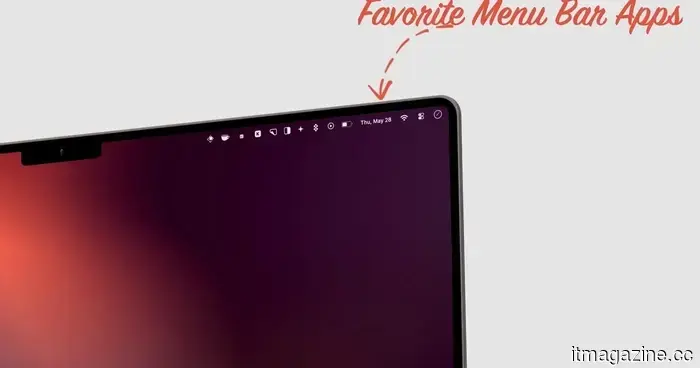 5 Menu Bar apps that have secured a permanent place on my Mac in 2026
The menu bar on my Mac is valuable space, and not every application deserves to occupy it. In 2026, these five apps were selected and have truly enhanced my daily workflow.
5 Menu Bar apps that have secured a permanent place on my Mac in 2026
The menu bar on my Mac is valuable space, and not every application deserves to occupy it. In 2026, these five apps were selected and have truly enhanced my daily workflow.
 AI is undermining summer internships. The entry-level pathway that shaped careers is faltering.
Tech internship listings have decreased by 30% since 2023. A survey conducted by Drexel indicates that more companies are reducing their workforce rather than hiring more. AI is now handling the tasks that interns previously performed.
AI is undermining summer internships. The entry-level pathway that shaped careers is faltering.
Tech internship listings have decreased by 30% since 2023. A survey conducted by Drexel indicates that more companies are reducing their workforce rather than hiring more. AI is now handling the tasks that interns previously performed.
 The CEO of Ferrari states that the Luce is worthy of...
CEO Vigna justified the €550,000 price of the EV as reasonable considering its innovative features. His predecessor suggested that the prancing horse emblem ought to be taken off the vehicle.
The CEO of Ferrari states that the Luce is worthy of...
CEO Vigna justified the €550,000 price of the EV as reasonable considering its innovative features. His predecessor suggested that the prancing horse emblem ought to be taken off the vehicle.
 Microsoft warned a security researcher of potential criminal charges, sparking outrage within the cybersecurity community.
A researcher disclosed unaddressed vulnerabilities in Defender and BitLocker following an alleged account revocation by Microsoft. In response, Microsoft activated its Digital Crimes Unit.
Microsoft warned a security researcher of potential criminal charges, sparking outrage within the cybersecurity community.
A researcher disclosed unaddressed vulnerabilities in Defender and BitLocker following an alleged account revocation by Microsoft. In response, Microsoft activated its Digital Crimes Unit.
SpaceX has recently secured its second Golden Dome contract, valued at $4.16 billion.
Two days after securing a $2.29 billion backbone contract, the Space Force granted SpaceX the AMTI satellite deal. SpaceX's total for Golden Dome projects now amounts to $6.45 billion.