
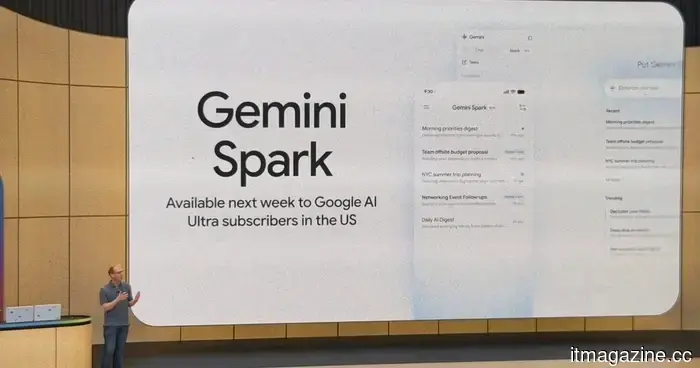
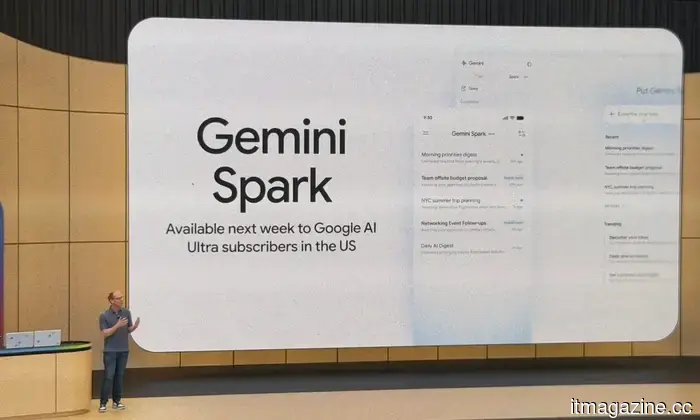
Gemini Spark is now being deployed, and it aims for you to have more confidence in an AI than in applications.
Digital Trends
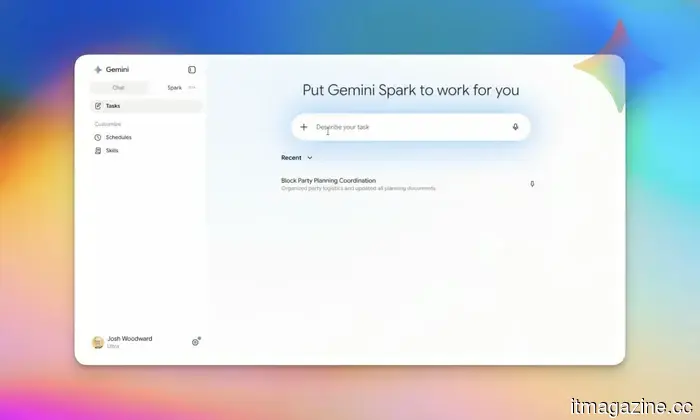
For many years, AI assistants have mainly existed within chat interfaces. You pose a question, receive an answer, and then the exchange concludes. Google seems prepared to advance that concept significantly with Gemini Spark, a new AI agent currently being introduced to all Google AI Ultra subscribers in the U.S. Instead of juggling numerous applications and manually overseeing tasks, you delegate responsibilities to Gemini Spark and allow it to function in the background.
Google indicates that Gemini Spark can perform autonomously within your digital environment, taking care of tasks even when your phone or laptop is powered off. Users can either observe it operate in real time or let it run quietly behind the scenes. Notably, Google emphasizes that users maintain control over the system and it is designed to seek approval before executing major actions.
Google aims for AI to act as an intermediary
The launch of Gemini Spark signifies a larger transformation in the AI sector. Companies are moving beyond merely creating chatbots that respond to inquiries. The upcoming objective is to develop AI agents that can take actions on your behalf. Consider the distinction between requesting restaurant suggestions from an assistant and having it compare alternatives, secure a reservation, add it to your calendar, and alert you when it’s time to leave. That’s the vision many AI firms are pursuing.
Google
Google's strategy implies a desire for Gemini to serve as the intermediary between users and their daily applications. Rather than switching between platforms, the AI orchestrates the connections among them.
The primary challenge is not the technology itself
While the technology might not be the toughest aspect to sell; gaining trust will be. Many users feel comfortable allowing AI to summarize emails or provide answers. However, giving it the authority to operate independently poses a different challenge. Even with safeguards in place for approval, numerous users will likely seek assurance that an AI agent can consistently make decisions without introducing new issues.
Google
That’s why Gemini Spark appears to be more than just another feature enhancement. It offers an early look at a future where AI doesn’t merely react to commands but actively oversees aspects of your digital existence. Whether users are prepared for this level of automation remains uncertain. Nonetheless, Google is evidently banking on the notion that the next evolution in AI will involve users feeling secure enough to allow AI to act on their behalf.
Shimul is a writer at Digital Trends, bringing over five years of experience in the technology field.
Shift will organize your home for free, but will log the tasks to train robots
Routine chores are becoming essential for future home robots
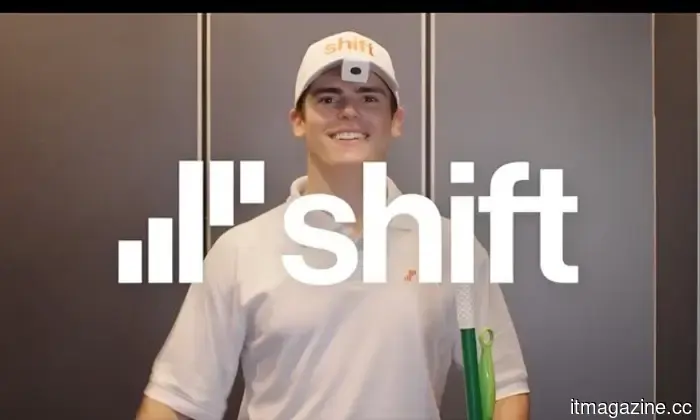
Shift is providing complimentary cleaning services, but there's a significant caveat. The company will record these chores to generate training data for forthcoming home robots. The New York-based startup currently offers free cleaning, where a vetted operator enters a home and uses a camera-equipped device while performing typical household tasks. The recorded footage can assist AI systems in comprehending how individuals clean in real-world environments outside of laboratory conditions.
Read more
Microsoft aims for Copilot to address all your health inquiries and manage your medical records
Copilot Health is Microsoft's most personalized AI feature to date. It has been developed in collaboration with 250 physicians and is explicitly intended not to replace your doctor.
Copilot Health is now available in preview, and Microsoft's goals for it are evident: an AI assistant that is familiar with your health history, comprehends your fitness information, and can help you interpret your medical records, all consolidated in one location. Copilot Health is a specialized section within the Copilot chatbot at copilot.microsoft.com/health where you can receive answers to health-related questions.
Read more
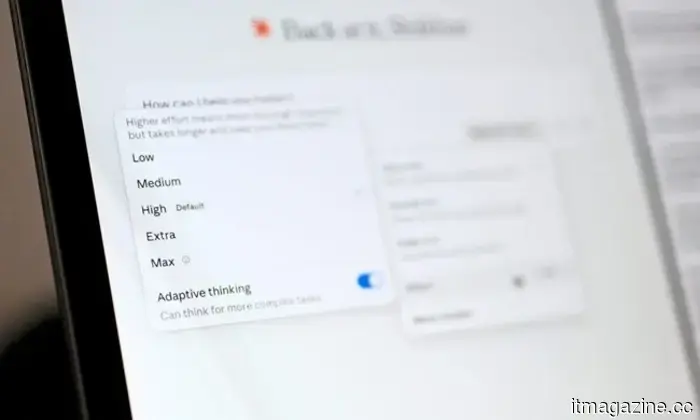
You can now decide how intensely Claude thinks before answering your questions
For the first time, Claude users can select whether their AI assistant gives fast or deep responses.
Anthropic has just unveiled Claude Opus 4.8, and while the benchmark enhancements are significant, the most meaningful change for everyday users is much simpler. You can now instruct Claude on the depth of thought it should engage in before replying to your question. Additionally, dynamic workflows are now available for research preview to Enterprise, Team, and Max plan users.
Read more



Other articles
 Meta is developing an AI pendant and is also preparing to launch a business subscription service called Wearables for Work.
An internal memo indicates that Meta plans to begin testing the pendant next year, following its acquisition of Limitless. Reality Labs experienced a loss of $4 billion last quarter.
Meta is developing an AI pendant and is also preparing to launch a business subscription service called Wearables for Work.
An internal memo indicates that Meta plans to begin testing the pendant next year, following its acquisition of Limitless. Reality Labs experienced a loss of $4 billion last quarter.
 Your power bank is likely getting too hot, but TORRAS has solved that issue.
TORRAS's MiniMag Pro utilizes semi-solid-state battery technology adapted from the electric vehicle industry to address the most significant issue in portable charging: heat.
Your power bank is likely getting too hot, but TORRAS has solved that issue.
TORRAS's MiniMag Pro utilizes semi-solid-state battery technology adapted from the electric vehicle industry to address the most significant issue in portable charging: heat.
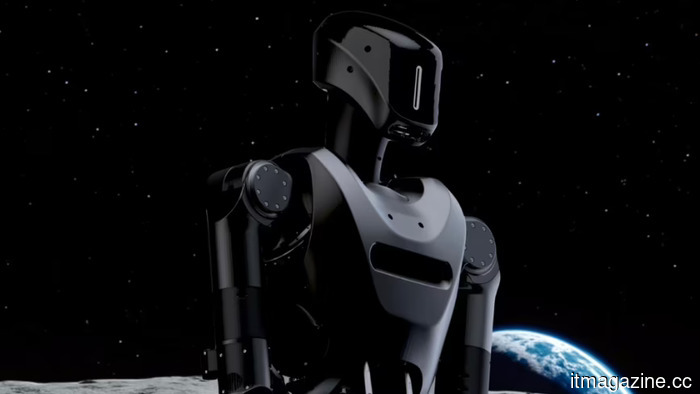 A startup advised by Eric Trump is conducting tests on humanoid robots in Ukraine, aiming to deploy them on US front lines within 18 months.
The Foundation dispatched two Phantom MK-1 robots to Ukraine for testing in logistics. It holds $24 million in contracts from the Pentagon. Senator Warren referred to the deal as "corruption."
A startup advised by Eric Trump is conducting tests on humanoid robots in Ukraine, aiming to deploy them on US front lines within 18 months.
The Foundation dispatched two Phantom MK-1 robots to Ukraine for testing in logistics. It holds $24 million in contracts from the Pentagon. Senator Warren referred to the deal as "corruption."
 Meta is developing an AI pendant and also intends to launch a business subscription service named Wearables for Work.
An internal memo indicates that Meta will begin testing the pendant next year, following its Limitless acquisition. Last quarter, Reality Labs reported a loss of $4 billion.
Meta is developing an AI pendant and also intends to launch a business subscription service named Wearables for Work.
An internal memo indicates that Meta will begin testing the pendant next year, following its Limitless acquisition. Last quarter, Reality Labs reported a loss of $4 billion.
 Social media firms compensated a school district with an amount exceeding its yearly budget in order to prevent a trial.
Financial specifics regarding the Breathitt County settlement indicate the cost of preventing the initial school addiction trial. An additional 1,300 districts are in anticipation.
Social media firms compensated a school district with an amount exceeding its yearly budget in order to prevent a trial.
Financial specifics regarding the Breathitt County settlement indicate the cost of preventing the initial school addiction trial. An additional 1,300 districts are in anticipation.
 MSI’s Triple Mode OLED monitor is a highlight of Computex, and I truly can't wait to see it.
The MSI MPG OLED 322URDX36 is recognized as the world's first gaming monitor with Triple Mode capability, allowing transitions between 4K at 360Hz, 2K at 520Hz, and FHD at 680Hz.
MSI’s Triple Mode OLED monitor is a highlight of Computex, and I truly can't wait to see it.
The MSI MPG OLED 322URDX36 is recognized as the world's first gaming monitor with Triple Mode capability, allowing transitions between 4K at 360Hz, 2K at 520Hz, and FHD at 680Hz.
Gemini Spark is now being deployed, and it aims for you to have more confidence in an AI than in applications.
Google's newest Gemini feature aims to go beyond simply providing answers. It has the potential to transform the way you engage with applications completely.