

Meta is developing an AI pendant and also intends to launch a business subscription service named Wearables for Work.
A leaked memo from Meta confirms the company is set to test an AI pendant next year. This device builds on the Limitless acquisition finalized at the end of 2025, which developed a pendant that users could attach to their clothing or wear as a necklace to record and transcribe conversations.
The memo also reveals intentions to broaden Meta’s lineup of AI glasses and introduce a business subscription called "Wearables for Work." This professional tier would position Meta’s devices as productivity tools rather than mere consumer gadgets. Meta's hardware division, Reality Labs, experienced a loss of $4 billion in the first quarter of 2026.
AI pendants have faced challenges in the past. Humane’s AI Pin, released in 2024, received poor reviews and was effectively defunct within a year, leading HP to acquire the startup’s assets for $116 million. Another AI pendant startup, Friend, invested over $1 million in subway advertisements but struggled to garner users. Neither of these devices provided sufficient utility to justify the need for an additional wearable.
However, Meta’s strategy differs in a significant way. The company already has a successful wearables business, having sold over seven million Ray-Ban smart glasses in 2025 and holding approximately 82% of the smart glasses market. The pendant would serve as a complementary device within an established ecosystem, rather than taking a risk as a standalone item in an unproven category.
Limitless had raised over $33 million from investors like Sam Altman and Andreessen Horowitz prior to its acquisition by Meta. CEO Dan Siroker noted that Meta’s vision of “personal superintelligence” through wearables was aligned with Limitless's mission. After the acquisition, the startup ceased selling devices to new customers but continued to support existing ones.
The Wearables for Work subscription appears to be the most commercially viable aspect of the memo. Meta’s glasses already feature integration with Meta AI for functions such as voice queries, real-time translation, and visual identification. An enterprise tier could potentially add features like meeting transcription, ambient note-taking, CRM integration, and hands-free access to workplace tools, resembling Microsoft's Copilot subscription model but through hardware instead of software.
The wearables market is increasingly fragmenting into distinct categories. While the Apple Watch leads the smartwatch sector, it is slowly losing ground to non-screen health trackers. Oura has filed for an IPO, and both Whoop and Google’s Fitbit Air focus on passive data collection. Meta’s pendant would create a new category for ambient AI capture, functioning as a constantly recording device that supplements rather than replaces a smartphone.
There are significant privacy concerns associated with this. Meta's Ray-Ban glasses have already encountered lawsuits and regulatory scrutiny regarding the footage captured by their cameras. A pendant that records conversations introduces similar concerns in a more personal context. The regulatory landscape in the EU, where Meta is subject to ongoing DMA enforcement and GDPR scrutiny, may limit the markets where the device can be sold.
Meta's hardware strategy now encompasses glasses, pendants, a planned smartwatch called Malibu 2, VR headsets, and a competitor to Vision Pro. The company hopes that AI wearables will help recover Reality Labs’ considerable losses, exceeding $60 billion since its inception. The success of the pendant will hinge on Meta's ability to provide enough utility for ambient AI recording that users find it worthwhile, and sufficient trustworthiness to ensure others will accept its presence.
Other articles
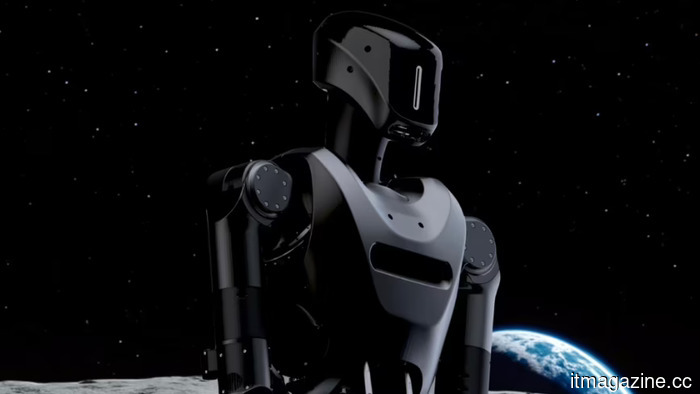 A startup advised by Eric Trump is conducting tests on humanoid robots in Ukraine, aiming to deploy them on US front lines within 18 months.
The Foundation dispatched two Phantom MK-1 robots to Ukraine for testing in logistics. It holds $24 million in contracts from the Pentagon. Senator Warren referred to the deal as "corruption."
A startup advised by Eric Trump is conducting tests on humanoid robots in Ukraine, aiming to deploy them on US front lines within 18 months.
The Foundation dispatched two Phantom MK-1 robots to Ukraine for testing in logistics. It holds $24 million in contracts from the Pentagon. Senator Warren referred to the deal as "corruption."
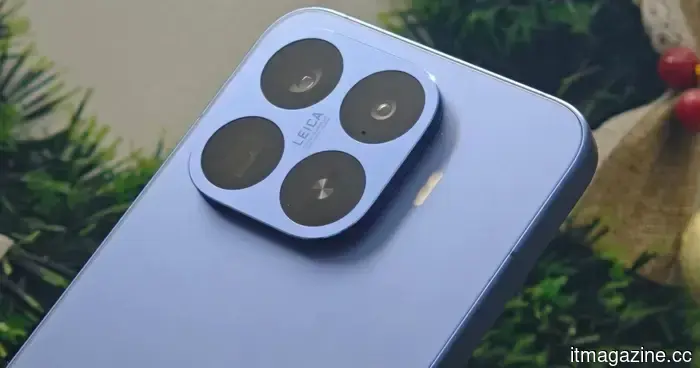 I spent a day using the Xiaomi 17T Pro, and the Leica cameras made each shot enticing.
After a day of photographing with the Xiaomi 17T Pro, I found myself more captivated by the mood, texture, and character of its Leica-tuned camera than by its specifications.
I spent a day using the Xiaomi 17T Pro, and the Leica cameras made each shot enticing.
After a day of photographing with the Xiaomi 17T Pro, I found myself more captivated by the mood, texture, and character of its Leica-tuned camera than by its specifications.
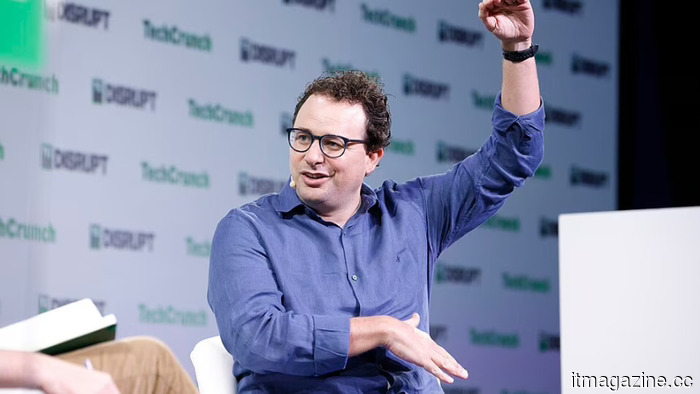 Anthropic identified eight companies that were illegally selling its shares. Following the negative response, it discreetly withdrew four of them.
The initial warning caused publicly traded funds to plummet and created panic among investors. The same week it retracted the statement, Anthropic secured $65 billion at a $965 billion valuation.
Anthropic identified eight companies that were illegally selling its shares. Following the negative response, it discreetly withdrew four of them.
The initial warning caused publicly traded funds to plummet and created panic among investors. The same week it retracted the statement, Anthropic secured $65 billion at a $965 billion valuation.
 MSI’s Triple Mode OLED monitor is a highlight of Computex, and I truly can't wait to see it.
The MSI MPG OLED 322URDX36 is recognized as the world's first gaming monitor with Triple Mode capability, allowing transitions between 4K at 360Hz, 2K at 520Hz, and FHD at 680Hz.
MSI’s Triple Mode OLED monitor is a highlight of Computex, and I truly can't wait to see it.
The MSI MPG OLED 322URDX36 is recognized as the world's first gaming monitor with Triple Mode capability, allowing transitions between 4K at 360Hz, 2K at 520Hz, and FHD at 680Hz.
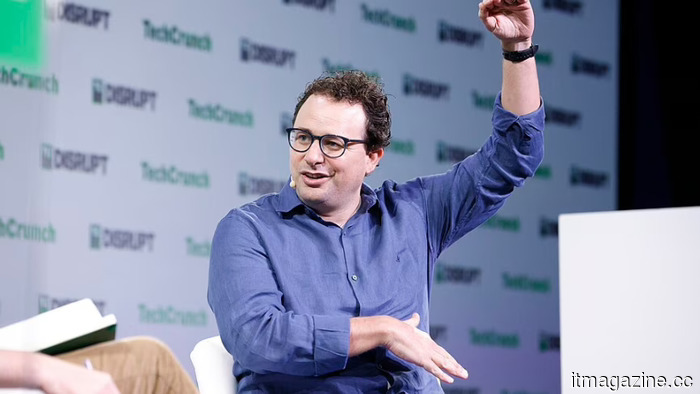 Anthropic identified eight companies that were illicitly selling its shares. Following the negative response, it discreetly eliminated four of them.
The initial warning caused publicly traded funds to plummet and instigated panic among investors. During the same week it retracted the list, Anthropic secured $65 billion at a valuation of $965 billion.
Anthropic identified eight companies that were illicitly selling its shares. Following the negative response, it discreetly eliminated four of them.
The initial warning caused publicly traded funds to plummet and instigated panic among investors. During the same week it retracted the list, Anthropic secured $65 billion at a valuation of $965 billion.
 Your power bank is likely experiencing overheating issues, but TORRAS has resolved that.
TORRAS's MiniMag Pro utilizes semi-solid-state battery technology inspired by the electric vehicle industry to address the primary issue of heat in portable charging.
Your power bank is likely experiencing overheating issues, but TORRAS has resolved that.
TORRAS's MiniMag Pro utilizes semi-solid-state battery technology inspired by the electric vehicle industry to address the primary issue of heat in portable charging.
Meta is developing an AI pendant and also intends to launch a business subscription service named Wearables for Work.
An internal memo indicates that Meta will begin testing the pendant next year, following its Limitless acquisition. Last quarter, Reality Labs reported a loss of $4 billion.