
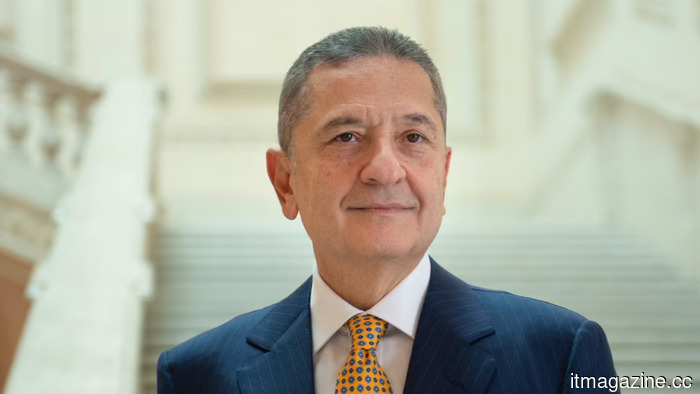
The Bank of Italy has stated that it is in discussions with major AI companies globally.
Governor Fabio Panetta utilized the annual gathering of the central bank to advocate for AI as a solution to Italy's persistent productivity issues and mentioned that the bank is already collaborating with the companies developing this technology. Central bankers typically refrain from disclosing which tech firms they are engaging with, but Fabio Panetta took a different approach.
During the Bank of Italy’s annual assembly on Friday, the governor indicated that the bank is in communication with the leading global developers of artificial intelligence and has recently initiated discussions with Italian banks about implementing this technology.
Although this statement is brief in the context of a lengthy speech, it conveys a significant message. A central bank that openly acknowledges its interaction with cutting-edge AI companies is signaling its commitment to understand the technology from within rather than simply regulating it from afar, especially in a nation where major U.S. laboratories are establishing their presence.
Panetta's broader argument was economic in nature. Italy has faced a persistent productivity challenge, with minimal growth in output per worker over the last two decades, and he positioned AI as a credible component of the solution. He suggested that with slow adoption, the technology could enhance Italian productivity by 0.2 percentage points annually. However, with rapid and widespread adoption, it could contribute over a full percentage point per year, leading to vastly different economic outcomes for a country that has struggled to expand.
The disparity between these two scenarios essentially represents an adoption issue, which Panetta highlighted by referring to current statistics. He pointed out that roughly 30% of Italian businesses utilize AI in some capacity, but only about 5% engage with it extensively. A technology can be widely acknowledged yet minimally implemented, and Italy finds itself in this middle ground, making the distinction between casual use and committed adoption particularly significant for the economic figures.
To bridge this gap, Panetta emphasized the need for greater capital resources rather than just technological advancements. He argued that Italy requires a stronger venture-capital and private-equity landscape—the financial support necessary for domestic AI firms to grow instead of selling early or relocating abroad.
This concern reflects a recurring sentiment in Europe: while the continent generates research and entrepreneurial talent, it has historically lacked the investment needed to nurture these into substantial domestic companies.
The timing of this commentary is particularly relevant. Anthropic recently opened an office in Milan and has identified Italian corporate clients such as Generali and Enel, and major U.S. laboratories are actively seeking partnerships with Italian institutions.
A central bank asserting its presence in discussions with these firms and encouraging banks toward greater adoption signals an intention from Rome to influence the arrival and integration of the technology rather than merely receiving it passively.
While Panetta's remarks are not binding commitments and an annual address is more about setting direction than providing exhaustive details, the essential matter to monitor is whether the discussions with banks lead to actual implementations and if the venture-capital support he advocated for comes to fruition.
For now, the governor has made an important acknowledgment: Italy’s central bank is actively engaging with the AI sector and desires to accelerate the country’s progress in this area.
Other articles
 GIGABYTE will present an AI ecosystem and more at COMPUTEX 2026.
The stand will showcase all the key consumer products of the company: motherboards, graphics cards, PC components, laptops, monitors, and peripherals.
GIGABYTE will present an AI ecosystem and more at COMPUTEX 2026.
The stand will showcase all the key consumer products of the company: motherboards, graphics cards, PC components, laptops, monitors, and peripherals.
 OpenAI delivers its latest model for cybersecurity to Japan's major banks.
Japan's three major banks will utilize OpenAI's GPT-5.5-Cyber via a verified-defender program, as stated by the finance minister, in light of increasing AI-related threats.
OpenAI delivers its latest model for cybersecurity to Japan's major banks.
Japan's three major banks will utilize OpenAI's GPT-5.5-Cyber via a verified-defender program, as stated by the finance minister, in light of increasing AI-related threats.
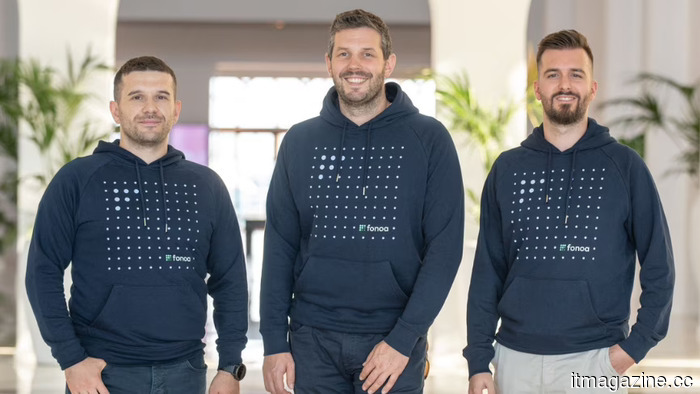
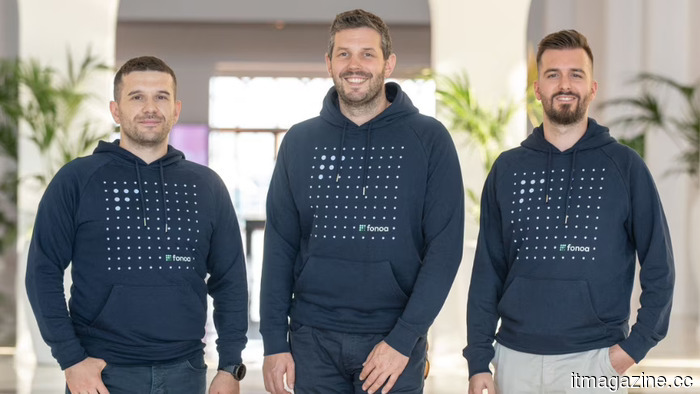 Fonoa secures $110 million and acquires PwC’s tax software to develop a real-time compliance platform.
Fonoa, based in Dublin, has secured $110 million in a Series C funding round led by Headline and has acquired PwC’s Indirect Tax Edge, with the belief that real-time tax compliance is taking the place of standalone tools.
Fonoa secures $110 million and acquires PwC’s tax software to develop a real-time compliance platform.
Fonoa, based in Dublin, has secured $110 million in a Series C funding round led by Headline and has acquired PwC’s Indirect Tax Edge, with the belief that real-time tax compliance is taking the place of standalone tools.
The Bank of Italy has stated that it is in discussions with major AI companies globally.
Governor Fabio Panetta stated that the Bank of Italy is collaborating with top global AI developers and has begun discussions with banks regarding adoption, advocating for AI as a solution to low productivity issues.