
OpenAI delivers its latest model for cybersecurity to Japan's major banks.
GPT-5.5-Cyber will be made available to MUFG, SMBC, and Mizuho through a verified-defender program, as stated by the finance minister, who indicated that Tokyo views frontier AI as both a threat and a protection. The same technologies that lower the cost of cyberattacks are now being intentionally given to those who defend against them. According to Finance Minister Satsuki Katayama, Japan’s three major banks will receive access to OpenAI’s latest model for cybersecurity, treating this advanced system as vital national infrastructure instead of a mere consumer product.
The model, GPT-5.5-Cyber, will be provided to MUFG Bank, Sumitomo Mitsui Banking Corporation, and Mizuho Bank via OpenAI’s “Trusted Access for Cyber” program, which aims to ensure that the most advanced tools are only available to verified defenders. The rationale behind this is based on gatekeeping: a model capable of identifying vulnerabilities at scale is inherently risky if it falls into the wrong hands, thus restricting access to institutions capable of being thoroughly vetted.
The arrangement was not solely formed at a technical level. Katayama and US Treasury Secretary Scott Bessent directly participated in the discussions that initiated the collaboration, lending it the nature of a government-to-government agreement rather than just a commercial transaction. In this perspective, Tokyo is acquiring cybersecurity capabilities similar to how it might procure any other strategic asset.
This initiative is part of a broader effort, as Japan established a public-private working group focused on AI-related cyber risks in mid-May, which includes major banks, the Bank of Japan, and the local branches of leading AI labs. This group centers on the risks posed by a new class of vulnerability-detection systems, notably including Anthropic’s Claude Mythos, which Japanese institutions are also poised to access. The OpenAI agreement marks the second advanced lab entering this defensive coalition.
This detail is significant, as it shows two American laboratories pursuing the same sovereign client with very similar proposals. Both labs are presenting cyber-specific adaptations of their premier models as instruments for national defenders, signaling the early development of an AI defense-contractor market, where banks and finance ministries are the clients.
However, there is an inherent risk in this positive development. Concentrating the most effective defensive AI within a few large, vetted institutions could leave the rest of the financial system, including smaller banks and fintech startups, in a more vulnerable position. A two-tier security framework, where megabanks are robustly defended while others remain more exposed, could likely emerge from a program designed, reasonably, to prevent powerful tools from getting into the wrong hands.
For now, the immediate outcome is clear. Three of the largest banks globally will soon have access to an advanced model focused on enhancing their own defenses, provided through a vetted channel, with two governments playing a role in negotiating the terms. Whether this improves the overall safety of the financial system or only strengthens its most powerful segments is a question that will unfold in the coming months.
Other articles
 The Bank of Italy has stated that it is in discussions with major AI companies globally.
Governor Fabio Panetta stated that the Bank of Italy is collaborating with top global AI developers and has begun discussions with banks regarding adoption, advocating for AI as a solution to low productivity issues.
The Bank of Italy has stated that it is in discussions with major AI companies globally.
Governor Fabio Panetta stated that the Bank of Italy is collaborating with top global AI developers and has begun discussions with banks regarding adoption, advocating for AI as a solution to low productivity issues.
 GIGABYTE will present an AI ecosystem and more at COMPUTEX 2026.
The stand will showcase all the key consumer products of the company: motherboards, graphics cards, PC components, laptops, monitors, and peripherals.
GIGABYTE will present an AI ecosystem and more at COMPUTEX 2026.
The stand will showcase all the key consumer products of the company: motherboards, graphics cards, PC components, laptops, monitors, and peripherals.
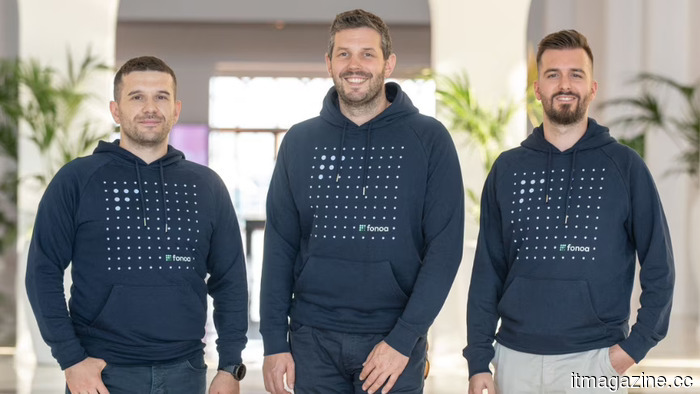 Fonoa secures $110 million and acquires PwC’s tax software to develop a real-time compliance platform.
Fonoa, based in Dublin, has secured $110 million in a Series C funding round led by Headline and has acquired PwC’s Indirect Tax Edge, with the belief that real-time tax compliance is taking the place of standalone tools.
Fonoa secures $110 million and acquires PwC’s tax software to develop a real-time compliance platform.
Fonoa, based in Dublin, has secured $110 million in a Series C funding round led by Headline and has acquired PwC’s Indirect Tax Edge, with the belief that real-time tax compliance is taking the place of standalone tools.
OpenAI delivers its latest model for cybersecurity to Japan's major banks.
Japan's three major banks will utilize OpenAI's GPT-5.5-Cyber via a verified-defender program, as stated by the finance minister, in light of increasing AI-related threats.