

Copilot has been redesigned and aims to offer more functionality while maintaining an appealing appearance.
Microsoft is implementing a subtle yet significant redesign of Copilot, shifting its focus beyond just enhanced capabilities. The aim is to integrate it seamlessly into your workflow.
Throughout Microsoft 365, Copilot is being reconfigured to decrease visual distractions and enhance practicality. Rather than consistently vying for attention, it is being designed to operate in the background when not needed, only becoming prominent when it can genuinely assist. Although this change may seem minor, it transforms how often one feels either interrupted or supported during daily tasks.
A Streamlined Copilot Tailored to Your Intentions
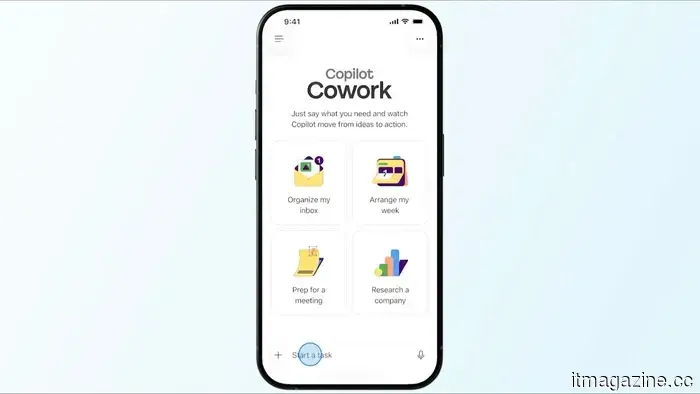
The Copilot application has been revamped with a fundamental principle in mind. Given that work is often chaotic and nonlinear, the interface should not resemble a rigid chatbot window. The most noticeable alteration is in the prompt area, which has evolved from a static text box waiting for input to a flexible region where users can write, paste, organize, and refine their requests. It allows for shaping thoughts prior to submission.
Beneath, Copilot now displays tools and controls based on your current task. For simpler tasks, the interface remains minimalistic; for more complex ones, additional options will emerge. This design choice minimizes clutter while ensuring depth is accessible when required. Navigation has also been streamlined with a collapsible side panel that accommodates chats, agents, and history without overwhelming the screen.
Microsoft is heavily utilizing progressive disclosure, a design methodology that starts the interface simple and gradually reveals more elements as needed. The outcome is a Copilot experience that feels more tranquil, even as its functionalities expand behind the scenes.
Copilot is Integrating More Closely with Your Actual Workflow
The significant change extends beyond the Copilot app itself and permeates all of Microsoft 365. Copilot is no longer merely an auxiliary assistant you engage separately; it is evolving into something that accompanies users throughout various applications. A single access point now follows users across Word, Excel, PowerPoint, and Outlook, suggesting actions based on what users are currently working on rather than requiring constant context switching. For instance, if you are creating a presentation, it can assist with rearranging slides or refining content. While in Excel, it can offer help when data becomes overwhelming.
This is where Microsoft’s initiative towards task-specific agents becomes crucial. Copilot is being divided into more specialized roles such as Designer, Researcher, and app-native assistants for Word, Excel, and PowerPoint. Each role is intended to function like a collaborator that can take actions within the document. Furthermore, the manner in which Copilot responds has evolved; it now initiates with simplicity and gradually incorporates structure. You may first encounter a basic response, followed by formatting options, suggestions, and subsequent actions if necessary, reflecting how people naturally work by starting with rough ideas and refining them over time.
At the core is Microsoft’s context-aware system that leverages information from emails, files, chats, and meetings, aiming to grasp ongoing work rather than responding to isolated prompts. This enables Copilot to better navigate long-term projects, performance reviews, or personnel changes where context holds greater significance than a single inquiry. Microsoft also reports performance enhancements, including faster load times and quicker responses, particularly for complex requests.
The Broader Shift Driving Copilot’s Redesign
What Microsoft is fundamentally altering is the role of Copilot within the workflow. The tool is being positioned as a layer that remains closely aligned with your work and intervenes only when necessary. Achieving this balance is nuanced: if it is too conspicuous, it can become a distraction; if it is too inconspicuous, it risks becoming irrelevant. The new objective is to bridge the gap between intention and output, enabling users to transition from vague ideas to usable content without repeatedly translating their intentions into prompts or switching between different modes.
There is also a distinct evolution in design philosophy. Microsoft is shifting its perspective from viewing AI as merely a feature to treating it as a system geared towards achieving outcomes. The focus is no longer on the interface itself but rather on whether the results produced are useful, organized, and reliable enough to act upon. In this context, Copilot’s redesign embodies restraint; it aims to not impede your workflow while remaining relevant, which is one of the most challenging design issues currently faced by AI tools.


Other articles
 In China, low-cost sodium batteries are already achieving performance levels comparable to those of Tesla.
A commercial sodium-ion battery developed in China is nearing performance levels similar to those of Tesla, utilizing more affordable materials and a double-aluminum structure that has the potential to compete with lithium-ion batteries in cost-sensitive electric vehicles and grid storage applications.
In China, low-cost sodium batteries are already achieving performance levels comparable to those of Tesla.
A commercial sodium-ion battery developed in China is nearing performance levels similar to those of Tesla, utilizing more affordable materials and a double-aluminum structure that has the potential to compete with lithium-ion batteries in cost-sensitive electric vehicles and grid storage applications.
 As AI proliferates with rapid responses, studies indicate that the essence of the internet is fading.
A recent joint research effort by UC Riverside scientists reveals that as an increasing number of individuals rely on AI for information, the internet is diminishing in the emotional richness and human reasoning that initially made it valuable to explore.
As AI proliferates with rapid responses, studies indicate that the essence of the internet is fading.
A recent joint research effort by UC Riverside scientists reveals that as an increasing number of individuals rely on AI for information, the internet is diminishing in the emotional richness and human reasoning that initially made it valuable to explore.
 Copilot has undergone a redesign and aims to enhance functionality while maintaining a visually appealing appearance.
Microsoft is transforming Copilot to create a workspace that adjusts to your needs. The revamp emphasizes a cleaner interface, enhanced contextual awareness, and reduced disruptions during your work.
Copilot has undergone a redesign and aims to enhance functionality while maintaining a visually appealing appearance.
Microsoft is transforming Copilot to create a workspace that adjusts to your needs. The revamp emphasizes a cleaner interface, enhanced contextual awareness, and reduced disruptions during your work.
 Halide Mark III introduces creative cinematic features to one of the top iPhone camera applications.
Halide Mark III has arrived, and it's a significant update. With new film-inspired Looks, an integrated Photo Lab for RAW editing, and a more streamlined design, it stands as the most comprehensive iPhone camera app to date.
Halide Mark III introduces creative cinematic features to one of the top iPhone camera applications.
Halide Mark III has arrived, and it's a significant update. With new film-inspired Looks, an integrated Photo Lab for RAW editing, and a more streamlined design, it stands as the most comprehensive iPhone camera app to date.
 ChargePoint partners with Powers Parts to provide charging solutions for transit electric buses.
ChargePoint and Powers Parts have teamed up to provide charging solutions and fleet telematics to transit agencies operating PhoenixEV buses, filling the service void created by Proterra's bankruptcy.
ChargePoint partners with Powers Parts to provide charging solutions for transit electric buses.
ChargePoint and Powers Parts have teamed up to provide charging solutions and fleet telematics to transit agencies operating PhoenixEV buses, filling the service void created by Proterra's bankruptcy.
Copilot has been redesigned and aims to offer more functionality while maintaining an appealing appearance.
Microsoft is transforming Copilot to resemble a workspace that adjusts to your needs. The redesign emphasizes a more streamlined appearance, enhanced contextual awareness, and reduced disruptions while you are working.