

Apollo and Blackstone are negotiating a $36 billion debt agreement to acquire Anthropic and its assets.
To understand the latest financing for Anthropic, it's important to observe which entities are not taking on the debt. Apollo Global Management and Blackstone are in the process of securing approximately $36 billion in loans, but this debt isn’t reflected on Anthropic’s balance sheet. Instead, it purchases chips which are then leased back.
According to Bloomberg, these two firms are introducing more investors into the arrangement this week, with a closing expected next week. The borrowed funds are channeled through a special-purpose vehicle that acquires Google’s custom tensor processing units (TPUs), which have become Anthropic’s alternative to relying solely on Nvidia. These units are then leased to Anthropic for use in data centers located in New York, Texas, Louisiana, and Indiana.
This transaction marks one of the largest private-credit arrangements ever created to meet a single company's computing requirements, reflecting significant financial engineering at work. By using a leasing vehicle for the purchase, Anthropic can access the chips without needing to take on the burden of tens of billions in hardware debt. Meanwhile, lenders benefit from an asset-backed structure rather than an unsecured bet on a company that hasn’t yet achieved profitability.
A notable clause is embedded beneath the senior tranches, where Broadcom, which assists Google in the production of TPUs, is offering a residual-value support agreement for approximately $31 billion of the senior debt. To simplify: if Anthropic fails to pay its lease and the used chips don’t sell for a high enough price to cover the loan, Broadcom would take on the loss. Essentially, a chipmaker is backing the demand for its own products.
Apollo and Blackstone plan to reduce part of the debt while retaining substantial shares of it, a strong indication of vested interest that facilitates the progression of such a large deal through a syndicate.
Blackstone is already familiar with the borrower, holding around $1 billion in Anthropic equity and participating in a separate $1.5 billion joint venture to integrate Claude into private-equity portfolio companies.
This financing occurs against the backdrop of a competitive race for computing resources that has inflated Anthropic’s paper valuation to levels that would have seemed unrealistic a year ago. The company has been raising funds at valuations exceeding $900 billion, and this chip-financing deal serves as the tangible counterpart to that figure: the valuation signifies ambition, while the debt provides the silicon needed to realize it.
None of the involved parties have commented publicly, and the terms may still change before closing. What is clear from the structure is how the costs associated with cutting-edge AI are being distributed. The model developer, cloud provider, chip designer, and private-credit giants are now interconnected through a single financing arrangement, each bearing a different portion of the risk associated with the expectation that demand for Claude continues to grow rapidly enough to cover the costs of the machines procured for its support.
Other articles
 The Chrome browser is receiving an unseen security upgrade that will be beneficial.
DBSC is now enabled by default in Chrome on Windows, linking your login session cookies to your particular device, which renders stolen cookies ineffective for attackers.
The Chrome browser is receiving an unseen security upgrade that will be beneficial.
DBSC is now enabled by default in Chrome on Windows, linking your login session cookies to your particular device, which renders stolen cookies ineffective for attackers.
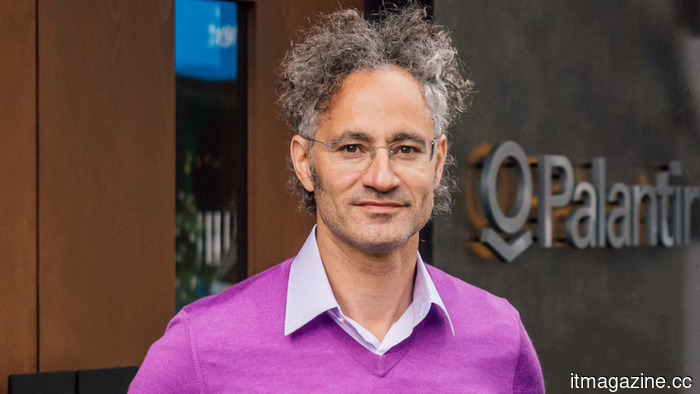 Norway's $2.3 trillion fund supports a human rights assessment at Palantir.
Norges Bank Investment Management plans to support shareholder proposals regarding human-rights due diligence at Palantir in anticipation of its annual general meeting on June 3.
Norway's $2.3 trillion fund supports a human rights assessment at Palantir.
Norges Bank Investment Management plans to support shareholder proposals regarding human-rights due diligence at Palantir in anticipation of its annual general meeting on June 3.
 How to stop restraining AI agents
According to Juras Jursenas, COO of Oxylabs, the actual limitation for agentic AI lies not in the quality of the models, but rather in a web that is designed to thwart automated access and enterprise data that is not adequately prepared for agents.
How to stop restraining AI agents
According to Juras Jursenas, COO of Oxylabs, the actual limitation for agentic AI lies not in the quality of the models, but rather in a web that is designed to thwart automated access and enterprise data that is not adequately prepared for agents.
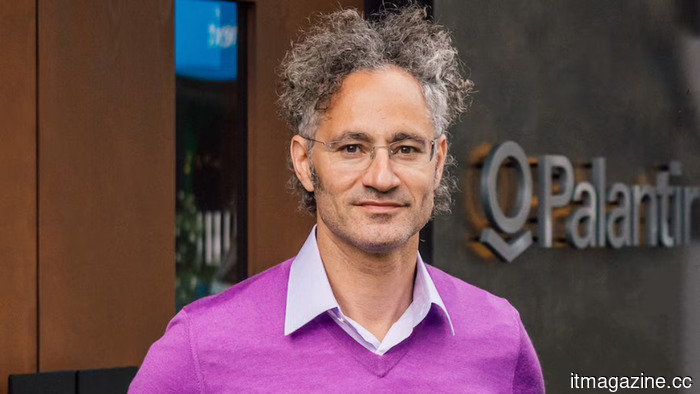 Norway's $2.3 trillion fund supports a human rights evaluation at Palantir.
Norges Bank Investment Management plans to support shareholder proposals regarding human-rights due diligence at Palantir prior to its annual general meeting on June 3.
Norway's $2.3 trillion fund supports a human rights evaluation at Palantir.
Norges Bank Investment Management plans to support shareholder proposals regarding human-rights due diligence at Palantir prior to its annual general meeting on June 3.
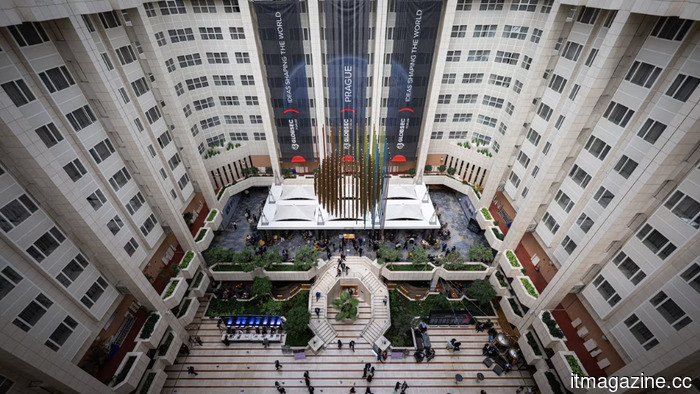 Insights from GLOBSEC Forum 2026: Two potential directions for Europe
Nebi became an official Content Partner of the GLOBSEC Forum 2026, and during the three-day event, we had the opportunity to listen, participate, and consider the current situation.
Insights from GLOBSEC Forum 2026: Two potential directions for Europe
Nebi became an official Content Partner of the GLOBSEC Forum 2026, and during the three-day event, we had the opportunity to listen, participate, and consider the current situation.
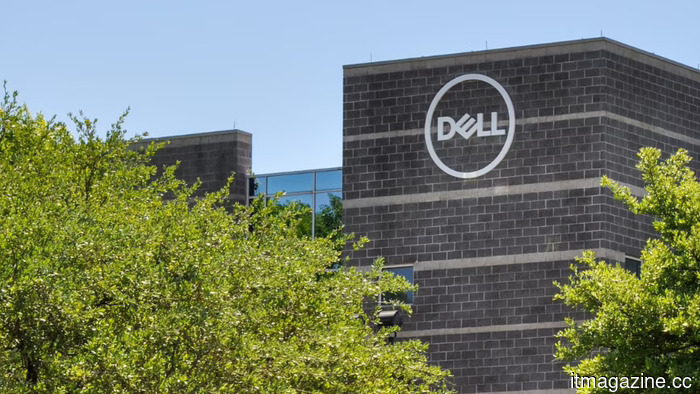 Dell rises due to increased demand for Nvidia-powered AI servers as it raises its projections.
Dell's stock surged following unprecedented Q1 results and an updated full-year outlook, as a $51.3 billion backlog for AI servers indicates that demand for Nvidia-equipped systems continues to rise.
Dell rises due to increased demand for Nvidia-powered AI servers as it raises its projections.
Dell's stock surged following unprecedented Q1 results and an updated full-year outlook, as a $51.3 billion backlog for AI servers indicates that demand for Nvidia-equipped systems continues to rise.
Apollo and Blackstone are negotiating a $36 billion debt agreement to acquire Anthropic and its assets.
Apollo and Blackstone are organizing a $36 billion financing deal to purchase Google TPUs and lease them to Anthropic, with Broadcom providing support for the senior debt.