
Snowflake pledges $6 billion to AWS over the next five years, with a focus on Graviton chips.
The five-year agreement is 2.4 times larger than Snowflake’s AWS contract from 2023 and coincides with a 38% surge in shares following a strong Q1 earnings report. The strategic importance lies in the Graviton component.
Snowflake has established a five-year, $6 billion agreement with Amazon Web Services, which both organizations are presenting as the most significant expansion of their 11-year partnership so far. The deal, revealed on Tuesday, includes commitments to utilize AWS Graviton, the cloud provider’s custom Arm-based CPU line, and to enhance product integrations for what Snowflake now refers to as “agentic enterprise” workloads.
The increase in Snowflake’s AWS expenditures provides context for the magnitude of this announcement. The company pledged $1.2 billion during its 2020 IPO, which increased to $2.5 billion with a renewal in 2023. The new $6 billion deal represents approximately five times the commitment from 2020 and 2.4 times that of 2023.
This expansion aligns with Snowflake’s own growth trajectory: the company reported Q1 fiscal-2027 earnings on Wednesday that significantly exceeded predictions, leading to a roughly 38% rise in stock price due to the combined earnings and AWS deal news.
The Graviton aspect is particularly noteworthy. AWS Graviton, now in its fourth generation, is Amazon’s proprietary Arm-server processor line, intended to replace x86 chips from Intel and AMD in AWS data centers, offering significantly enhanced price-performance.
Snowflake's decision to scale its data-cloud workloads on Graviton is an important validation of the Arm-server concept that has been gradually altering cloud-infrastructure economics for five years. Additionally, it serves as a valuable data point for Amazon in light of the recent announcement that ByteDance is developing its own Arm and RISC-V CPUs to mitigate pricing pressures from Intel and AMD.
The transition to custom Arm-server silicon, driven by hyperscalers, is now a prominent narrative in data-center CPUs. For AWS, the Snowflake deal arrives amid a series of substantial AI-infrastructure commitments. Anthropic has pledged significant AWS spending over multi-year terms; OpenAI signed a notable agreement competing with Microsoft Azure on AWS earlier this year; and Meta has been visibly expanding its AWS presence for inference workloads. Snowflake marks the latest and largest non-foundational model agreement in this series.
AWS’s ability to accommodate an additional $6 billion of demand over five years, given its already stretched data-center pipeline, is a clear indicator of how swiftly Amazon is expanding its capacity.
The strategic backdrop for Snowflake involves the agentic-AI concept that the company is betting on. Snowflake’s strategy, similar to that of other enterprise data platform vendors currently, is that AI agents will primarily function on the trusted and governed enterprise data already within customers’ cloud-warehouse environments, rather than relying on external training datasets.
Achieving this future vision necessitates significantly more computational integration with the underlying cloud provider, including direct access to AWS’s native AI tools (such as Bedrock, SageMaker, and the Q assistant) and closer marketplace and go-to-market integration.
One remaining question is the comparison to Databricks. Snowflake’s most prominent competitor is more closely associated with Azure (through its 2023 partnership with Microsoft) and has aggressively positioned itself as multi-cloud agnostic. Snowflake’s extensive commitment to AWS, particularly with the explicit focus on Graviton, reflects a different strategic approach: partnering with a larger hyperscaler, securing customer acquisition through AWS Marketplace, and accepting the inherent single-cloud bias that accompanies this choice.
Whether this strategy will succeed compared to Databricks's diversified approach remains an open question for the coming years. AWS Marketplace sales for Snowflake increased to $2 billion in 2025, signaling that the integration is already demonstrating commercial success. Neither company has specified which Graviton generation Snowflake is committing to. Snowflake CEO Sridhar Ramaswamy noted that further details will be shared at the AWS re:Invent conference later this year.
Other articles
 Gold-Backed Stablecoins Aim to Make Cryptocurrency Seem More Familiar
Recent digital assets are bringing up well-known concerns regarding trust, regulation, and transparency of reserves. Traditionally, gold has been seen as a stable option amid market uncertainties. In response to the volatility inherent in crypto assets, stablecoins were developed. An increasing number of initiatives are now merging these concepts by establishing digital tokens that are connected to physical gold reserves. [...]
Gold-Backed Stablecoins Aim to Make Cryptocurrency Seem More Familiar
Recent digital assets are bringing up well-known concerns regarding trust, regulation, and transparency of reserves. Traditionally, gold has been seen as a stable option amid market uncertainties. In response to the volatility inherent in crypto assets, stablecoins were developed. An increasing number of initiatives are now merging these concepts by establishing digital tokens that are connected to physical gold reserves. [...]
 The Pentagon has awarded Dell a $9.7 billion contract to unify Microsoft licenses throughout the military.
The Pentagon has granted Dell a five-year contract worth $9.7 billion to unify Microsoft software licensing for the US military and intelligence agencies, which is expected to result in annual savings of $422 million.
The Pentagon has awarded Dell a $9.7 billion contract to unify Microsoft licenses throughout the military.
The Pentagon has granted Dell a five-year contract worth $9.7 billion to unify Microsoft software licensing for the US military and intelligence agencies, which is expected to result in annual savings of $422 million.
 A Google engineer has been charged by the DOJ for using internal search data to place a $2.7 million bet on Polymarket.
The Department of Justice has accused Google information-security engineer Michele Spagnuolo of using internal search trend data to earn $1.2 million on Polymarket’s Year-in-Search market.
A Google engineer has been charged by the DOJ for using internal search data to place a $2.7 million bet on Polymarket.
The Department of Justice has accused Google information-security engineer Michele Spagnuolo of using internal search trend data to earn $1.2 million on Polymarket’s Year-in-Search market.
 The Pentagon has awarded Dell a $9.7 billion contract to streamline Microsoft licenses throughout the military.
The Pentagon has granted Dell a contract worth $9.7 billion over five years to unify Microsoft software licensing for the US military and intelligence agencies, with an expected annual savings of $422 million.
The Pentagon has awarded Dell a $9.7 billion contract to streamline Microsoft licenses throughout the military.
The Pentagon has granted Dell a contract worth $9.7 billion over five years to unify Microsoft software licensing for the US military and intelligence agencies, with an expected annual savings of $422 million.
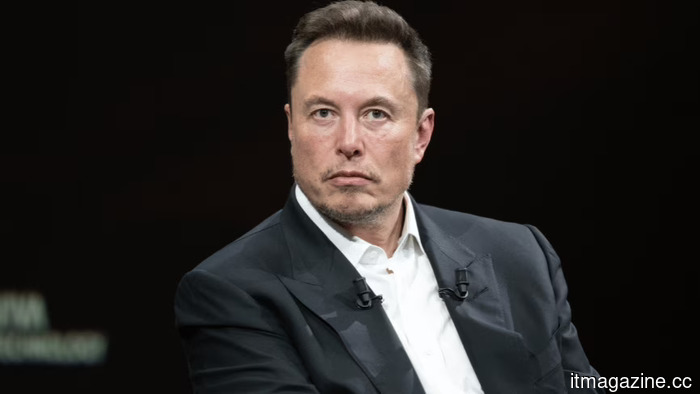 Musk reverts the Anthropic Colossus agreement to a six-month lease.
Elon Musk stated on Wednesday that SpaceX has not entered into a multi-year lease for Colossus 1 with Anthropic, clarifying that the agreement is for 180 days and includes a 90-day mutual cancellation option.
Musk reverts the Anthropic Colossus agreement to a six-month lease.
Elon Musk stated on Wednesday that SpaceX has not entered into a multi-year lease for Colossus 1 with Anthropic, clarifying that the agreement is for 180 days and includes a 90-day mutual cancellation option.
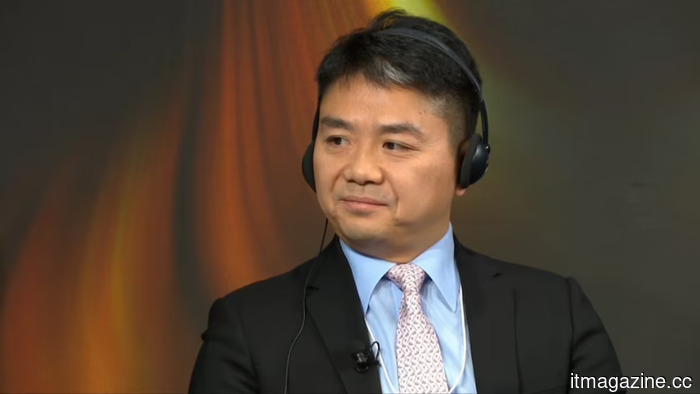 The founder of JD.com pledges to safeguard 900,000 jobs from AI. However, his approach to warehousing suggests a different direction.
Liu Qiangdong, the founder of JD.com, promised in an internal address to safeguard the company's 900,000 employees from being replaced by AI. This commitment is in contrast to JD's significant reliance on automation and Liu's own vision of an "unmanned era."
The founder of JD.com pledges to safeguard 900,000 jobs from AI. However, his approach to warehousing suggests a different direction.
Liu Qiangdong, the founder of JD.com, promised in an internal address to safeguard the company's 900,000 employees from being replaced by AI. This commitment is in contrast to JD's significant reliance on automation and Liu's own vision of an "unmanned era."
Snowflake pledges $6 billion to AWS over the next five years, with a focus on Graviton chips.
Snowflake has pledged $6 billion to AWS over a five-year period, which is 2.4 times greater than its agreement in 2023, focusing on AWS Graviton chips. Following this announcement and a Q1 earnings surpassing expectations, shares surged by 38%.