

Mistral's Arthur Mensch directly counters Pope Leo's views on AI in warfare.
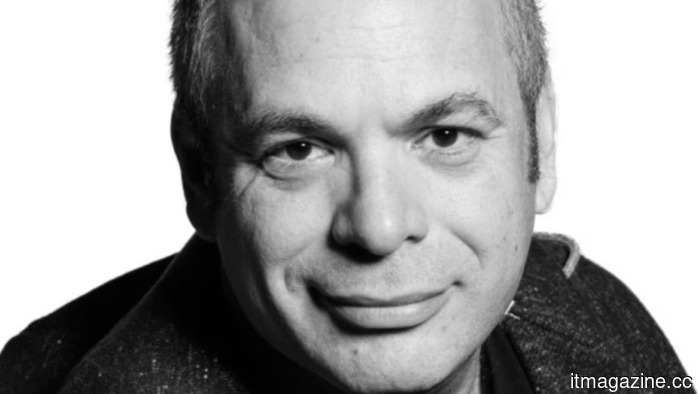
Three days after the Vatican urged for AI to be "disarmed," the CEO of Mistral defended his company's work in defense-related AI, stating that Europe cannot afford to impose restrictions unilaterally. Arthur Mensch, the chief executive of the French AI startup Mistral, directly countered Pope Leo XIV’s appeal to “disarm AI,” emphasizing that European firms must not retreat from defense-AI initiatives while adversaries are actively utilizing the technology.
His comments came shortly after the Vatican released Magnifica Humanitas, the Pope’s first encyclical, representing one of the most explicit corporate reactions to what has swiftly turned into the Catholic Church’s most significant involvement in AI. “We’re all for peace,” Mensch remarked, “but considering our global rivals and adversaries, they are employing artificial intelligence. As long as we face threatening adversaries – and they are indeed threatening – we must maintain our own capabilities.”
Mensch’s framing reflects the structural defense of military-AI development that the European technology sector has been pushing for since the onset of the Ukraine war. However, his choice to present it as a direct rebuttal to a sitting Pope is what renders Thursday's statements particularly noteworthy.
The encyclical itself is the principal document Mensch is addressing. Magnifica Humanitas, a 42,300-word text released on May 25, advocates for disarmament of AI, sets three binding requirements concerning autonomous weapons deployment, includes traceability of decisions, emphasizes meaningful human control over lethal actions, and calls for international regulations to mitigate the technological arms race, explicitly rejecting the conventional "just war" doctrine as "outdated."
The Pope further asserted that military force can only be justified in “self-defense in the strictest sense.” This encyclical represents the most direct papal engagement in tech regulation in decades.
Mensch's stance has a theological resonance of its own. Both the Pope's framing of “self-defense in the strictest sense” and Mensch’s assertion that “adversaries are threatening, so we need our own capabilities” are not strictly contradictory. Both recognize the legitimacy of self-defense while dismissing offensive use. Their divergence lies in what self-defense entails in 2026. Leo’s view is that the threshold for introducing lethal AI is higher than any nation has yet articulated, while Mensch contends that Europe cannot confront credible adversaries with such a threshold when those adversaries do not operate under it.
The commercial context is relevant here. Mistral has visibly been developing a defense-AI portfolio since early 2025. The partnership with Helsing, revealed at the Paris AI Action Summit in February 2025, resulted in collaborative efforts on vision-language-action models intended for “a new generation of defense systems.” Helsing has already integrated AI systems into Eurofighter combat jets, battlefield simulations, and operations in Ukraine. Mistral is also pursuing defense contracts with several European governments.
Therefore, Mensch’s public rejection of the Pope's stance is not a theoretical position but rather a defense of an existing business area that is currently facing formal moral scrutiny from the Vatican. Conversely, the Pope's influence on the AI policy debate has been more significant than anticipated six months prior.
Anthropic co-founder Christopher Olah participated in the encyclical's launch, providing Silicon Valley endorsement to the document. The European Commission also acknowledged it on Monday evening, while OpenAI, Google, and Microsoft issued formal statements of respect.
The Vatican does not serve, in any substantial way, as a regulatory body over AI development. However, with Magnifica Humanitas, it has created a moral framework that legislators and policymakers can utilize; Mensch’s response recognizes the importance of this framework.
The sharp rhetorical contrast belies a more subdued reality in European policy. Brussels is advancing towards enforceable AI warfare frameworks but has yet to establish the kind of binding restrictions advocated by Magnifica Humanitas. Meanwhile, member-state governments are simultaneously increasing their defense-AI procurement budgets.
This contradiction is significant, and the upcoming year of enforcement of the EU AI Act, along with member-state defense spending and Vatican-aligned policy advocacy, will reveal which perspective prevails. Judging by recent evidence, Mensch appears to be betting his company’s public stance on the side of defense procurement.
Other articles
 Wix reduces its workforce by 20% due to restructuring in AI and currency.
Wix has let go of 1,000 employees, representing 20% of its workforce, due to the pressure from a robust shekel and competition in the AI sector impacting the website builder. The stock has decreased by 50% in 2026 following an earnings shortfall.
Wix reduces its workforce by 20% due to restructuring in AI and currency.
Wix has let go of 1,000 employees, representing 20% of its workforce, due to the pressure from a robust shekel and competition in the AI sector impacting the website builder. The stock has decreased by 50% in 2026 following an earnings shortfall.
 Morgan Stanley has revised its forecast upward: European banks may cut 20% of their workforce due to AI.
Morgan Stanley has revised its prediction for job losses in European banking due to AI, now estimating that 20% of the workforce will be affected by 2030. Layoffs are already happening at UBS, ABN Amro, HSBC, and Société Générale.
Morgan Stanley has revised its forecast upward: European banks may cut 20% of their workforce due to AI.
Morgan Stanley has revised its prediction for job losses in European banking due to AI, now estimating that 20% of the workforce will be affected by 2030. Layoffs are already happening at UBS, ABN Amro, HSBC, and Société Générale.
 Meta offers AI subscription services, while OpenAI and xAI venture into the advertising industry.
Meta's foray into AI subscriptions and OpenAI/xAI's venture into advertising characterize the next stage of the discussion regarding consumer-AI revenue models. None of the three entities feels at ease with this convergence.
Meta offers AI subscription services, while OpenAI and xAI venture into the advertising industry.
Meta's foray into AI subscriptions and OpenAI/xAI's venture into advertising characterize the next stage of the discussion regarding consumer-AI revenue models. None of the three entities feels at ease with this convergence.
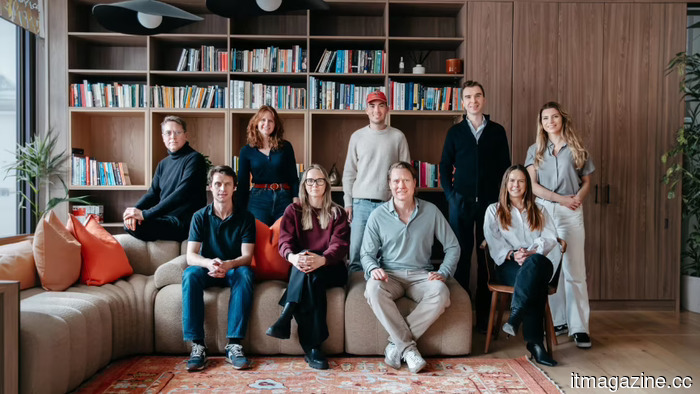 Transition Ventures secures $150 million for Fund II, featuring Olix, Applied Atomics, and Seneca in its portfolio.
Transition Ventures, a firm based in London and co-founded by David Helgason of Unity, has successfully raised $150M for its second fund aimed at early-stage companies that integrate AI with the physical world.
Transition Ventures secures $150 million for Fund II, featuring Olix, Applied Atomics, and Seneca in its portfolio.
Transition Ventures, a firm based in London and co-founded by David Helgason of Unity, has successfully raised $150M for its second fund aimed at early-stage companies that integrate AI with the physical world.
 Wix reduces its workforce by 20% due to restructuring in AI and currency.
Wix has cut 1,000 jobs, representing 20% of its workforce, due to the pressures of a strong shekel and competition from AI in the website building sector. The stock has dropped 50% in 2026 following a disappointing earnings report.
Wix reduces its workforce by 20% due to restructuring in AI and currency.
Wix has cut 1,000 jobs, representing 20% of its workforce, due to the pressures of a strong shekel and competition from AI in the website building sector. The stock has dropped 50% in 2026 following a disappointing earnings report.
 Wix reduces its workforce by 20% due to restructuring in AI and currency.
Wix is cutting 1,000 jobs, representing 20% of its workforce, due to pressure from a robust shekel and competition from AI in the website building sector. The stock has dropped 50% in 2026 following an earnings shortfall.
Wix reduces its workforce by 20% due to restructuring in AI and currency.
Wix is cutting 1,000 jobs, representing 20% of its workforce, due to pressure from a robust shekel and competition from AI in the website building sector. The stock has dropped 50% in 2026 following an earnings shortfall.
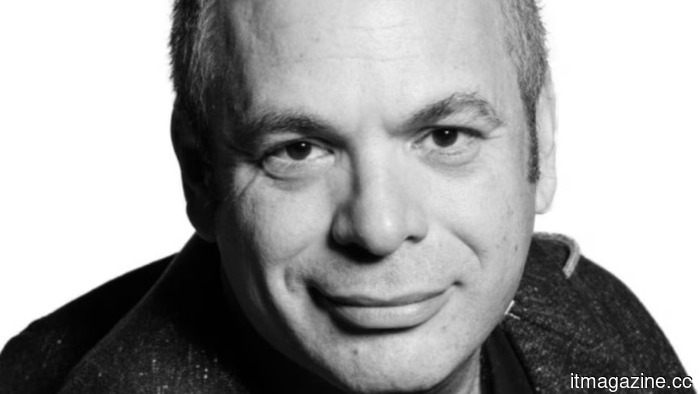
Mistral's Arthur Mensch directly counters Pope Leo's views on AI in warfare.
Mistral's CEO, Arthur Mensch, directly opposed Pope Leo XIV's plea for AI disarmament, stating that Europe cannot take unilateral action to limit itself while its rivals are utilizing the technology.