

China's market regulator has imposed fines on Luxshare and Wingtech due to their termination of a deal.
SAMR has imposed fines on two electronics companies for procedural infractions related to their failed asset sale, marking another indication of Beijing's increasingly stringent approach to merger enforcement. According to a Reuters report from Wednesday, China's State Administration for Market Regulation has penalized Luxshare Precision Industry and Wingtech Technology for violations associated with their unraveling asset sale.
This fine represents the most recent formal action in a deal that has evolved over the last 18 months, shifting from a pressured divestment to a Singapore arbitration case, and serves as an example of the vulnerabilities that Chinese electronics firms face amidst overlapping commercial, geopolitical, and regulatory challenges. The transaction in question involved Wingtech selling its product-assembly business to Luxshare, an agreement made in early 2025 valued at approximately 4.4–4.6 billion yuan ($630 million). Wingtech, a supplier for iPhone and parent company of Nexperia, felt compelled to pursue this sale due to losses incurred from U.S. sanctions that rendered its assembly operations financially unviable. Luxshare, a key Apple supplier and rival to Foxconn, was set to take over the assembly assets, including those in India.
However, the deal began to disintegrate almost immediately. Indian authorities seized the local manufacturing assets on national security grounds, raising apprehensions about Chinese control over strategic electronics manufacturing. Luxshare initially paid around 2 billion rupees ($22 million) but was unable to finalize the asset transfer.
In January 2026, Luxshare initiated arbitration at the Singapore International Arbitration Centre to reverse the Indian segment of the deal and recover its deposit. Wingtech has countered by claiming that Luxshare's termination attempt constitutes a breach in itself.
According to Reuters, SAMR’s fine focuses on the procedural validity of the deal rather than on its actual competitive implications. The amended Anti-Monopoly Law in China has significantly broadened the regulator's powers to impose penalties for notification failures, "gun-jumping," and other merger-control violations, with fines now potentially reaching up to 10% of an offending party's revenue from the previous year.
The 2024 revision of the law also eased the conditions under which SAMR can act on transactions that do not meet formal notification thresholds but are nonetheless deemed significant by the regulator.
The broader context is challenging. Over the past 18 months, SAMR has visibly intensified its merger enforcement activities, particularly with a notable increase in gun-jumping cases and a more assertive stance on which deals necessitate pre-completion notification.
The fine imposed on Luxshare and Wingtech fits within this trend and sends a message to other Chinese electronics companies facing U.S. sanctions that any mandatory divestments they pursue will not be automatically approved based on the geopolitical situation.
For Luxshare, the fine arrives at a particularly inconvenient time. The company has been heavily investing in expanding its AirPods and other Apple supplier operations, and any signs of inconsistency in its M&A practices could complicate its relationship with Apple. Wingtech, meanwhile, has spent the past year shifting its focus to semiconductors after offloading its assembly business, experiencing its own balance sheet pressures from the very U.S. sanctions that led to the initial divestment.
Neither firm commented on the precise amount of the SAMR penalty when contacted by Reuters. The arbitration in Singapore remains ongoing, with a procedural hearing reportedly set for later this quarter.
Other articles
 Taiwan believes that NVIDIA chips may have been illegally transported to China through a transshipment route in Japan.
Taiwanese prosecutors suspect that at least one shipment of Nvidia AI chips, which are restricted by the US, was smuggled to China through Japan, marking the first public case of AI chip diversion in Taiwan.
Taiwan believes that NVIDIA chips may have been illegally transported to China through a transshipment route in Japan.
Taiwanese prosecutors suspect that at least one shipment of Nvidia AI chips, which are restricted by the US, was smuggled to China through Japan, marking the first public case of AI chip diversion in Taiwan.
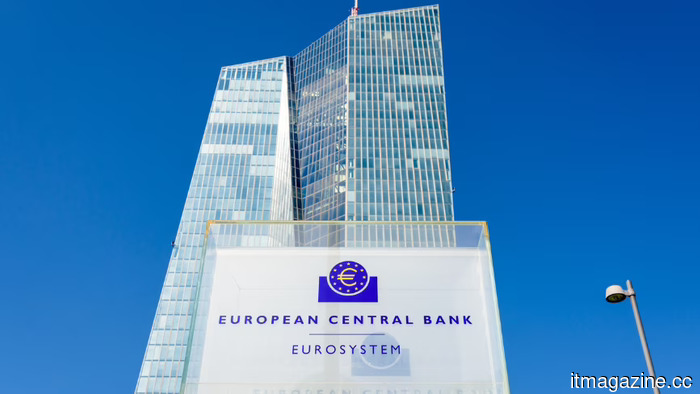 ECB advises eurozone banks to enhance cyber-security measures due to changing threat landscape caused by AI.
The ECB announced on Wednesday that eurozone banks need to strengthen their cyber-security measures due to AI-driven attack tools, following weeks of private recommendations.
ECB advises eurozone banks to enhance cyber-security measures due to changing threat landscape caused by AI.
The ECB announced on Wednesday that eurozone banks need to strengthen their cyber-security measures due to AI-driven attack tools, following weeks of private recommendations.
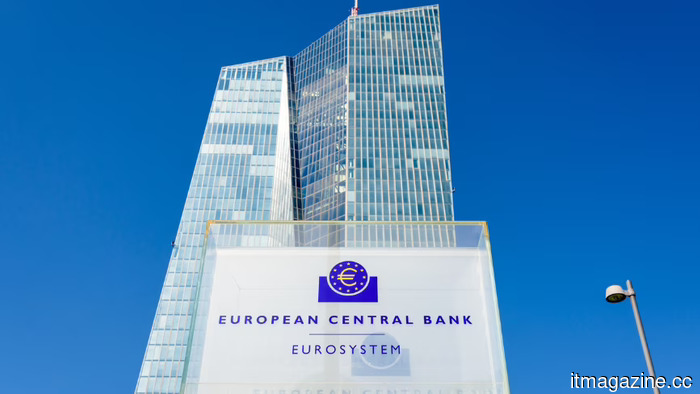 The ECB urges banks in the eurozone to enhance their cyber-security measures as artificial intelligence alters the landscape of threats.
The ECB has informed eurozone banks that they need to enhance their cyber-security measures in light of AI-driven attack tools, according to a formal statement released on Wednesday after several weeks of private advice.
The ECB urges banks in the eurozone to enhance their cyber-security measures as artificial intelligence alters the landscape of threats.
The ECB has informed eurozone banks that they need to enhance their cyber-security measures in light of AI-driven attack tools, according to a formal statement released on Wednesday after several weeks of private advice.
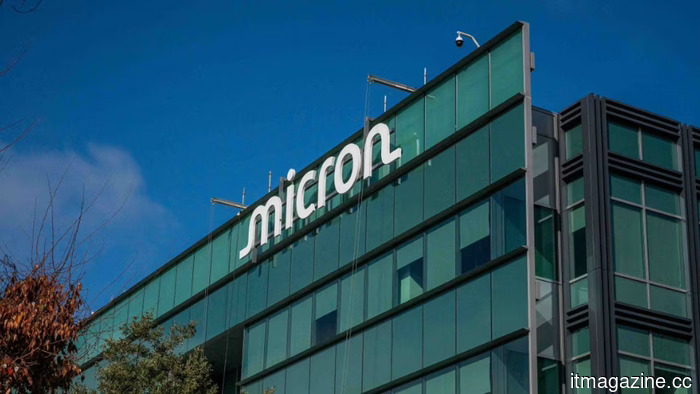 Micron nears $1 trillion as UBS envisions a trajectory towards $1.8 trillion within a year.
UBS analyst Timothy Arcuri raised his price target for Micron to $1,625 on Tuesday, suggesting a valuation of $1.8 trillion, due to the expectation that long-term HBM agreements will shorten the memory cycle.
Micron nears $1 trillion as UBS envisions a trajectory towards $1.8 trillion within a year.
UBS analyst Timothy Arcuri raised his price target for Micron to $1,625 on Tuesday, suggesting a valuation of $1.8 trillion, due to the expectation that long-term HBM agreements will shorten the memory cycle.
 The Qualcomm-ByteDance ASIC agreement is intentionally structured to navigate US export regulations.
Qualcomm has reached an agreement with ByteDance, the parent company of TikTok, for the supply and manufacturing of AI chips, structured to comply with US export-control limits.
The Qualcomm-ByteDance ASIC agreement is intentionally structured to navigate US export regulations.
Qualcomm has reached an agreement with ByteDance, the parent company of TikTok, for the supply and manufacturing of AI chips, structured to comply with US export-control limits.
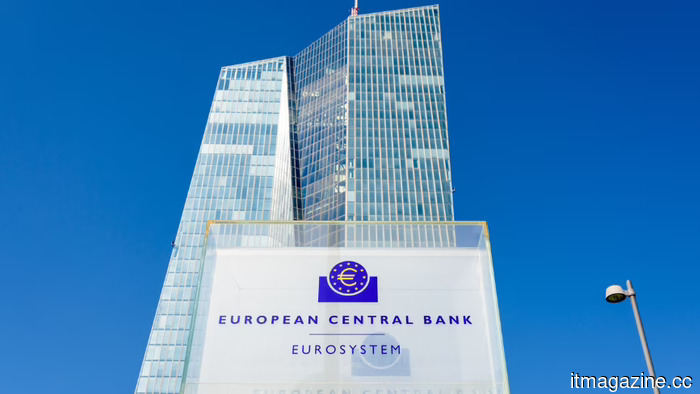 ECB advises eurozone banks to enhance their cyber-security measures as artificial intelligence transforms the landscape of threats.
The ECB instructed eurozone banks to strengthen their cyber-security measures in reaction to AI-driven attack tools, as stated in an official announcement on Wednesday after weeks of private recommendations.
ECB advises eurozone banks to enhance their cyber-security measures as artificial intelligence transforms the landscape of threats.
The ECB instructed eurozone banks to strengthen their cyber-security measures in reaction to AI-driven attack tools, as stated in an official announcement on Wednesday after weeks of private recommendations.
China's market regulator has imposed fines on Luxshare and Wingtech due to their termination of a deal.
China's SAMR has imposed fines on Luxshare and Wingtech for procedural breaches related to their failed asset deal, indicating a stricter approach to merger enforcement.