
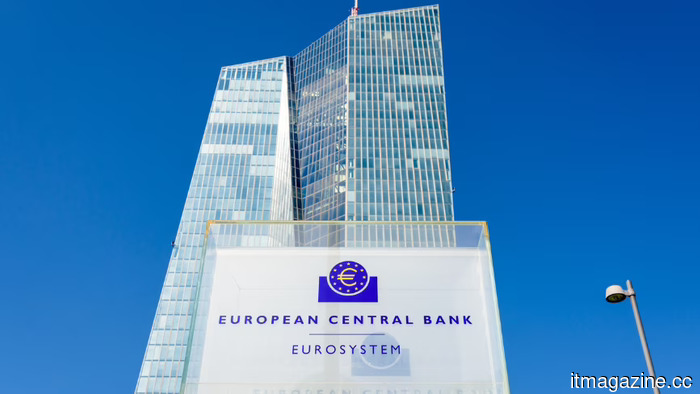
ECB advises eurozone banks to enhance cyber-security measures due to changing threat landscape caused by AI.
The European Central Bank has officially informed eurozone banks that they must enhance their cyber-security measures in light of AI-driven attack tools. This announcement, made in a follow-up statement on Wednesday, escalates previous private guidance to a level of supervisory expectation. Frank Elderson, the ECB’s vice-chair of the Single Supervisory Mechanism, indicated that the shift in terminology reflects a more stringent regulatory approach instead of merely being a discussion document.
The impetus for this directive remains Anthropic’s Mythos, a restricted-access AI model capable of autonomously identifying and exploiting cybersecurity vulnerabilities at extraordinary speeds. Mythos has shown the ability to amalgamate minor weaknesses into significant attacks and to reverse-engineer patches into exploitable flaws at a pace surpassing older toolchains.
Access to Mythos is currently restricted by Anthropic to around 40 to 50 organizations, including a few U.S. banks, with no eurozone institutions included in that list. Earlier this month, Elderson stated that “the lack of access is not an excuse for inaction,” echoing the ECB’s stance on the matter. The recent statement reinforces this view, requiring banks to operate under the assumption that attackers may have access to AI tools with similar proficiency regardless of the defenders' capabilities.
The supervisory implication is that the conventional monthly software-patching cycles are now insufficient. Banks need to audit contractor relationships for similar risks, and the overall institutional approach to vulnerability management must align with the speed of AI attackers. The ECB has indicated that it will integrate AI-cyber readiness into supervisory discussions with individual banks.
The political and commercial landscape has also shifted. BNP Paribas is now openly collaborating with Mistral to create a European alternative to Mythos, effectively acting as a continent-wide hedge. Meanwhile, discussions between Brussels and Anthropic regarding expanding Mythos access to European entities have reportedly stalled, with Spain describing the negotiations as deadlocked.
The ECB's statement essentially reflects the supervisory aspect of the same issue: regulators cannot wait for the access question to be resolved before demanding an enhanced defensive posture.
The more challenging question is what specific changes banks are expected to implement. The ECB has not released a precise list of technical controls, partly due to the rapidly evolving threat landscape that a static checklist would fail to capture. The implicit expectation is that banks now treat any unpatched vulnerability as a potential target, and the time to patch critical systems should be reduced from weeks to days or even hours.
Smaller eurozone banks, which have traditionally depended on outsourced infrastructure for their technical operations, are less equipped to meet this timeline compared to the larger universal banks.
The ECB also highlighted contractor exposure as a significant concern. Most eurozone banks have a lengthy list of third-party software providers with inconsistent patching practices; an AI-driven attacker discovering a vulnerability in a commonly used vendor product could infiltrate multiple banking environments through that vendor relationship.
The supply-chain vulnerabilities similar to those witnessed in the Solarwinds incident of the late 2010s are being recontextualized in terms of AI threats. Elderson noted that supervisors will hold banks responsible for their contractors' security, as well as their own.
Eurozone banks have until the end of 2026 to prove their readiness in alignment with the ECB’s new expectations, with formal supervisory discussions set to commence over the summer. Current public reports indicate that Mythos has not yet been demonstrated in real-world scenarios involving a European institution.
Other articles
 The Qualcomm-ByteDance ASIC agreement is intentionally structured to navigate US export regulations.
Qualcomm has reached an agreement with ByteDance, the parent company of TikTok, for the supply and manufacturing of AI chips, structured to comply with US export-control limits.
The Qualcomm-ByteDance ASIC agreement is intentionally structured to navigate US export regulations.
Qualcomm has reached an agreement with ByteDance, the parent company of TikTok, for the supply and manufacturing of AI chips, structured to comply with US export-control limits.
 Taiwan believes that NVIDIA chips were illicitly transported to China through a transshipping route in Japan.
Taiwanese prosecutors believe that at least one shipment of Nvidia AI chips, which are restricted by the US, was illegally transported to China through Japan, marking Taiwan's first publicly reported case of AI-chip diversion.
Taiwan believes that NVIDIA chips were illicitly transported to China through a transshipping route in Japan.
Taiwanese prosecutors believe that at least one shipment of Nvidia AI chips, which are restricted by the US, was illegally transported to China through Japan, marking Taiwan's first publicly reported case of AI-chip diversion.
 Micron nears $1 trillion as UBS identifies a route to $1.8 trillion within a year.
UBS analyst Timothy Arcuri raised his price target for Micron to $1,625 on Tuesday, suggesting a valuation of $1.8 trillion, due to the expectation that long-term HBM contracts will shorten the memory cycle.
Micron nears $1 trillion as UBS identifies a route to $1.8 trillion within a year.
UBS analyst Timothy Arcuri raised his price target for Micron to $1,625 on Tuesday, suggesting a valuation of $1.8 trillion, due to the expectation that long-term HBM contracts will shorten the memory cycle.
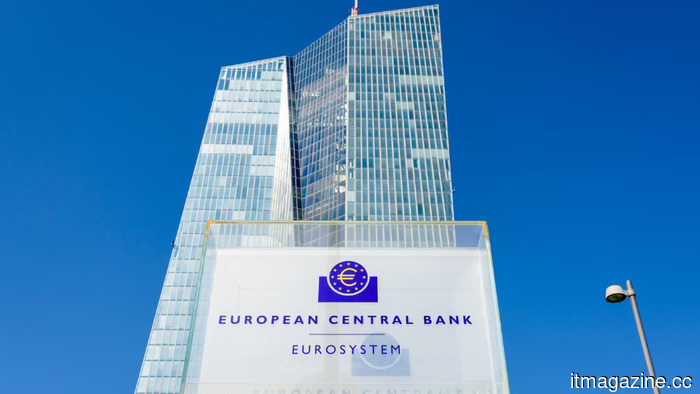 The ECB advises eurozone banks to enhance their cyber-security measures as AI alters the landscape of threats.
The ECB has informed banks in the eurozone that they need to enhance their cyber-security measures due to AI-driven attack tools, according to a formal statement released on Wednesday after weeks of private advice.
The ECB advises eurozone banks to enhance their cyber-security measures as AI alters the landscape of threats.
The ECB has informed banks in the eurozone that they need to enhance their cyber-security measures due to AI-driven attack tools, according to a formal statement released on Wednesday after weeks of private advice.
 Micron nears $1 trillion, while UBS predicts a trajectory towards $1.8 trillion within the next year.
On Tuesday, UBS analyst Timothy Arcuri raised his price target for Micron to $1,625, suggesting a valuation of $1.8 trillion, due to the expectation that long-term HBM agreements will shorten the memory cycle.
Micron nears $1 trillion, while UBS predicts a trajectory towards $1.8 trillion within the next year.
On Tuesday, UBS analyst Timothy Arcuri raised his price target for Micron to $1,625, suggesting a valuation of $1.8 trillion, due to the expectation that long-term HBM agreements will shorten the memory cycle.
 The ASIC agreement between Qualcomm and ByteDance is structured to navigate US export restrictions intentionally.
Qualcomm has established an agreement with ByteDance, the parent company of TikTok, for the supply and manufacturing of AI chips, aimed at remaining compliant with US export-control limits.
The ASIC agreement between Qualcomm and ByteDance is structured to navigate US export restrictions intentionally.
Qualcomm has established an agreement with ByteDance, the parent company of TikTok, for the supply and manufacturing of AI chips, aimed at remaining compliant with US export-control limits.
ECB advises eurozone banks to enhance cyber-security measures due to changing threat landscape caused by AI.
The ECB announced on Wednesday that eurozone banks need to strengthen their cyber-security measures due to AI-driven attack tools, following weeks of private recommendations.