
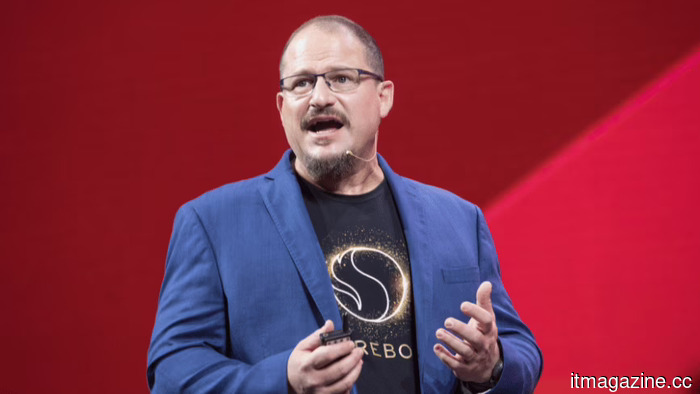
The Qualcomm-ByteDance ASIC agreement is intentionally structured to navigate US export regulations.
The parent company of TikTok is set to purchase millions of application-specific chips from Qualcomm for AI data centers and will collaborate with Qualcomm to transition its own chip design from concept to production.
According to a Bloomberg report on Tuesday, Qualcomm has secured a deal to provide ByteDance with millions of application-specific integrated circuits (ASICs), marking its most significant effort to enter the competitive AI data-center market over the past two years. ByteDance, the Chinese parent company of TikTok, plans to utilize Qualcomm’s ASICs to support its AI-agent software, with sources indicating that Qualcomm’s stock rose about 5% following the announcement, peaking at gains above 8% during the day.
This agreement includes two key elements. First, there is a direct ASIC supply deal in which ByteDance has committed to sizeable volumes, making it Qualcomm’s first publicly acknowledged major purchaser of AI-oriented chips.
The second crucial aspect involves chip-manufacturing services: Qualcomm will assist ByteDance in taking its own internally designed semiconductor, which is already complete, into mass production. Essentially, ByteDance has engaged Qualcomm as both a supplier and a manufacturing partner.
The arrangement is important because it navigates around US export restrictions. Qualcomm’s ASICs fall within the legal performance limits set by the US Commerce Department for chip exports to Chinese companies, while ByteDance’s internal design is engineered to remain compliant with these same thresholds.
Thus, this deal holds significant commercial value but is politically justifiable in ways that direct sales of cutting-edge Nvidia GPUs to China are not.
For Qualcomm, the strategic landscape is more challenging. Traditionally, the company has generated most of its revenue from smartphone modems and Snapdragon application processors. The current AI-data-center market predominantly features Nvidia’s GPUs and a small number of custom ASIC initiatives from major cloud providers like Google (TPU), Amazon (Trainium), Meta (MTIA), and Microsoft (Maia).
Entering this market as an external supplier is more difficult than it appears due to unique workloads, software stacks, and packaging requirements. ByteDance is one of the largest non-hyperscaler clients Qualcomm has realistically secured, and its agent-software workload aligns with the inference-heavy applications that Qualcomm’s architecture is designed for.
For ByteDance, this agreement comes at a time of increasing restrictions from Beijing. Recently, Chinese authorities have limited the travel of top AI talent and have directed major companies, including ByteDance, to decline US investment in funding rounds without prior approval.
Purchasing inference silicon from a US designer while adhering to legal thresholds is a strategy ByteDance can support domestically as a workaround for what Beijing is willing to accept, while still relying on Western design intellectual property for the computational layer.
Furthermore, this deal reflects a broader trend of Chinese AI firms seeking alternatives to Nvidia for computing resources. Jensen Huang has pointed out that the shift towards alternative silicon in Chinese AI labs is a significant trend to observe. While Huawei has been the prominent alternative, Qualcomm now represents a parallel option.
Whether this situation leads to further fragmentation of the Chinese AI hardware landscape or accelerates domestic design and production will determine how the rest of the Chinese AI industry purchases hardware moving into the latter half of 2026.
Qualcomm has chosen not to comment on the specifics of the ByteDance deal, which is anticipated to scale up through 2026 and 2027.
Other articles
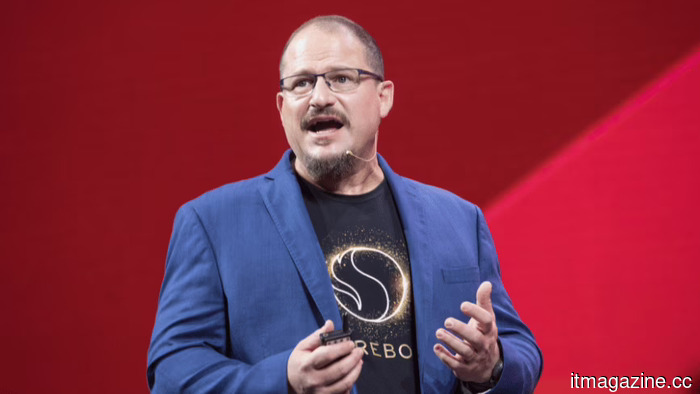 The Qualcomm-ByteDance ASIC agreement is intentionally structured to navigate US export restrictions.
Qualcomm has secured a supply and manufacturing-services agreement for AI chips with ByteDance, the parent company of TikTok, aimed at adhering to US export control limits.
The Qualcomm-ByteDance ASIC agreement is intentionally structured to navigate US export restrictions.
Qualcomm has secured a supply and manufacturing-services agreement for AI chips with ByteDance, the parent company of TikTok, aimed at adhering to US export control limits.
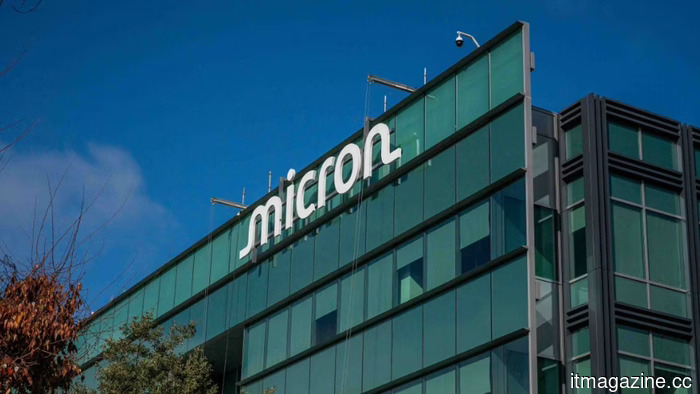 Micron nears $1 trillion while UBS forecasts a potential increase to $1.8 trillion within a year.
UBS analyst Timothy Arcuri increased his price target for Micron to $1,625 on Tuesday, suggesting a valuation of $1.8 trillion, due to the expectation that long-term HBM agreements will shorten the memory cycle.
Micron nears $1 trillion while UBS forecasts a potential increase to $1.8 trillion within a year.
UBS analyst Timothy Arcuri increased his price target for Micron to $1,625 on Tuesday, suggesting a valuation of $1.8 trillion, due to the expectation that long-term HBM agreements will shorten the memory cycle.
 Taiwan believes that NVIDIA chips were illegally transported to China through a transshipment route in Japan.
Taiwanese prosecutors believe that at least one shipment of Nvidia AI chips, which are restricted by the US, was illegally transported to China through Japan, marking Taiwan’s inaugural public case of AI chip diversion.
Taiwan believes that NVIDIA chips were illegally transported to China through a transshipment route in Japan.
Taiwanese prosecutors believe that at least one shipment of Nvidia AI chips, which are restricted by the US, was illegally transported to China through Japan, marking Taiwan’s inaugural public case of AI chip diversion.
 Airbnb spearheads a $58 million Series C funding round for WeRoad and appoints its CEO to manage its hotel operations.
The Milan-based group-adventure travel platform WeRoad has secured $58 million in a Series C funding round, led by Airbnb, which acquired a 10% share and appointed CEO Andrea D’Amico to head its hotels division.
Airbnb spearheads a $58 million Series C funding round for WeRoad and appoints its CEO to manage its hotel operations.
The Milan-based group-adventure travel platform WeRoad has secured $58 million in a Series C funding round, led by Airbnb, which acquired a 10% share and appointed CEO Andrea D’Amico to head its hotels division.
 China's market regulator has imposed fines on Luxshare and Wingtech for their deal unwinding.
China's SAMR has imposed fines on Luxshare and Wingtech due to procedural infringements related to their failed asset deal, indicating stricter enforcement of merger regulations.
China's market regulator has imposed fines on Luxshare and Wingtech for their deal unwinding.
China's SAMR has imposed fines on Luxshare and Wingtech due to procedural infringements related to their failed asset deal, indicating stricter enforcement of merger regulations.
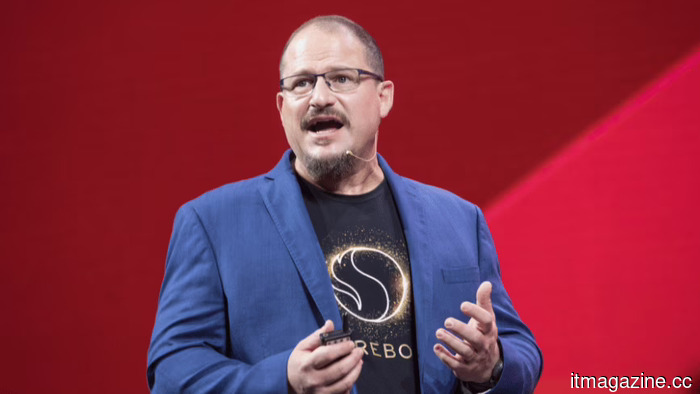 The Qualcomm-ByteDance ASIC agreement is intentionally structured to navigate US export regulations.
Qualcomm has reached an agreement with ByteDance, the parent company of TikTok, for the supply and manufacturing of AI chips, structured to comply with US export-control limits.
The Qualcomm-ByteDance ASIC agreement is intentionally structured to navigate US export regulations.
Qualcomm has reached an agreement with ByteDance, the parent company of TikTok, for the supply and manufacturing of AI chips, structured to comply with US export-control limits.
The Qualcomm-ByteDance ASIC agreement is intentionally structured to navigate US export regulations.
Qualcomm has entered into an agreement with ByteDance, the parent company of TikTok, for the supply and manufacturing services of AI chips, aimed at adhering to US export-control limits.