
xAI cautions its employees to reduce interaction with Cursor staff.
TL;DR: The general counsel of TL;DRxAI has cautioned employees to minimize interactions with Cursor staff after the two teams commenced collaboration, raising antitrust concerns ahead of a potential $60 billion acquisition linked to SpaceX’s upcoming IPO.
Elon Musk's xAI has instructed employees to restrict their communications with Cursor, the AI coding startup that SpaceX has the option to acquire for $60 billion. This guidance, issued by James Burnham, xAI’s general counsel and former chief legal officer at the Department of Government Efficiency, was reported by Bloomberg.
Last week, Burnham sent instructions to xAI employees stating that their dealings with Cursor staff should be limited to what is essential for a technical partnership announced in April. This partnership enables both companies to work together on coding and computing resources but is legally distinct from the potential acquisition.
The timing is problematic, as Cursor employees are already working in xAI’s offices, and the two teams have been engaged in collaborative projects for several weeks. The legal advice that should have been provided before the collaboration began only arrived after it was already in progress.
U.S. antitrust law prohibits what regulators refer to as gun-jumping—the premature blending of assets or business decisions between merging companies before receiving approval from the Justice Department or Federal Trade Commission. Breaching this law can lead to significant financial penalties and potentially halt or delay a transaction. Burnham's email reminded staff that xAI and Cursor remain legally distinct and must function independently until the deal, if it advances, receives regulatory approval.
The implications are significant. Employees were informed that their discussions could be subpoenaed during the regulatory examination. Any proof of improper coordination between the two entities could jeopardize the entire acquisition.
According to the guidelines, xAI engineers may share data and code with Cursor for joint model development, but cannot utilize Cursor's resources for unrelated purposes. Both parties can leverage intellectual property from either company, including the Grok chatbot, solely for the development of the joint model, while everything else is prohibited.
This warning coincided with SpaceX filing documents for what is anticipated to be the largest IPO in history. After merging with xAI in a $1.25 trillion stock deal in February, SpaceX plans to go public on the Nasdaq under the ticker SPCX, with an estimated valuation of about $1.75 trillion. A securities filing submitted last week confirmed that SpaceX has the right to acquire Cursor within a 30-day timeframe after going public. If SpaceX does not take this option by the end of 2026, it would owe Cursor a $10 billion breakup fee.
Internally, xAI's antitrust guidance is just one aspect of a broader operational turmoil. Michael Nicolls, a SpaceX vice president formerly in charge of Starlink engineering, has assumed leadership over most of the engineering at what Musk now refers to as SpaceXAI, which includes infrastructure and Grok development. Nicolls has publicly acknowledged that the company is “clearly behind” its competitors.
Employee turnover further emphasizes the issue. Following frustrations regarding xAI’s coding performance compared to competitors like Anthropic's Claude Code and OpenAI's Codex, Musk ordered layoffs in March. All 11 co-founders of xAI have since departed, and job cuts have continued in recent weeks even as new hires are being brought on board. The operations team is strained, leading to delays in processing basic internal requests.
An example of the dysfunction illustrates the situation: xAI offered employees $420 to submit their personal tax returns as training data for Grok before the April tax deadline, but two months later, no payments have been made, and the manager responsible for the program no longer works there.
For Cursor, the situation is equally precarious. The startup achieved $2 billion in annual recurring revenue by February 2026, making it the fastest-growing B2B software company to date. Its AI code editor is utilized by 67 percent of Fortune 500 companies. Cursor has every incentive to maintain distance from xAI’s internal turmoil while the acquisition timeline progresses.
The antitrust risk is significant but can be managed if both parties adhere to regulations from this point forward. The more challenging question is whether a company that struggles to pay employees timely, has lost all its co-founders, and is both laying off and hiring staff can effectively integrate a $60 billion acquisition a month after going public. The success of SpaceX’s post-IPO Cursor deal hinges on execution, which is an area where xAI has faced substantial challenges.
Other articles
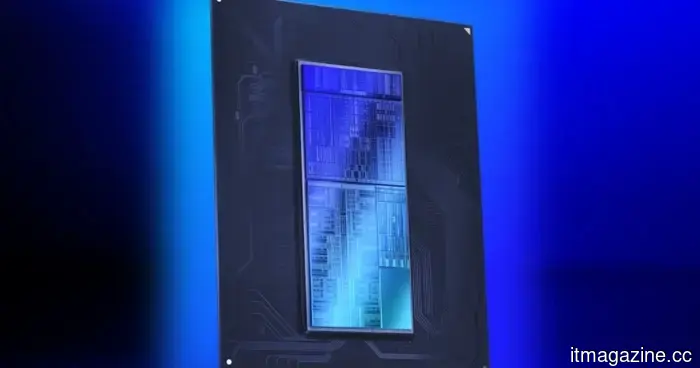 An Intel leak suggests that the forthcoming Nova Lake Edge processors will feature an unusual core configuration.
Intel's Nova Lake Edge is said to be omitting P-cores altogether, opting instead for eight E-cores and 12 Xe graphics cores.
Stord secures $250 million at a $3 billion valuation to compete with Amazon.
Logistics startup Stord secured $250 million in funding at a valuation of $3 billion to grow its network of 100 warehouses and implement AI robotics, enabling brands to compete with Amazon's delivery speeds.
An Intel leak suggests that the forthcoming Nova Lake Edge processors will feature an unusual core configuration.
Intel's Nova Lake Edge is said to be omitting P-cores altogether, opting instead for eight E-cores and 12 Xe graphics cores.
Stord secures $250 million at a $3 billion valuation to compete with Amazon.
Logistics startup Stord secured $250 million in funding at a valuation of $3 billion to grow its network of 100 warehouses and implement AI robotics, enabling brands to compete with Amazon's delivery speeds.
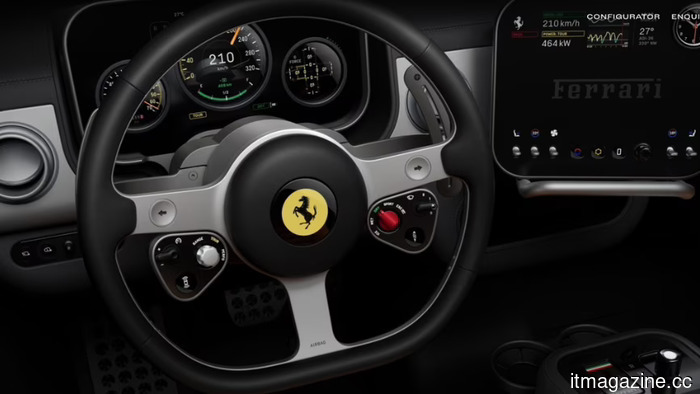 Ferrari's shares fell by 7% following the unveiling of the Luce electric vehicle.
Ferrari's stock declined by 7% in Milan following the online ridicule and design critiques of the Luce reveal, resulting in a loss of GBP 3 billion in market capitalization, despite boasting 1,036 hp and 60 new patents.
Ferrari's shares fell by 7% following the unveiling of the Luce electric vehicle.
Ferrari's stock declined by 7% in Milan following the online ridicule and design critiques of the Luce reveal, resulting in a loss of GBP 3 billion in market capitalization, despite boasting 1,036 hp and 60 new patents.
 xAI advises its employees to minimize interactions with Cursor staff.
The former DOGE lawyer from xAI advised employees to restrict their communication with Cursor to mitigate the risk of gun-jumping related to antitrust issues. This guidance came weeks after personnel started collaborating closely in anticipation of a $60 billion deal following the IPO.
xAI advises its employees to minimize interactions with Cursor staff.
The former DOGE lawyer from xAI advised employees to restrict their communication with Cursor to mitigate the risk of gun-jumping related to antitrust issues. This guidance came weeks after personnel started collaborating closely in anticipation of a $60 billion deal following the IPO.
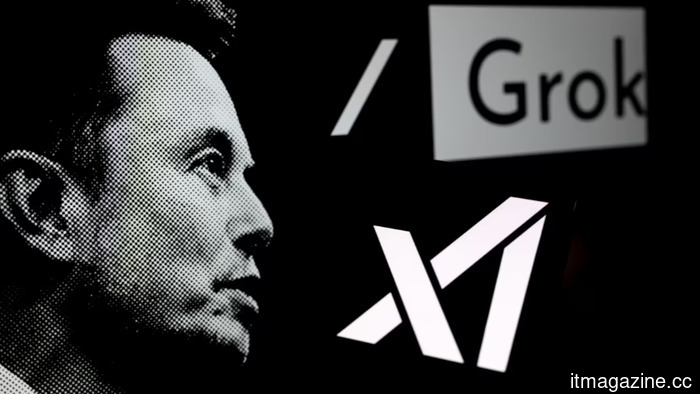 xAI advises its staff to minimize interactions with employees from Cursor.
The former lawyer for xAI who handled DOGE advised employees to reduce communication with Cursor due to potential antitrust risks related to gun-jumping, just weeks after staff members started collaborating closely prior to a $60 billion post-IPO agreement.
xAI advises its staff to minimize interactions with employees from Cursor.
The former lawyer for xAI who handled DOGE advised employees to reduce communication with Cursor due to potential antitrust risks related to gun-jumping, just weeks after staff members started collaborating closely prior to a $60 billion post-IPO agreement.
 Ozzy Osbourne's upcoming performance will feature an AI avatar, and opinions among fans are divided.
Ozzy Osbourne's family is collaborating with Hyperreal and Proto Hologram to create a realistic AI avatar capable of speaking to fans and responding in real time.
Ozzy Osbourne's upcoming performance will feature an AI avatar, and opinions among fans are divided.
Ozzy Osbourne's family is collaborating with Hyperreal and Proto Hologram to create a realistic AI avatar capable of speaking to fans and responding in real time.
xAI cautions its employees to reduce interaction with Cursor staff.
The former DOGE lawyer at xAI advised employees to reduce their interactions with Cursor due to potential antitrust concerns related to gun-jumping, just weeks after the staff started collaborating closely in anticipation of a $60 billion post-IPO transaction.