
Spotify is experimenting with narrated magazine articles within its audiobook subscription tier.
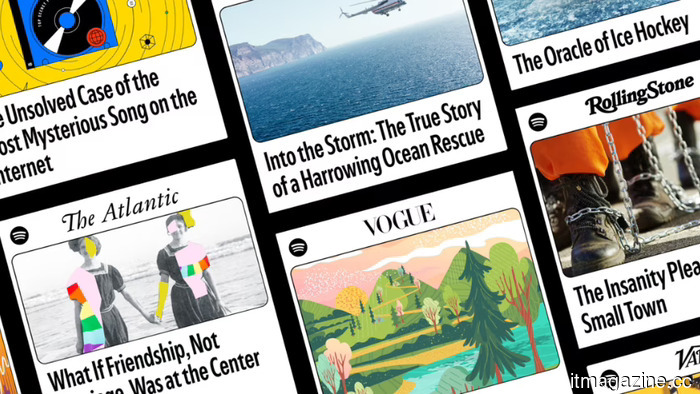
On Tuesday, Spotify started testing a new content format: narrated long-form magazine articles, which are placed alongside audiobooks instead of podcasts. The company announced this launch in its newsroom that morning, featuring over 650 English-language articles from notable publications such as Rolling Stone, The Atlantic, Vogue, Variety, Billboard, Vibe, GQ, WIRED, Vanity Fair, and Pitchfork.
These Articles, as Spotify refers to them, are each under two hours in length and created in-house by the Spotify Audiobooks team. Premium users in the 22 markets where audiobooks are available can access them as part of their monthly audiobook quota. Free users can purchase individual articles for $1.99. According to Spotify’s framing, this product serves as a bridge between podcasts and full-length books, based on the rationale that shorter listens reduce the barriers that prevent new readers from committing to lengthy novels.
The timing of this launch is strategically significant. In the latter half of the 2010s, Spotify made significant investments in narrative-journalism podcast studios, acquiring Gimlet Media for around $230 million and The Ringer for $200 million. Both studios have undergone major restructuring, with multiple rounds of layoffs at The Ringer and Spotify Studios projected for 2024 and 2025, as the company shifted away from costly narrative documentary projects in favor of more affordable conversational and video podcasts.
With the launch of Articles, Spotify is effectively re-entering the journalism sector through the audiobook channel instead of the podcast route, acting as a licensor of completed magazine work rather than a creator of original journalism.
The economics of licensing appear more favorable. Magazine articles are less expensive to acquire compared to commissioned narrative podcasts, narration costs are lower than studio production expenses, and there is a vast supply available. This model also allows Spotify to avoid the editorial and trust-and-safety challenges that have affected its podcast business, as the publications handle editing while Spotify manages narration and distribution.
This launch occurs during a particularly busy period for the audiobook division. Spotify now offers approximately 700,000 audiobook titles in the 22 markets where the service exists, a significant increase from 150,000 at launch, with listening hours growing by 60% year-over-year. The Bookshop.org partnership for selling physical books in the US and UK began in April, Audiobook Charts were introduced in February, and Page Match— which allows readers to scan a printed page to find the corresponding audiobook timestamp— now works in over 30 languages. The Audiobooks+ feature, available for €10 per month, is approaching $100 million in annual revenue.
However, it remains to be seen whether magazine readers actually prefer listening to articles rather than reading them. Audible has had a narrated product for The New York Times for years; The Economist, Financial Times, and others have invested heavily in app-native narration; yet none has achieved significant monetization success.
The 650-article test is small enough for Spotify to scale back quickly if engagement is low, while being large enough to indicate to the magazine industry that Spotify is interested in licensing. The participating publishers have not disclosed financial terms, and in line with its approach to product trials, Spotify is labeling this as a test rather than a full launch, with the pricing, markets, and title offerings all subject to change.
Other articles
 Spotify is experimenting with narrated magazine articles within its audiobook section.
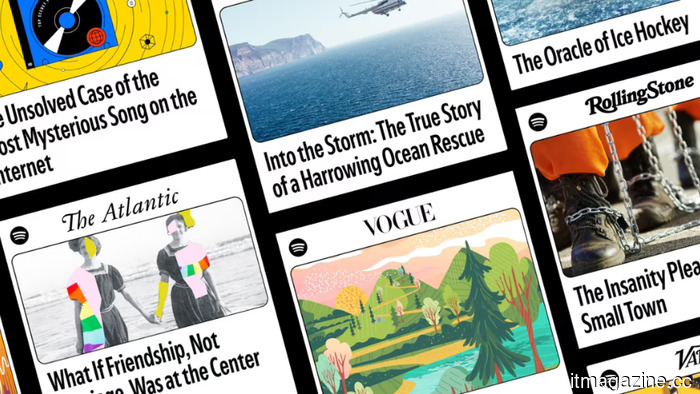
Spotify is experimenting with 650 narrated long-form articles from publications like The Atlantic, WIRED, and Vogue within its audiobook section, signaling a subtle reemergence of journalism.
Spotify is experimenting with narrated magazine articles within its audiobook section.
Spotify is experimenting with 650 narrated long-form articles from publications like The Atlantic, WIRED, and Vogue within its audiobook section, signaling a subtle reemergence of journalism.
 Pope Leo’s initial encyclical is viewed as addressing technology regulation as well as theological matters.
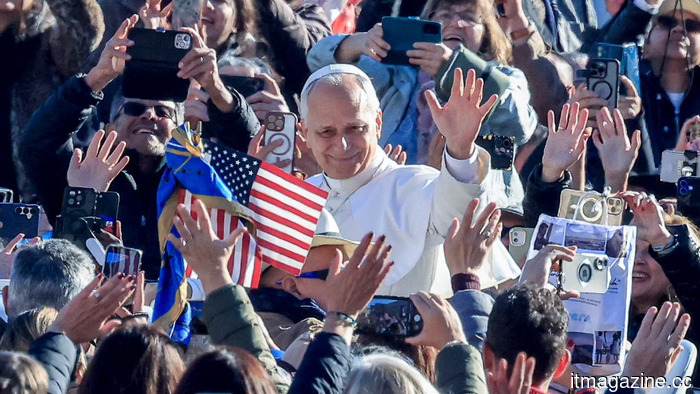
The day following the release of Magnifica Humanitas by Pope Leo XIV, his AI encyclical is being examined in policy centers as the most straightforward papal intervention in technology in many years.
Pope Leo’s initial encyclical is viewed as addressing technology regulation as well as theological matters.
The day following the release of Magnifica Humanitas by Pope Leo XIV, his AI encyclical is being examined in policy centers as the most straightforward papal intervention in technology in many years.
 BNP Paribas collaborates with Mistral to provide a European solution to Anthropic's Mythos.
According to Bloomberg, BNP Paribas is assisting Mistral in developing a European sovereign alternative to Anthropic's limited Mythos cybersecurity AI.
BNP Paribas collaborates with Mistral to provide a European solution to Anthropic's Mythos.
According to Bloomberg, BNP Paribas is assisting Mistral in developing a European sovereign alternative to Anthropic's limited Mythos cybersecurity AI.
 Honeywell's Quantinuum has established a $12.7 billion target for its IPO following initial expectations of $20 billion.
Quantinuum, the quantum-computing company primarily owned by Honeywell, is aiming for an IPO valuation of $12.7 billion, significantly lower than the more than $20 billion estimates circulating earlier this month.
Honeywell's Quantinuum has established a $12.7 billion target for its IPO following initial expectations of $20 billion.
Quantinuum, the quantum-computing company primarily owned by Honeywell, is aiming for an IPO valuation of $12.7 billion, significantly lower than the more than $20 billion estimates circulating earlier this month.
 Wall Street is offering $25,000 daily to AI trainers who were previously employed there.
Felipe Sinisterra and Dave Wang are charging $25,000 per day to train Wall Street banks on AI tools that they have already purchased. They are fully booked for the next two months.
Wall Street is offering $25,000 daily to AI trainers who were previously employed there.
Felipe Sinisterra and Dave Wang are charging $25,000 per day to train Wall Street banks on AI tools that they have already purchased. They are fully booked for the next two months.
 Wall Street is offering $25,000 daily for AI trainers who previously worked in the industry.
Felipe Sinisterra and Dave Wang are charging $25,000 per day to educate Wall Street banks on AI tools they have already acquired. Their schedule is fully booked for two months.
Wall Street is offering $25,000 daily for AI trainers who previously worked in the industry.
Felipe Sinisterra and Dave Wang are charging $25,000 per day to educate Wall Street banks on AI tools they have already acquired. Their schedule is fully booked for two months.
Spotify is experimenting with narrated magazine articles within its audiobook subscription tier.
Spotify is experimenting with 650 narrated long-form articles from publications like The Atlantic, WIRED, Vogue, and others within the audiobook section, signaling a subtle revival of journalism.