
The excitement surrounding Salesforce's Agentforce exceeds its actual performance.
Salesforce has finalized 29,000 Agentforce deals and boasts $800 million in annual recurring revenue (ARR), yet its stock has plummeted 30 percent in 2026 amid a broader selloff in the SaaS sector dubbed the "SaaSpocalypse." Demos from clients like Williams-Sonoma, UChicago Medicine, and SharkNinja have proven to be preliminary versions rather than fully operational implementations.
Salesforce faces a significant issue that marketing alone can't resolve. The company has centered its narrative on Agentforce, its AI agent platform, showcasing impressive statistics: 29,000 closed deals, $800 million in ARR, and a future roadmap aiming to replace extensive human labor. However, Wall Street remains skeptical, and the disparity between Salesforce’s presentations and actual customer usage continues to widen.
The stock performance reflects this reality. Salesforce shares dropped nearly 21 percent in 2025, followed by an additional 30 percent decline in 2026. This downturn aligns with a general selloff of software-as-a-service companies, which the market has termed the SaaSpocalypse, where approximately $285 billion in SaaS market capitalization disappeared in just 48 hours in February. The rationale is straightforward: if a single AI agent can replace ten employees, why would a business pay for ten positions?
Salesforce has attempted to counter this logic by presenting itself as the provider of agents instead of traditional seats. CEO Marc Benioff has referred to Agentforce as a “digital labor platform,” and during earnings calls, the company cites the 29,000 deals and ARR as evidence of enterprise engagement.
However, the showcased examples have not held up under closer examination. At Dreamforce, Salesforce introduced a Williams-Sonoma AI agent named Olive, intended to assist customers as a sous chef. In reality, Olive struggled with specific inquiries and recommendations, and its more advanced features were discussed as future plans rather than available functionalities.
A similar issue occurred with the University of Chicago Medicine, which Salesforce highlighted as a leading Agentforce deployment for healthcare. In reality, the hospital's first AI agent was limited to basic web chat functionalities like addressing parking directions and clinic hours, with more complex features still in development.
SharkNinja, known for its vacuums and kitchen appliances, was also presented as a key customer. Salesforce claimed that the company would leverage Agentforce to enhance customer service, but reports indicated that the deployment was prospective rather than reflective of achieved results, focusing on anticipated future capabilities.
This trend is significant as Salesforce is not alone in overstating AI potentials. Apple recently agreed to pay $250 million to settle a class action lawsuit claiming it exaggerated the capabilities of Apple Intelligence and a smarter Siri during the iPhone 16 launch.
Salesforce's financial growth trajectory adds complexity to the situation. Revenue growth has decreased from around 25 percent a few years ago to roughly 10 percent in fiscal 2026, when total revenue reached $41.5 billion. Although still substantial and supported by a strong fourth quarter with 12 percent growth, this slowdown raises concerns for investors when discussing AI agents' potential to reduce the number of human software license users.
The company is attempting to tackle pricing issues. Agentforce follows a consumption-based model rather than the conventional per-seat pricing, charging for what they call “agentic work units.” The platform has processed nearly 20 trillion tokens, translating them into over 2.4 billion units. Whether this model can expand sufficiently to counter the risk to seat-based revenue remains a primary consideration.
Smaller clients illustrate both the potential and drawbacks. The city of Kyle, Texas, implemented Agentforce for its 311 service, managing over 12,000 resident inquiries since March 2025 with nearly 90 percent resolved on the first call. The city increased its Salesforce expenditure to $300,000. For a growing municipality, this may seem reasonable, yet for larger enterprises contemplating similar investments, the economics are less clear.
Competitive pressures are evident, with SAP launching its Autonomous Enterprise featuring over 200 AI agents and a partnership with Anthropic at Sapphire 2026. Companies like ServiceNow, Google, and Microsoft are also developing agent platforms. The crucial question is no longer whether AI agents will transform enterprise software, but whether Salesforce can sustain its position as the market adjusts around it.
Benioff has responded with characteristic optimism, setting a new revenue goal of $60 billion by fiscal 2030 and committing to $50 billion in share buybacks, signaling to investors that the company considers its stock undervalued. Slack’s evolution into an agent-focused platform, which will feature over 30 new AI functionalities and mandatory bundling with every new Salesforce account starting this summer, is part of this strategy.
Nevertheless, this does not resolve the core discrepancy. Salesforce is asking customers to invest in a future that its own demonstrations have yet to realize while urging investors to have confidence that a consumption-based AI revenue model can effectively replace the seat-based framework that initially supported the
Other articles
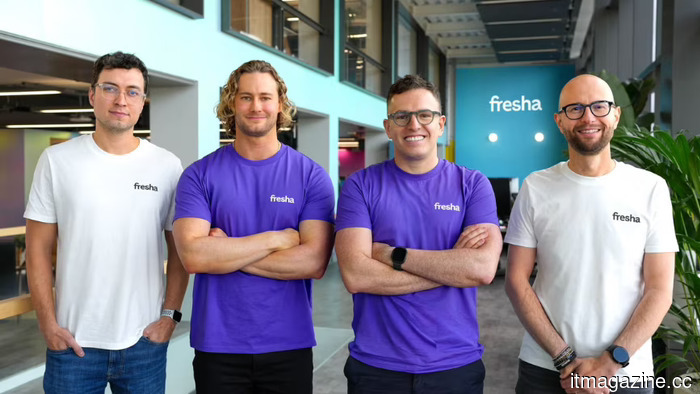 Fresha in London achieves unicorn status following an $80M funding round led by KKR.
Fresha, a beauty and wellness booking platform located in London, has secured $80 million from KKR, achieving a valuation exceeding $1 billion and entering the ranks of UK unicorns.
Fresha in London achieves unicorn status following an $80M funding round led by KKR.
Fresha, a beauty and wellness booking platform located in London, has secured $80 million from KKR, achieving a valuation exceeding $1 billion and entering the ranks of UK unicorns.
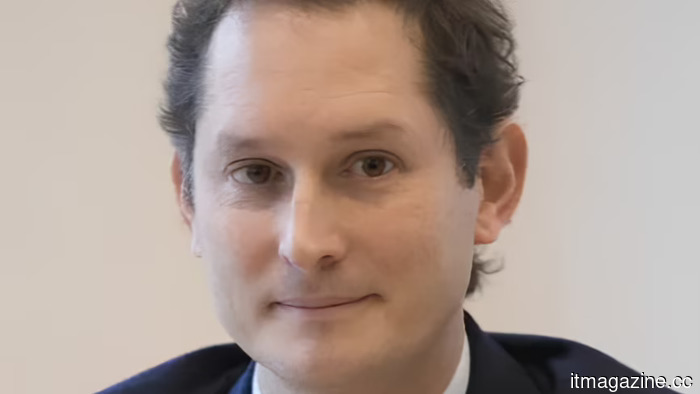 Norway's $2.3 trillion fund opposes Elkann's position on the Meta board.
Norway's sovereign wealth fund chose not to vote on Elkann's reappointment to the Meta board and supported shareholder proposals regarding AI data privacy and hate speech.
Norway's $2.3 trillion fund opposes Elkann's position on the Meta board.
Norway's sovereign wealth fund chose not to vote on Elkann's reappointment to the Meta board and supported shareholder proposals regarding AI data privacy and hate speech.
 Starbucks withdraws its AI inventory system nine months later due to persistent issues with misidentifying the various types of milk.
Starbucks has discontinued its AI inventory tool in North American locations nine months after its introduction, citing reliability problems and returning to manual inventory counts.
Starbucks withdraws its AI inventory system nine months later due to persistent issues with misidentifying the various types of milk.
Starbucks has discontinued its AI inventory tool in North American locations nine months after its introduction, citing reliability problems and returning to manual inventory counts.
 Kawasaki Heavy partners with Nvidia on physical AI, while the rideable robot horse is equipped with a foundation model.
Kawasaki Heavy Industries surged 12% following the announcement of a partnership in physical-AI with Nvidia, Microsoft, Fujitsu, and Analog Devices, featuring its CORLEO robot as the highlight of the presentation.
Kawasaki Heavy partners with Nvidia on physical AI, while the rideable robot horse is equipped with a foundation model.
Kawasaki Heavy Industries surged 12% following the announcement of a partnership in physical-AI with Nvidia, Microsoft, Fujitsu, and Analog Devices, featuring its CORLEO robot as the highlight of the presentation.
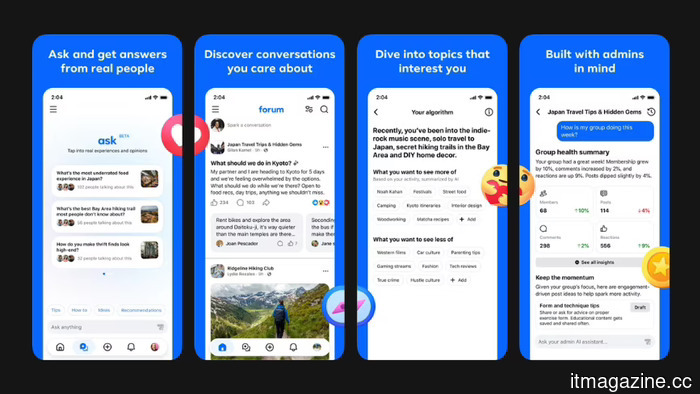 Forum is Meta's latest app for Facebook Groups, and it bears a strong resemblance to Reddit.
Meta has discreetly launched Forum, an independent app resembling Reddit that is based on Facebook Groups, featuring an AI "Ask" tab and an admin assistant.
Kawasaki Heavy partners with Nvidia on physical AI, and the rideable robotic horse receives a foundational model.
Kawasaki Heavy Industries surged 12% following the announcement of a collaboration in physical-AI with Nvidia, Microsoft, Fujitsu, and Analog Devices, with its CORLEO robot taking center stage in the display.
Forum is Meta's latest app for Facebook Groups, and it bears a strong resemblance to Reddit.
Meta has discreetly launched Forum, an independent app resembling Reddit that is based on Facebook Groups, featuring an AI "Ask" tab and an admin assistant.
Kawasaki Heavy partners with Nvidia on physical AI, and the rideable robotic horse receives a foundational model.
Kawasaki Heavy Industries surged 12% following the announcement of a collaboration in physical-AI with Nvidia, Microsoft, Fujitsu, and Analog Devices, with its CORLEO robot taking center stage in the display.
The excitement surrounding Salesforce's Agentforce exceeds its actual performance.
Salesforce finalized 29,000 Agentforce transactions, yet its stock has declined by 30% in 2026, and demonstration showcases continue to be under development.